Three and a half years ago, Cork beat Kilkenny by seven points in PĂĄirc UĂ Rinn, a wintry midweek evening lit up by a solitary goal scored by the home side.
It wasnât a National League game, but a fundraiser for the late, lamented Kieran OâConnor of Aghada. Cork and Kilkenny had met in the NHL not long beforehand, and at the final whistle that day the managers met up on the sideline.
âJohn [Meyler] approached me after our last game in Nowlan Park,â said Kilkenny boss Brian Cody ahead of that fundraiser.
âHe asked if we could play a match, and straightaway we said: âOf course we will, yeahâ.
âThe whole GAA family rallies around in a situation like this, and thatâs whatâs been happening in Cork for the last few weeks, as we know â and around the country as well, because of the respect people everywhere have for Kieran, for a man whoâs done so much for his club and for Cork.â
On the evening of the game then-Cork boss Meyler saluted Kilkenny for travelling: âKilkenny are great ambassadors for hurling, and thereâs great credit due to them, their team and county board, for facilitating the match.
âItâs a very worthwhile cause, obviously, but agreeing to play a game on a Wednesday night means arranging for lads to take a day or half a day off work, so itâs a fantastic gesture from them.â
The game marked another milestone in the long and winding history of the two counties when it comes to hurling. For decades they have been reminiscent of city-states in medieval Italy: Venice and Florence, perhaps, doges and gonfalonieres glowering at each other across the buffer zones stretching between their fiefdoms.
(Side note: curious that the other semi-finalists, Waterford and Limerick, are also heavily reliant for players on their urban centres: decent analogues for Genoa and Naples, maybe? Something for another day.)
For Cork, in those circumstances, Kilkenny were the clear box-office draw, and the obvious opposition to invite to such a game; for Kilkenny there was only one realistic response to such an invitation, notwithstanding the headaches involved in fulfilling such a fixture, as noted by Meyler.
The gesture also did something else. It blunted something of the edge that had developed between the counties, perhaps, and there was no harm in that either.
For a few years that edge was more jagged than was strictly necessary. Itâs not uncommon for rivalries in Gaelic games to tip into the toxic from time to time, and that description surely applied to some of the rhetoric in Cork-Kilkenny exchanges at that time.
We were told then that some players were without honour in the game of hurling, or that some were like the Stepford Wives. A simmering discontent grew from on-field protests which left one side unhappy, while there were on-field hammerings which gave the other side a deep satisfaction.
All of it â the references to Ira Levinâs fluent thrillers notwithstanding â served to blur a unique hinterland in the sport, with the two counties sometimes functioning as reverse images, and sometimes mirror images of each other. The Venetians and Florentines of long ago would have understood.
During the week, Donal Collins, who played for James Stephens while working in Kilkenny in the early â80s, having won All-Ireland club medals with Blackrock in Cork, offered a sharp comparison of the two counties: when playing in Kilkenny, he found a more physical game with an emphasis on catching the ball.
Back home in Cork, he felt the style was sharper and faster â at the time the âBig Threeâ clubs in the city dominated the county championship, and a premium was placed on speed.
Dig deeper. Even as Collins was wearing the red and green of the Village in Kilkenny, change was already underway in that county.
Ballyhale Shamrocks won their first Kilkenny senior title in 1978, and afterwards the chairman of Leinster Council at the time, Paddy Buggy â himself an All-Ireland winner with Kilkenny â made much of the fact that the club was based in south Kilkenny, which lagged behind seriously in terms of collecting senior titles.
âI hope the Shamrocks can do something about that,â said Buggy, scarcely anticipating the juggernaut they would later become: it has become the significant contributor to Kilkennyâs success in the last 20 years.
Something similar happened in an area of Cork with even less tradition of success in senior hurling. Just as Ballyhale were clearly identified with a particular tactical approach, moving the ball from wing to wing to discomfit opposing defences, Newtownshandrumâs insistence on ball retention and running became synonymous with the little village outside Charleville.
Once the traditionalists stopped clutching their pearls, it gradually dawned on the hurling universe that retaining the ball was the only serious option in the modern game, but within the confines of the county itself, Newtownâs dominance of the senior championship was no less seismic.
So much for the development of the game within the city-states. What about tomorrow?
In their long grapple for supremacy, Cork and Kilkenny games have not only formed the crossroads for the sport itself on several occasions, time and again those games have been signposts of primacy between the two counties as well.
Itâs an article of faith that the trilogy of All-Ireland finals in 1931 forms the basis of modern hurling in terms of the promotion of the game, the media focus on the trilogy, the copper-fastening of the All-Ireland hurling final as one of the critical dates in the sporting calendar.
But it also served as a transfer of power from one county to another. Cork had been powerful in the â20s, but by 1931, they were going out and Kilkenny were coming in, as one of the Cork players said: Kilkenny were a dominant side for the rest of that decade.
They had enough to nudge out Cork in 1939 â âby the usual pointâ in the words of Jack Lynch â but the situation had reversed. Cork then dominated most of the â40s as Kilkenny entered a lull.
Since then there have been other significant watershed All-Ireland finals: 1966, when Cork beat Kilkenny to end a famine; 1972, when Kilkennyâs late, irresistible surge against Cork franked their dominance of the early â70s; and 1978, when Corkâs win over Kilkenny did the same for their dominance of the late â70s.
Kilkennyâs great sides of 1982-3 and 1992-3 both had important All-Ireland victories over Cork to underline their quality; the same could be said of Corkâs youthful team in the 1999 decider.
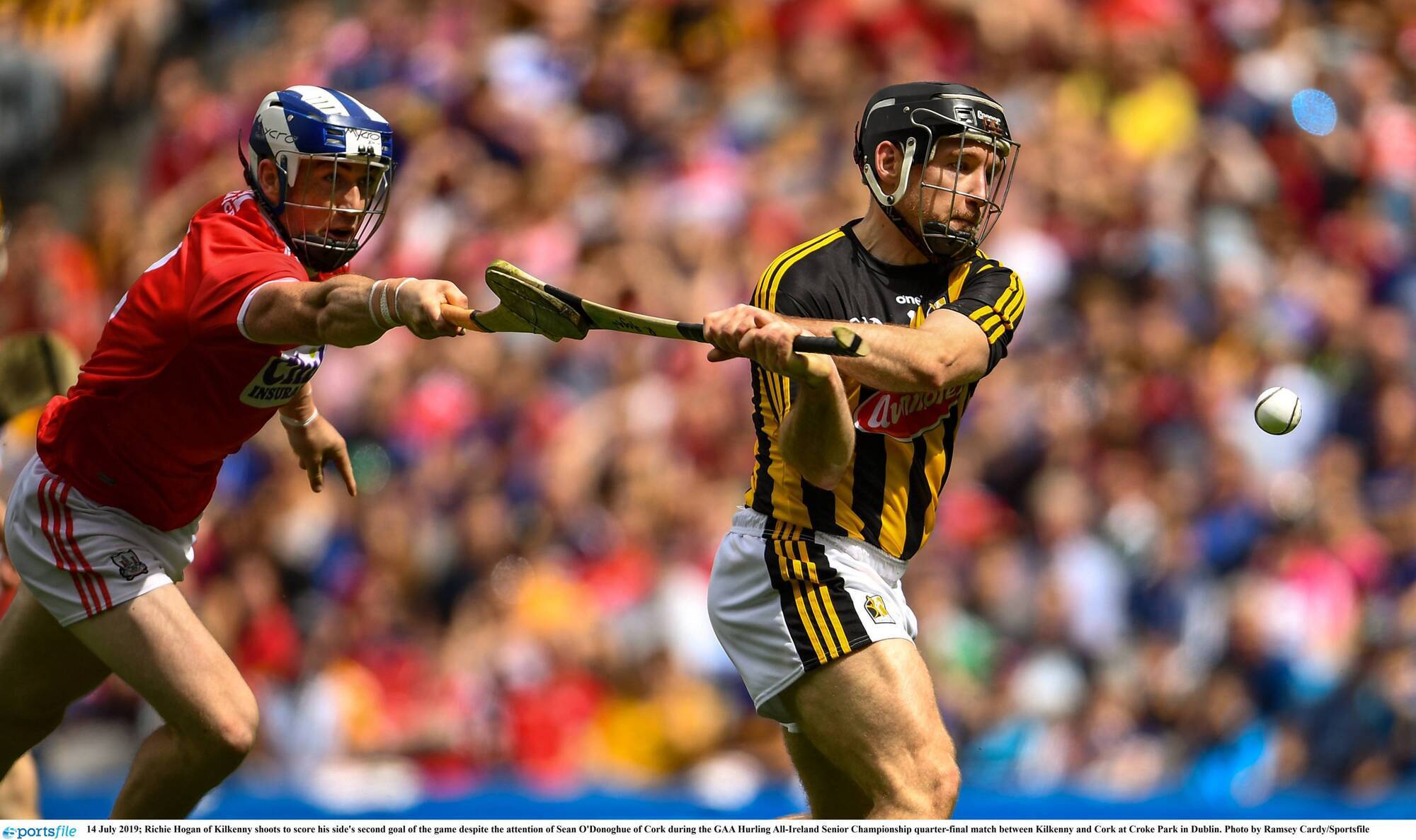
Sundayâs clash doesnât have the same epochal resonance on the face of it.
Apart from a couple of household names on either side, the age profile of both teams would suggest neither are likely to disappear from relevance on foot of a defeat, while the representatives of Genoa and Naples â sorry, Waterford and Limerick â will both have an eye on hogging the next decade or so themselves.
In that regard, the auguries for the near future are promising, particularly when we consider the fruits of those city-state struggles in Italy long ago.
The Renaissance scholar Harry Lime once noted that in a single 30-year period, Italy mad endured warfare, terror, murder and bloodshed â but then it has also produced the likes of Michelangelo, Leonardo da Vinci, and the Renaissance.
Weâll take TJ Reid and Patrick Horgan in their stead, but a renaissance would be welcomed by all.
CONNECT WITH US TODAY
Be the first to know the latest news and updates