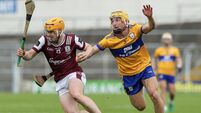
In a way they’re his peers, his equal. In fact at some stage or another, he’d have been the one looking up in awe at them.
Tony Griffin, who’d have lined out alongside him his first time playing senior hurling, knows what it’s like to come from a small, non-traditional, club like Ballyea and still win an All-Star.
Gary Brennan, who hails from the same neck of the woods and has won county championships with him, is possibly Clare’s greatest ever footballer.
Jamesie O’Connor, who like Brennan, taught Kelly in St Flannan’s, was long regarded as Clare’s greatest hurling forward. Was.
Now they’re looking on — up — in awe of him. Though they’ve always known him, they’ve known nothing like him.
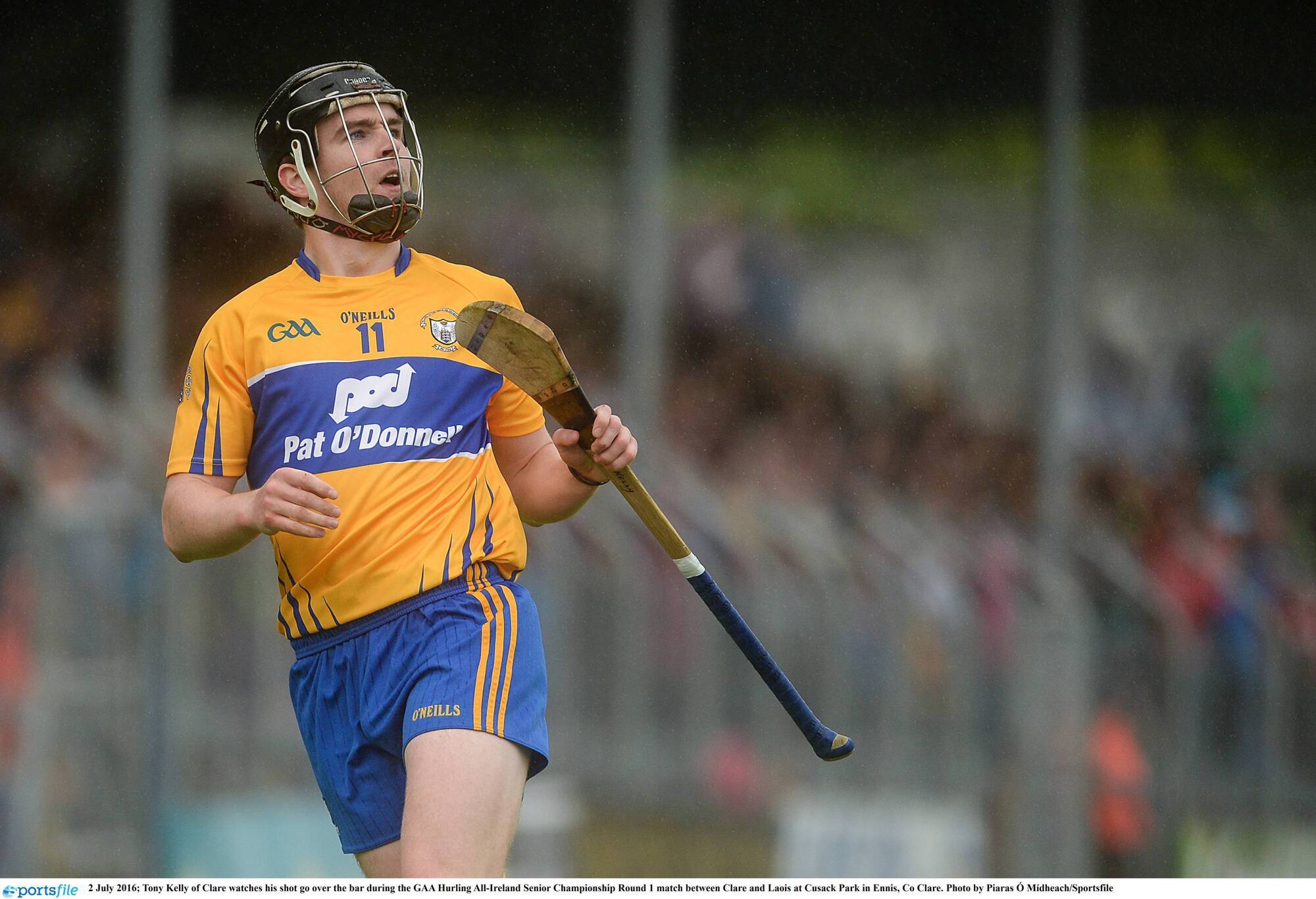
“I think there’s no player Clare has ever had that was as good as Tony is now,” claims Griffin. “I’m not saying that if Jamesie or Jimmy Smyth were still playing now and had the conditioning that Tony has been exposed to, they wouldn’t be as good but I just think he’s on another level now in terms of the pantheon of great Clare forwards. I don’t think it’s even an argument. Just look at the scores he’s putting up.”
So how has Tony Kelly become Tony Kelly? Well, as good as anyone to explain is the man himself and his father and mentor Donal (courtesy of some leftover quotes from an interview they gave me for a piece on Ballyea’s breakthrough county and provincial success in 2016) as well as three of the few people in his orbit who’d be able to recognise how the game he plays is one they’re both very familiar and unfamiliar with.
FIELD RAT
GARY BRENNAN: The first time I’d have come across Tony was when our two fathers were managing and training a Clondegad (football) team back around 2000. We’d tag along with them and what I remember is Tony would always have the hurley. I’d be kicking a ball around but Tony would never be without a hurley. Even if he joined in with us and kicked a ball for a bit, he’d be back to the hurling within five minutes. He was never without a hurley, he was always practising with it.
DONAL KELLY: We used to live in Clondegad (the football-dominated side of Ballyea’s catchment area) up until Tony was seven or eight. We had no back lawn but beside us was a field nearly the size of a hurling pitch. It was cut for hay in the summer so we got a goalpost put up there. Johnny Hayes, my aunt’s husband, was a great GAA man (former Ballyea minor president and refereed almost 50 ladies All-Ireland finals) and would take him out there every day.
TONY KELLY: When they (his parents) would be at work, (Auntie) Christina would mind me and before Johnny would go to work himself he’d bring us out hurling the whole time. This was before I was even two.
Growing up I suppose the only reason anyone outside of Clare would have ever heard of Ballyea was Tony Griffin. I was 11 when he won an All-Star. So when he played for Clare it was the aspiration for everyone else. “He’s playing for Clare, I’d love to play for Clare.”
If you were at the field and the seniors were training, you were only going to see him. He’d be the lad you were trying to impress.
TONY GRIFFIN: I’d have always known and heard of Tony but sure you’d be so absorbed in your own career you wouldn’t pay particular notice. You might have seen him and a gang of them pucking around before our training and think ‘Yeah, that fella’s good’ but he didn’t stand out.
There was a gang of them — Paul Flanagan, Jack Browne, (Niall) Deasy, Gudgie (Gearóid O’Connor) — and you’d hear a lot of talk about this great team we had coming up along.
TK: We were always hanging out together. We used to spend hours down at the (Ballyea club) field. In the summer you’d cycle up to the field at 10 (in the morning) and you wouldn’t come home until half-five. You wouldn’t eat. There was a tap behind the dressing room — how good or bad it (the water) was for you, I don’t know — but it was enough to keep us going.
DK: Yourself (Tony) and Jack Browne used to go for hours, left and right, left and right.
TK: I’m predominantly left-sided and (as a kid) I was always (striking off my) left, left, and left. But then I started going: ‘What would it be like to puck it off this (right) side and try and get better?’
When we were playing U12 against the Bridge (Sixmilebridge) the standard was ridiculously high. I remember Jamie Shanahan could hit the ball 70 yards, left and right, Séadna Morey and Chloe Morey the same. That’s why you were at the field. You were training to beat them. All the way up they made us better.
TG (a former sports science graduate): Athletically Tony is on a completely different level to most hurlers. I remember having the privilege of once in my lifetime going for a run with Sonia O’Sullivan in Victoria and being in awe of how her heels barely touched the ground, creating the least amount of impact on her body. Tony is the same. If you see him up close, his heel barely strikes the ground, he just glides. He can cover ground without applying a lot of weight on his body.
TK: Coming up along in Ballyea, Fergie O’Loughlin would put a huge emphasis on our basic fundamental movements. Skipping, jumping, running, stopping. Though they seem very simple, they’re very hard to develop at 20, 21; you’re trying to catch up.
Most other places, they might just throw in a ball and have a match or you’d have lads running around doing laps. When I’m coaching myself now, I like to do a nice bit on footwork. Any bit of training I do it’s all movement and hurling-based.
THE ACADEMY
JAMESIE O’CONNOR: Tony was a good student but we always had great craic in class.
TK: Going to Flannan’s, I was there to hurl first and get an education second. That was my main focus at 12: I was there to hurl. Every day from first year to third year you’d be in with a hurley. There was no point in going in without the hurley. The hurley would be more important than the bag. It was like an extension of your body at that age.
I don’t do half the hurling now I did then. By the time I’d get into school there could be 150 lads in the alley. If you got a game, it was first to three and winner stays on, loser off, next man up. Sometimes it could be up to one. So you had to be ready, you might only get one crack. That’s how competitive it was.
SENIOR HURLING
TG: I only got to play a couple of years with Tony but I remember even in his first year thinking, ‘Oh my God, this fella is on a different level to everyone else.’ I was able to pass him the ball and move into a spot and he’d know where I was going and next thing he was putting it right into my path.
It was a brilliant feeling because it was one of the few times, at club level anyway, where I felt someone was thinking as quickly as myself and we were on the same wavelength.
GB: He’s a very easy player to play with. We just have this understanding without having to say too much on the field. I know if I’m getting the ball he’ll be making a run off the shoulder. He’s a great reader of the game, the most intelligent player I’ve seen on a hurling field anyway.
You often look at a match and wonder how has Tony ended up with that much space but it’s a combination of his movement and his anticipation. I remember a club championship game last year we had a puckout and I just looked at Tony and as the ball was coming down in the air Tony just said: ‘Here’ and all I did was tap it down and before I even looked down he was gone with it.
TG: I’d love to have played with him for longer. It would have been amazing to play with him at the same time as say 2005, 2006, when I was in good shape and my game was as well. But just those flashes we had, they were magical, telepathic. It was like ‘WE both know what we’re trying to do here.’
TK: I’d say winning the county (in 2016) actually meant a lot more to the older generation than it did to us.
We grew up only playing A hurling, seeing Tony Griffin winning an All-Star, only seeing Ballyea playing senior hurling. Now, they were often in a relegation battle or play-off, but they were always senior.
TG: One of the things I’ve always admired and appreciated about Tony is how he’s been very generous in his acknowledgment of those who came before him.
He understands not so much that he stands on the shoulder of giants but that others kept the flag flying when it wasn’t easy. It’s even just in the look or clasping hands he’ll give you after a big game, you both knowing that when we were fighting at junior and intermediate and senior B level, it was for the likes of Tony, just I didn’t know it at the time.
NEXT LEVEL – BUT SAME LOVE OF THE GAME
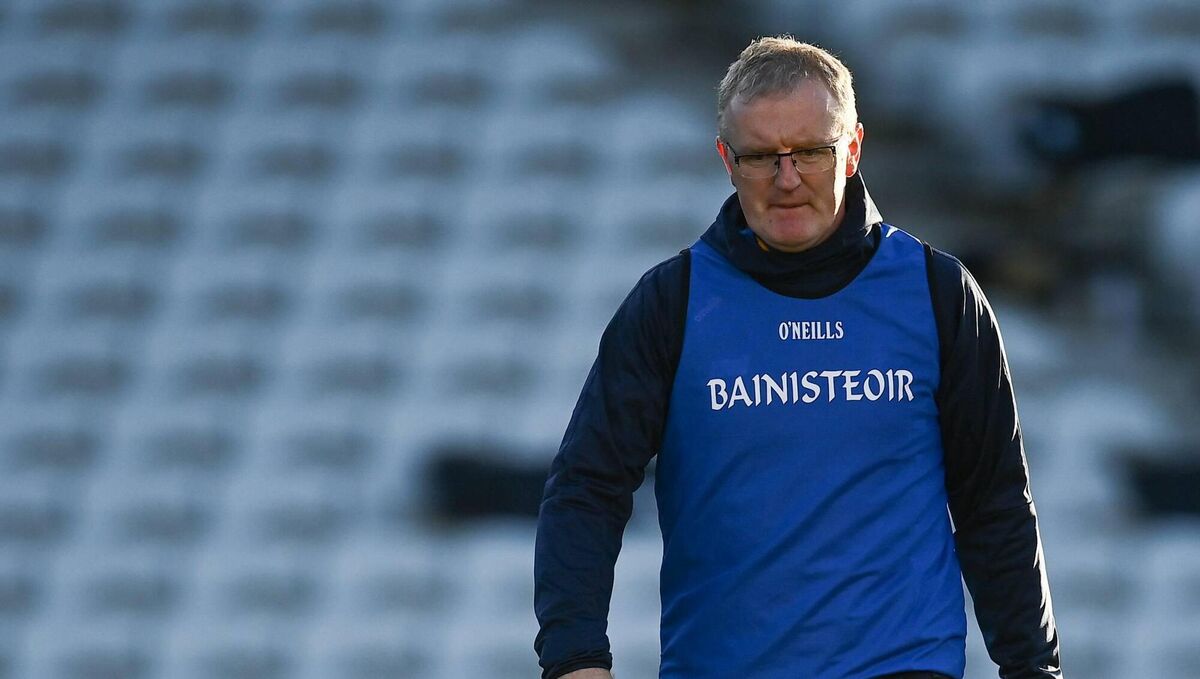
JOC: To me last year Tony Kelly looked like a guy with the bit between his teeth: the physical shape he’d gotten himself into, the sharpness of his hurling.
Obviously, the bar was set very high very early for him with winning all he did in 2013. But the next few years were very tough for that generation; they were expected to be constantly reaching All-Ireland semi-finals and clearly it didn’t happen. And while you’d have flashes of brilliance from Tony where he could get maybe three points in five minutes, he might then have had little impact on the game for the next half hour. People were questioning him, and maybe he heard that.
Maybe he even heard it from (Brian) Lohan. Lohan would know what buttons to push. The two of them have a very good, honest relationship from Fitzgibbon and no one worked harder or demanded more as a player than Lohan. I remember a week out from the 1997 All-Ireland final we trained in the Gaelic Grounds and I was in the form of my life. I had been man of the match in the semi-final against Kilkenny and in this in-house game I had scored another four or five points.
But then in one of the last passages of play I put a shot wide and Lohan ran about 30 yards to feck me out of it, that I had been complacent. At the time I brushed him off — “Ah, don’t be annoying me” — but I remember on the drive home thinking: “You know what, he’s right, I did slacken off.”
And the following week that was still in the back of my mind when I had the same shot (to score the winning point). So he wouldn’t be afraid or slow to challenge Tony to get even better, work even harder.
GB: Even when the club (senior team) aren’t training, you’d constantly see Tony down on the field. The past couple of years he’s been training the minors and U16s and now four of them are playing senior with us.
Last week we were training the U15s and Tony appeared in the middle of our session and trotted down to the back field with five or six balls.
Now, he was maybe there for only 20 minutes, shooting, but it’d be 20 minutes another fella wouldn’t be hitting. Even when we won the county final in 2016, he was up in the field striking the ball the next day. He just loves it up there.


Cancel anytime
CONNECT WITH US TODAY



Be the first to know the latest news and updates