GAA community remembers fallen heroes on Garda Memorial Day: ‘Even 40 years on, it is still so fresh’
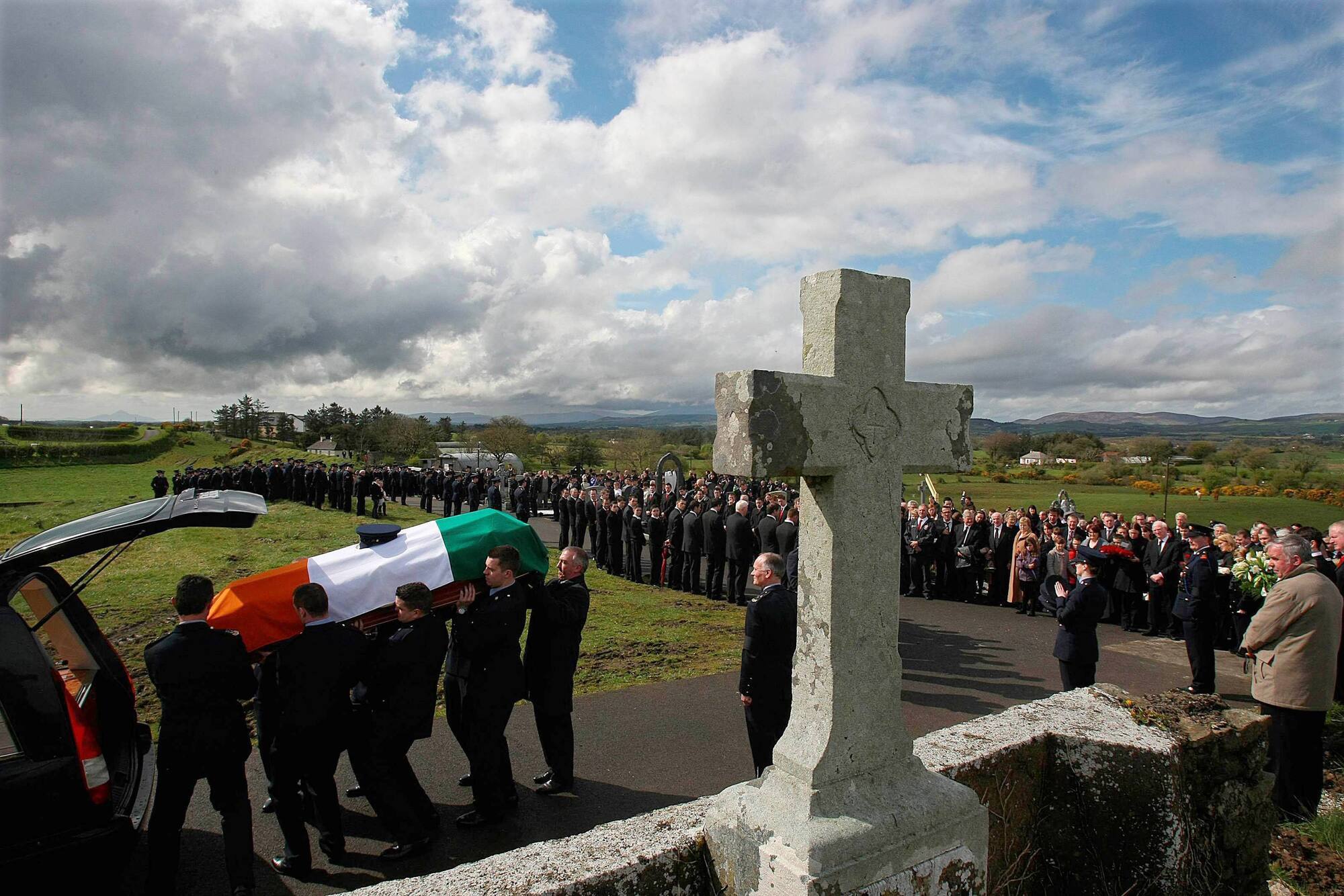
Garda Robert McCallion was honoured with a State funeral in 2009, while based in Letterkenny, Co Donegal. ‘He relished a challenge and he rose to that challenge every time. His actions on the field and on the training would inspire other players to set their own bar higher up all the time,’ recalls Billy McNicholas.
When John O’Mahony’s phone started ringing earlier this week, it was left in the car. He had taken a former comrade in football, the former RTÉ journalist Tommy Gorman, out to Shannon’s Cross to have a look at the memorial built for O’Mahony’s old Ballaghaderreen and Mayo teammate, John Morley.
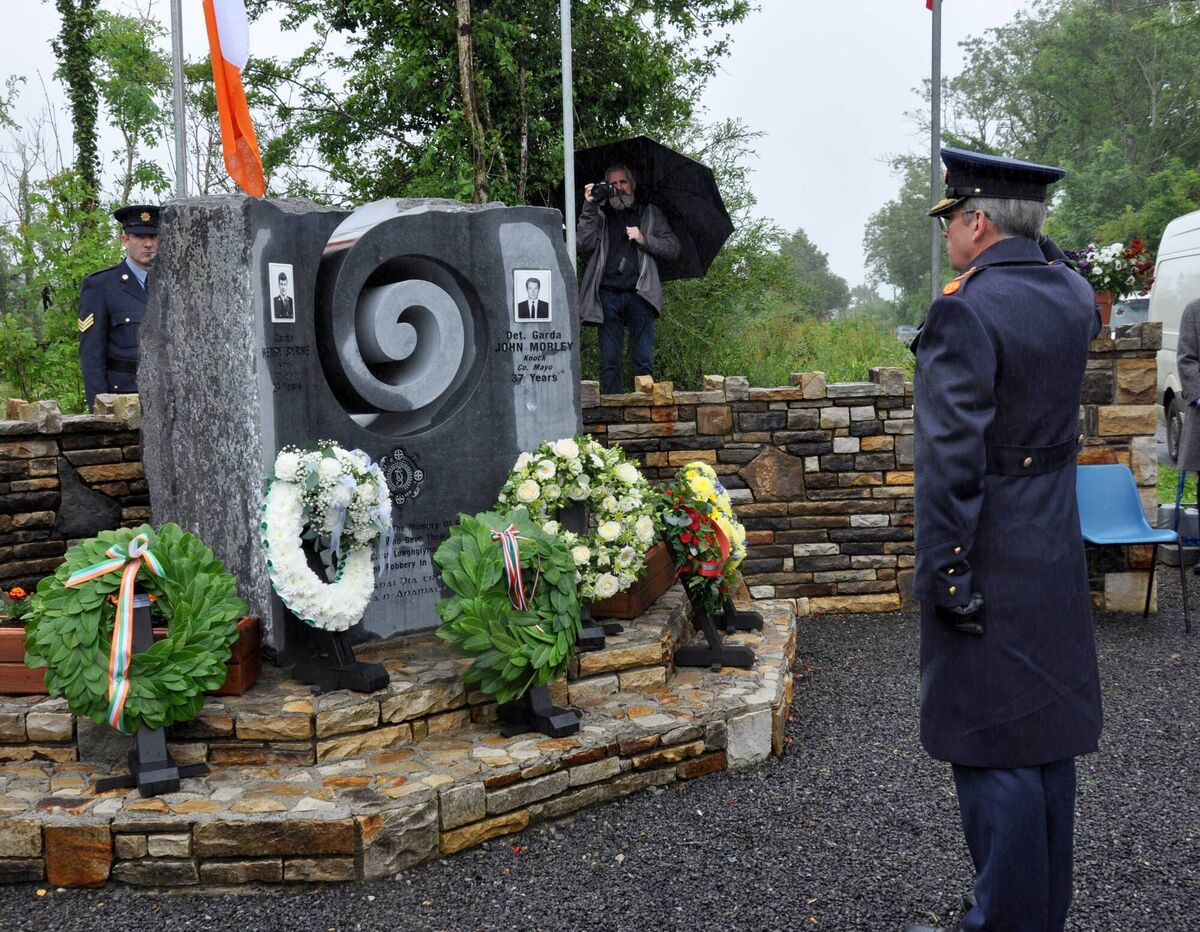
Garda Morley had been in the process of apprehending a group of bank raiders in that very spot on July 7, 1980, when they fired on him, killing him instantly.
O’Mahony still remembers him in every way. The community was left with a gaping hole.
Today is the Garda Memorial Day, but men like Morley, and other gardaí such as Adrian Donohoe and Robbie McCallion who died in the course of fulfilling their duties are kept alive daily by the remembrances of those GAA communities they enriched.
One of the thankless communitarian roles O’Mahony did at the time was to write the local notes for the newspaper. When news of the murder broke, he instantly contacted the paper and they were first on the scene ahead of the national, and international media.
“The raiders had gone the back roads out of the town and crashed into the squad car at Shannon’s Cross,” O’Mahony recalls.
“That’s where the shooting took place. John Morley ran out. He showed his bravery in his work that he had on the field. He called on them to drop their guns. And instead of doing that, they returned fire on him. He was shot, and bled to death.
The two had been bonded by football. O’Mahony came into a Ballaghaderreen team that won the Junior, Intermediate and Senior county titles in a matter of a few years with Morley as the man. Eventually, they would play in the 1973 Connacht final together losing to Galway, O’Mahony at left corner-back, Morley in midfield.
All those glory days came to an end, but they kept plugging away together in football. The very morning of Morley’s death, O’Mahony had been on the phone to him lining up a challenge match between Ballaghaderreen and Castlerea for the coming fortnight.
“It was the most amazing feeling around that evening when it happened. The whole world’s eyes on the town, the army closing it down. Unreal, to be honest with you,” he laments.
“He was very much a community person. He was chairman of the Community Games in the town as well. He was a big figure.
“It was very much when guards were part of the community. Obviously (there was) great respect for them but because they took part in the community where they lived and worked, I am sure that was a great help for them. They were living and working among the community. In recent times, that has changed where you might be a guard in the town, but you live somewhere else.”
Last year there was a commemoration, attended by prominent politicians and then Justice Minister Charlie Flanagan.
Forty years had passed. And yet…
“It was so poignant because it was so fresh. Even 40 years on, my generation, it is still fresh,” O’Mahony continues.
“What is amazing to see now, when you see the monument in his honour and that he was just 37 years of age at the time. Cut down in the prime of his life.
“The Connacht final was on the following Sunday. Fr Leo Morohan was Chairman of Mayo County Board at the time and said something over the Public Address at the final. And it was all that rivalry with Mayo and Roscommon but you could hear a pin drop, really. 35, 36,000 people in Dr Hyde Park.”
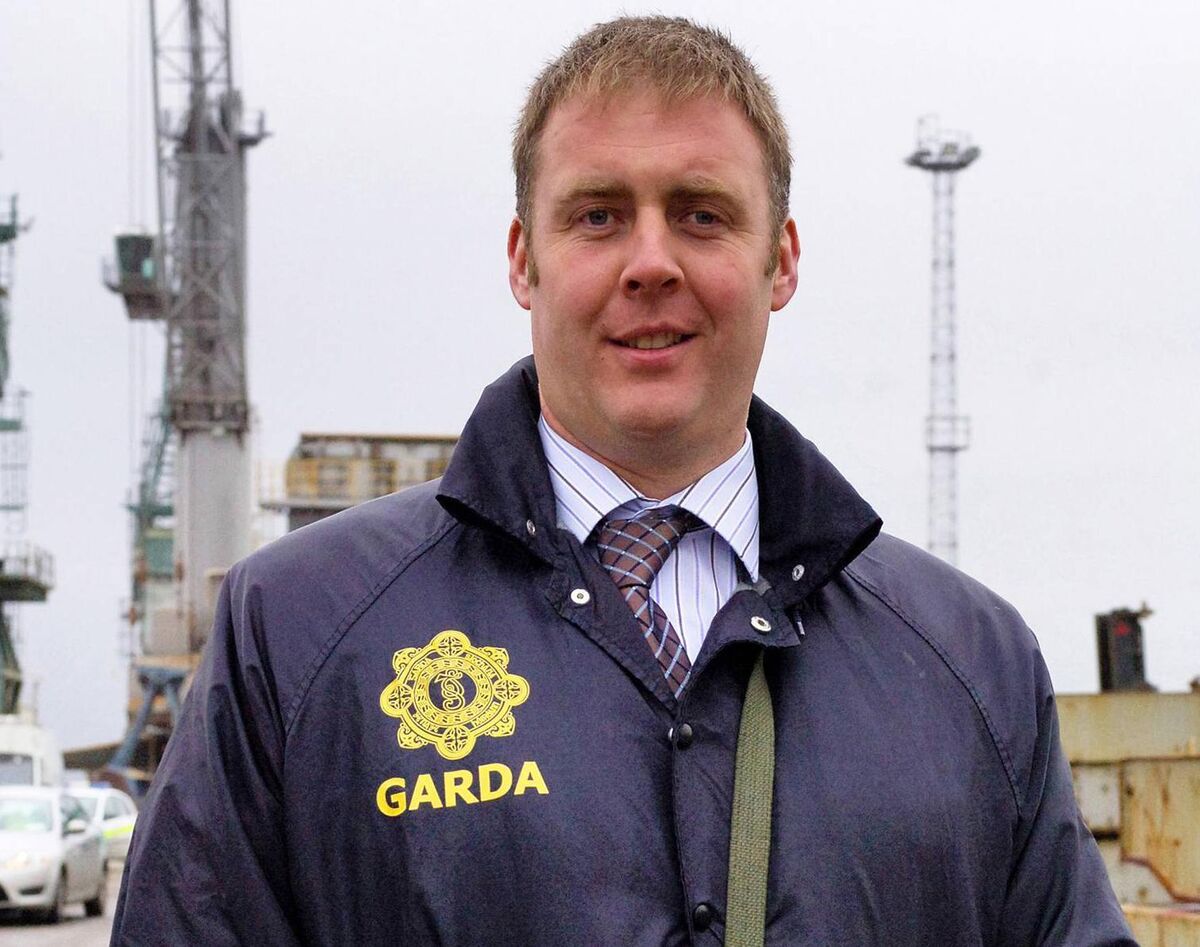
In January 2013, another Garda was killed in the line of duty. This was also a man who lived within the people he policed.
Adrian Donohoe had been a strapping man-mountain from Crosserlough, Cavan who had played under-21 for his county. When he moved to the Cooley Penisula in Louth, he put his head and shoulders into St Patrick’s of Lordship, taking punishment in midfield before becoming a much-loved coach heading up their youth development.
The long-serving Louth player Paddy Keenan identifies him as one of his greatest influences as he was making his way into adulthood and senior football.
“You obviously hear a few stories and nice things when people die prematurely, but he was genuinely the nicest guy you could ever meet. He was a big genuine guy, I know that has been said by numerous people about him, but it is the truth,” says Keenan.
“He couldn’t have been any more welcoming for us young lads coming into the team. As a club we won the minor in 2002 and then we all came into the senior team, four or five of us starting the senior final the following year in 2003 when we won it for the first time with the club.
“He was very open particularly to me and I would have learned a lot from his down through the years. He was very well got around the club. He wasn’t from the area but he came in and straight away it felt like he was one of our own.”
When his playing days ended, he went straight into youth coaching.
“You would have seen him around the back pitch, the second pitch we have. You couldn’t have missed him, he was a huge man and you had kids that were 5, 6, running around his feet all looking up to them.
“It was the kindness he had in his bones that the kids just absolutely loved him.”
On May 6, 2012, Mayo and Donegal teams convened to Swinford to play a challenge match that would be recreated as the All-Ireland final just over four months later.
The Flying Doctor, the late Dr Padraig Carney who played on the Mayo team in 1951 to win the All-Ireland was flying in from California to cut the ribbon. He had fulfilled the same role in 1979.
Only this time, it was to rename their premises the Robert McCallion Memorial Park.
McCallion had been a Garda stationed in Letterkenny when he answered a call out in the town. He was hit by a speeding car and a fortnight later, died from his injuries.
Billy McNicholas, the current Games Manager for Mayo GAA was best friends with his brother John, also a guard and a former Mayo player. McNicholas coached the young Robbie right through the Swinford system and even lined out with him on rare occasion at senior level.
Despite the four-hour round trip from Letterkenny, there was no question he was ever going to transfer clubs.
“Robbie was very dedicated to his craft. Loved the GAA, really, really loved it. He was steeped in it. And like his brother in his dedication. Robert was based in Letterkenny and there was never a chance of him playing for anybody else but Swinford. He is a huge loss to his family, to his community and in particular to our GAA club.”
The high point of his playing career was a task he relished for the 1999 Intermediate final. They were up against Ballintubber, and McCallion was given the role of looking after the silky James Horan for the day.
“And he did a brilliant job on Horan,” recalls McNicholas. “That’s the kind of guy he was. He relished a challenge and he rose to that challenge every time. His actions on the field and on the training would inspire other players to set their own bar higher up all the time.”
A few years ago, McNicholas was a selector with the Swinford senior team. They felt they needed to honour Robbie’s memory, but also show the younger players something of dedication and commitment to the cause. They travelled up en masse to Letterkenny and went to visit the scene of his death. They talked a little about him, his devotion to Swinford, and laid a wreath.
“It was a very poignant moment for our younger players, just to educate them as well. It was a good moment, connecting the not-so-distant past with the future.”
On the day, McNicholas went to the hotel reception they were staying in to arrange a taxi bus to the scene for the travelling party.
When the taxis arrived, they refused to take any money for the journey.
McCallion might not have been completely immersed in Letterkenny life, but he still touched enough to be granted a deep respect by people in the town.


CONNECT WITH US TODAY



Be the first to know the latest news and updates