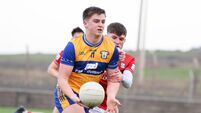
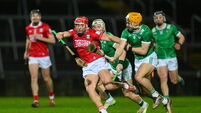
Nickey Brennan inter-county career yielded All-Ireland senior hurling medals with Kilkenny, so it’s no surprise to hear the game was central to his view of the hardest thing in Irish sport...
“I’ve seen previous instalments in this series and they’ve been personal to the people involved, and my hardest thing in Irish sport is personal as well — but it’s also wider.
“Something that’s been seen as very hard for years is spreading the game of hurling to more areas and making it more competitive and so on. The reality is that that is not going to happen.”
Brennan became president of the GAA in 2006: he’s well placed to comment on the difficulties involved.
“The real challenge is how to get more teams to the top table in hurling — tier one, if you want to describe it that way — and more people have tried to do that, the investment has been very significant ...
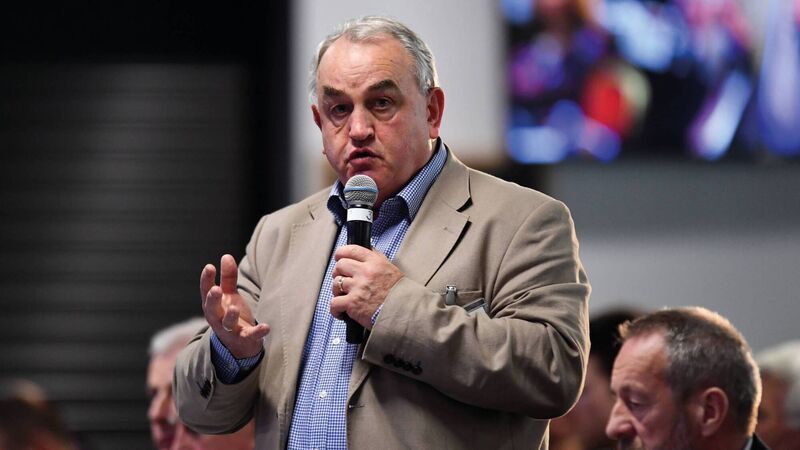
“That is one of the biggest tasks, and I’m not sure it’s doable, to be honest, despite what people are saying. I’m saying that from a position where I wish it were different, but I’ve been through the mill on this so I know where I’m coming from.”
Brennan acknowledges “tradition is definitely an issue” when it comes to spreading the game: “Many years ago (in 1994) I made a statement at a GAA Congress to the effect that hurling was dying.
“That was a time when I was on a GAA hurling committee — one of the first I was on — and Tommy Barrett was the chairman of the group.
“The Congress was in Cavan and I remember saying to Tommy, ‘there’s not a lot going on, I’m going to let fly and we’ll see what happens’. It got a good few headlines and meant some investment was put into hurling. Those working in the area got some help.”
Not all sectors of the GAA were helpful, mind.
“Let’s be honest, at that time there was also a situation where so-called football counties absolutely put their foot down and made sure that hurling would not develop there. Martin Fogarty as national hurling coordinator has done a lot of work on growing the game in areas where it was more or less coming from zero.
But all we ever wanted was a situation where youngsters who wanted to play hurling didn’t have obstacles put in their way.
“The notion that Cavan or Longford would win the Liam MacCarthy is for the birds. But if Cavan or Longford can compete at the level they’re comfortable at and their players can represent their clubs and counties, with the possibility of a game in Croke Park . . . that in itself is something to be cherished.
“Look at sport in England: how many kids there have the opportunity to play a competitive game in Wembley?
“More and more GAA players have the opportunity to play in Croke Park, which is a career highlight for them, and we shouldn’t downplay that.”
Is it also important to keep hurling strong where it’s already strong?
“Absolutely. And the GAA has invested significantly in hurling — not in 2020, for obvious reasons, but up to that the GAA was investing €1m a year in hurling: in hurling projects, hurling personnel, and in hurling equipment.
“So the issue of hurling was never about money. Up to recently €1m was given to four Leinster counties and Antrim to try to bridge the gap between tiers one and two as well, particularly when it came to preparing senior inter-county teams.
“That was important because a lot of the panellists in those counties would be in college with panellists from the top counties and would know about the investment in those top counties’ preparation.
So that investment was a sign the GAA was trying to help those tier two counties try to bridge the gap when it came to preparation.
Hurling has done “a fair bit for itself” over the years, says Brennan, particularly with the tiered competitions.
“Some of that started in Leinster in Sean Kelly’s time (as president) and I added a tier later, the Lory Meagher.
“The challenge has always been to get more teams to the top table — which I don’t think will happen —but you will get a number of teams toggling between tiers one and two. Occasionally they’ll hold their own without being consistent.
“I think there’s an acceptance within the hurling fraternity that the levels are working pretty well — the Leitrim hurlers, for example, would probably have played in Croke Park more often than the Leitrim footballers in the last decade or so.”

Continue reading for €5
Unlock unlimited access and exclusive benefits
Already a subscriber? Sign in
Cancel anytime
CONNECT WITH US TODAY
Be the first to know the latest news and updates