Dry balls and stolen boots: Michael ‘Babs’ Keating relives finest hour in Tipperary jersey
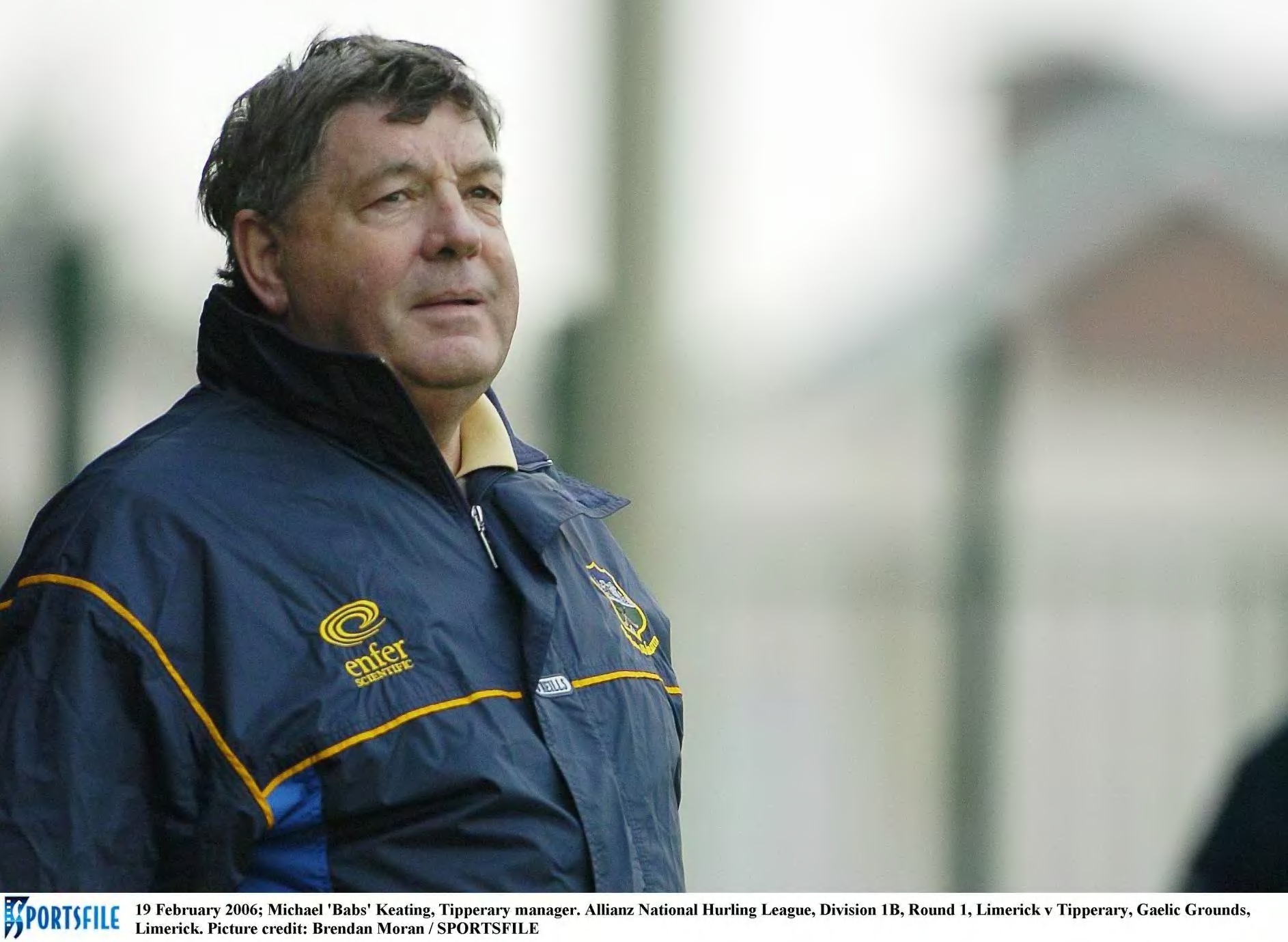
Michael ‘Babs’ Keating in 2006 during his second stint as Tipperary manager. Keating won two All-Irelands as a player and later as manager led the Premier to two titles. Picture: Brendan Moran/Sportsfile
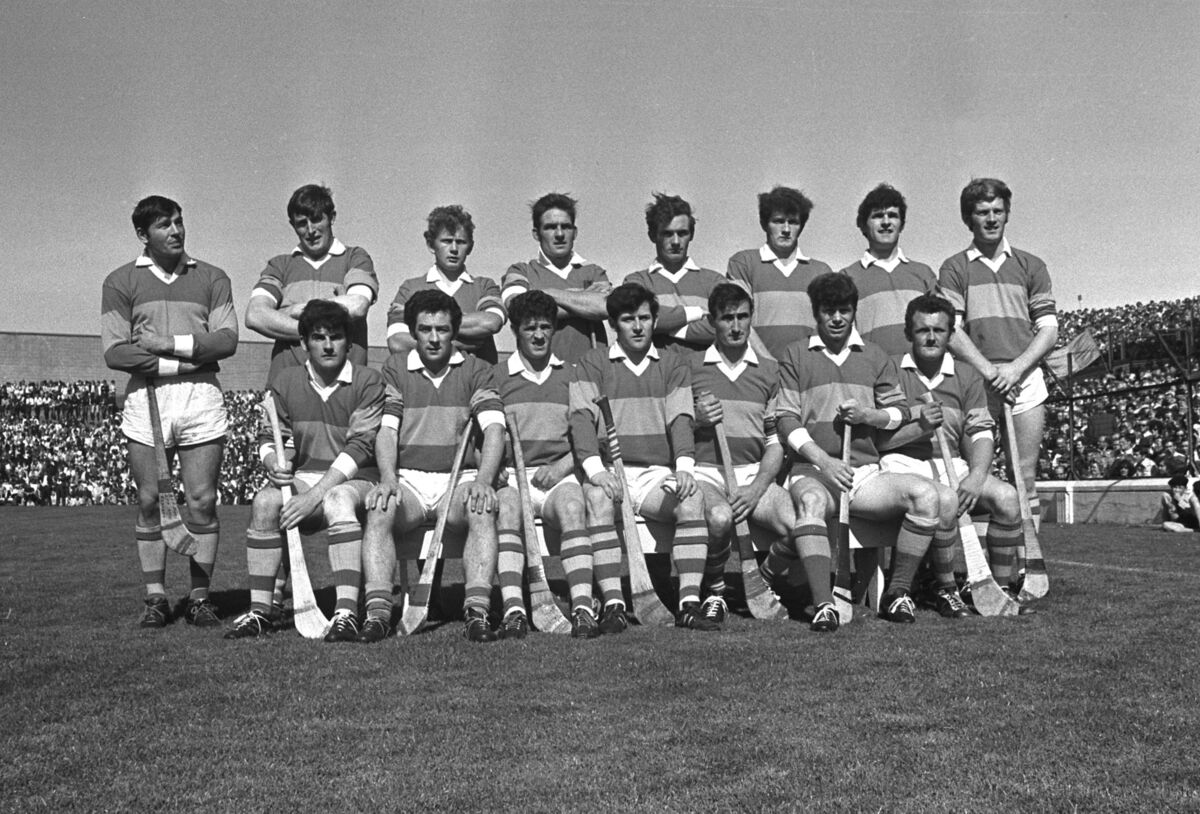
Perhaps because the All-Ireland final was being televised in colour for the first time, the 1971 meeting of Tipperary and Kilkenny saw the smallest crowd in Croke Park on the first Sunday in September for the first time since 1958.
The attendance totalled 61,393 for the first 80-minute final, and those sitting at home did not get to fully savour a game for the ages.
***
COMING from where I came from, an area with no hurling tradition, getting to be the first from the parish to wear the blue and gold in an inter-county match, and then going on to march behind the Artane Boys Band on All-Ireland final day and bring that medal to the parish… that was life changing.
My first All-Ireland win in 1964 was incredible. But I think I got more satisfaction from the 1971 All-Ireland final against Kilkenny than any other win because Mick Roche, Len Gaynor, John O’Donoghue, and I were the only four left from the early 60s. Being on the 1964 team I didn’t carry any responsibility.
But being 27 years old on the 1971 team, the four of us felt that extra burden as the county had lost All-Ireland finals in 1967 and ’68. There were no minors breaking through in the 60s so there was a general feeling that if we didn’t win in ’71, it was the end of the road for the four of us.
That All-Ireland final day at Croke Park in ’71 was the destination for a journey that began when I was very young.
My father was an out-and-out Tipperary fanatic. Hurling was always a topic of conversation throughout my juvenile years and there was no Sunday that we weren’t at a match. We came from a middle-sized farm and were all educated reasonably well. My mother and father both worked hard, but there were no luxuries.
I was particularly lucky that hurling coaching had started in the schools and I had a teacher from Kerry who sparked the match in the school. From there, hurling and football became part of the parish and we grew up with it. I dreamed of playing with Tipperary and was lucky as I had a homegrown hero living near the banks of the Suir.
When I think back to my childhood, I looked up to Theo English.
Cycling to the High School in Clonmel if I met him on the road, or anywhere, my day was made. I often went out of my way to meet him. He’d encourage me to be a hurler and make hurling my number one sport. Theo’s influence was of huge importance.
He set the tune for the rest of South Tipperary. We were basically the poor hurling relation, both south and west, but the west had the tradition of having more inter-county hurlers than the south to some degree, particularly in that era with the Cashel fellas and Willie O’Donnell from Golden.
Theo was the only one from South Tipperary that hurled with the county at that time.
Making the Tipp senior hurling team changed my life. To be mixing with players I admired so much and sharing the same dressing room as John Doyle, Tony Wall, Nealon, Devaney, and the likes, was just a great place to be.
John Doyle was an amazing leader.
Everything about his approach to the game was about making yourself be the right person for Tipperary hurling and doing whatever you had to do to be the best you could be. Doyle ploughed fields in his bare feet to build up his ankles and legs. Mick Maher was of a similar philosophy but the likes of Tony Wall was unique and saw the world differently.
The chemistry for success was there. John O’Donoghue, Mick Roche, and myself started the same day and joined a group of leaders. To top it off, we got to train in Semple Stadium which was just marvellous!
The first big county game I played was a league final and there was a trip to New York at stake. The winning team would get to travel with an allowance which was a huge reward for the likes of Mick Roche and myself. In those days flying anywhere was much less frequent than now.
There were so many people from Tipperary that had to leave Ireland at the time of Independence and the Civil War that never got to come back. We brought Ireland to them Stateside and loved singing songs with them as well as living it up.
Donie Nealon, Liam Devaney, Roche, Theo, and myself all got on great together so we ensured we played our part in pubs and house parties that were often organised for us. That was the scene with Tipp that I entered into. There was glamour and privilege both here and abroad.
Being a county hurler put you on a pedestal and it would carry you around the world.
It was a special year in 1971 for me as I missed out on a lot of the ’70 campaign due to a football injury. I spent the winter getting myself fit and ready for the ’71 championship.
I was living in Limerick back then, near Thomond Park, and I had a colleague at work who was a member of Young Munster rugby club and I spent the winter training with the rugby team! When the hurling got going I was ready to came back for a league semi-final against Cork, where I scored about 1-13 on Pat McDonnell who was the previous year’s Hurler of the Year.
Limerick beat us in the league final, but I was up and running.
Time rolled on until we met Limerick again in the Munster final. They threw everything at us that day as Limerick hadn’t won a Munster final since the peak of Mick Mackey in the 1940s. It was a tense game.
A key moment arrived when we were eight down, and got a ‘21’.
There was no such thing as a penalty back then so I took all 21-yard frees. The hurling balls in those days were much heavier than now and were hand-made.
Donie Nealon brought in a dry ball for the free, which added to my chances against the packed defence.
I hit the net.
I hit 3-5 that day in Killarney and it’s often recalled for that famous story of the ‘dry ball’.
Some even nicknamed me ‘dry balls’!
I’d say one of the best games I ever had was against Galway in the All-Ireland semi-final. I got scores that day that I’ll always remember. For one point I was at the corner flag and played it over the bar.
The final against Kilkenny didn’t stand out from a performance point of view, as much as Killarney or the semi-final against Galway because I had an exceptional day against Galway and we needed it. Winning the final stood out but, overall, it was the year that stands out.
The 1971 final against Kilkenny was a cautious affair.
It was an 80-minute final and a typical age-old Tipp and Kilkenny type of test with Frank Murphy from Cork in as the referee. Throughout the 60s there was bitterness between the teams.
Very few were on speaking terms.
I couldn’t find the words to describe the bitterness and, thankfully, a lot of it is water under the bridge now decades later. I think Eddie Keher of Kilkenny best described it when he told the story about the time both county teams went to New York. Both counties travelled on the same plane and stayed in the same hotel in Manhattan. We were staying on the 15th or 16 floor, one floor above the Kilkenny players.
They were waiting for the lift and the lift stopped on their floor.
There was four of us from Tipp already in it so the doors just opened and closed without acknowledgement, and they let the lift go.
They preferred to wait.
Or walk all those floors rather than join us in the lift!
Croke Park was no place for the faint-hearted on the day of the final. We hurled with the wind in the first half but there was no room there at all. I was on Fan Larkin, who was a ferocious marker; he had me in a vice-like grip but I played the ball every chance I got. I took the frees, moved the ball and made things happen for others.
They were hardy backs, the likes of Fan, as well as Jim Treacy, Pa Dillon, and Pat Henderson. They were as tough as it gets.
I took my boots off in that final but it’s never been explained properly why I took them off. In the lead in to the game I was at a conference in London for my employer Esso, and I went shopping and bought the most expensive pair of boots.
They were beautiful.
No one in Ireland had a pair like them at the time I’d say, because in Ireland you were restricted to buying a pair of Irish Blackthorn boots. After our last training session before the final I threw my gear bag, with the boots in it, inside the door of the local hotel.
That was the last I saw of the new boots.
So I went back to my old pair and took them to the shoemaker in Clonmel before the final to be fixed up. A nail came up through them shortly after half-time in the final. When a nail comes up through the boot in Croke Park you take the boot off.
Then you realise you have to take off the second one! It was a wet, misty second half and the socks were coming off over my toes, so then I had to take off the socks as well!
The commentator Micheal O’Hehir made a hero of me for taking them off, if that is the proper word. But I think now it was utter stupidity on my behalf!
It sounded great for those listening and after too, but I will tell you now, for someone taking the frees in maybe the most important game of their life, it was a stupid thing to do. When I became manager in the 1980s I made sure everyone in my squad had two pairs of boots each and it’s a big part of the reason the Tipperary Supporters Club was set up.
The satisfaction I felt winning that day was immense.
The 1971 team was a real team, and it will be until the very last whistle sounds for us all. There was no such thing as individualism in that squad. That would have been despised.
There was a golden rule… ‘If a fella is in a better position, give him that ball’.
The on-field positioning and movement in Tipp hurling for decades before and since was based on that mantra.
When it comes to great players you can’t compare backs, centrefield and forwards but I’ve no doubt that Mick Roche was the best player I ever saw. He won his first two All-Irelands at centrefield and he played centre and left half-forward for his club.
The rest of them one might mention as the greats — be it Keher, Doyle, Mackey, Shefflin, DJ Carey, or Christy Ring — were all confined to one position on the field.
Tony Wall was magnificent too. I didn’t see enough of our 1949 winning captain, Pat Stakelum, to compare to the others as he was before my time. Of all I did see though, Mick Roche had the ability to excel anywhere on the field; if you asked him to play in goal or full-back he could do so without a problem. Again though, you can’t compare. Roche was versatile, but didn’t play corner-forward… and Ring won eight All-Ireland finals.
Seeing my old friend Christy Ring play, all my generation will say that he was the best. He was Maradona and Messi rolled into one. And such confidence! I loved meeting him for lunch when I was playing and after; he would have you thinking about something new in the game for days afterwards.
It was the first year of the All Stars and Mick Roche, Tadhg O’Connor, Francis Loughnane, and I collected awards, and I was glad to get the Hurler of the Year award. It had been a big 10 years for Tipp hurling, from the glorious early 60s to the disappointments after.
We lost the 1967 final to Kilkenny.
We lost too after leading Wexford by eight points at half-time in the 1968 final. It felt like a puck around in a church field but they stormed back and we couldn’t withstand the pressure in the second half. We had a bad year in 1970 and the clock kept on ticking, so that’s why winning in ’71 was so sweet.
After that Tipp hit the rocks. Limerick beat us in 1973 in a close game when Richie Bennis got that controversial point in Thurles and they won it out after.
That game against Limerick should have been the end for me. I played in 1974, but I shouldn’t have.
Time beat me. I knew well it was over for me but I wouldn’t accept it. I played every game in hurling and football I could from my first minor All-Ireland in 1960 to that last match in ’74.
All any of us do is build on the tradition of Tipperary hurling, and there’s very few things that have the glamour and colour of a Tipperary team in full flight with the county behind it. Down all the days, to get to line out in the golden era of the 60s with players I admired so much was marvellous, but that All-Ireland win in 1971 brings a satisfaction that makes it stand apart from all the others.
TIPPERARY: P. O’Sullivan; L. King, J. Kelly, J. Gleeson; T. O’Connor, M. Roche, L. Gaynor; PJ Ryan (0-2), S. Hogan; F. Loughnane (0-4), N. O’Dwyer (1-0), D Ryan (1-1); J. Flanagan (1-2), R. Ryan (2-0), M. Keating (0-7).
Subs: J. Doyle for Hogan, P. Byrne (0-1) for Flanagan.
KILKENNY: O. Walsh; P. Larkin, P. Dillon, J. Treacy; W. Murphy, P. Henderson, M. Coogan; F. Cummins (0-2), P. Lawlor; M. Murphy (1-1), P. Delaney, E. Keher (2- 11); M. Brennan, K. Purcell (1-0), N. Byrne (1-0).
Subs: P. Moran for W. Murphy, P. Cullen for Brennan, T. Carroll for Larkin.
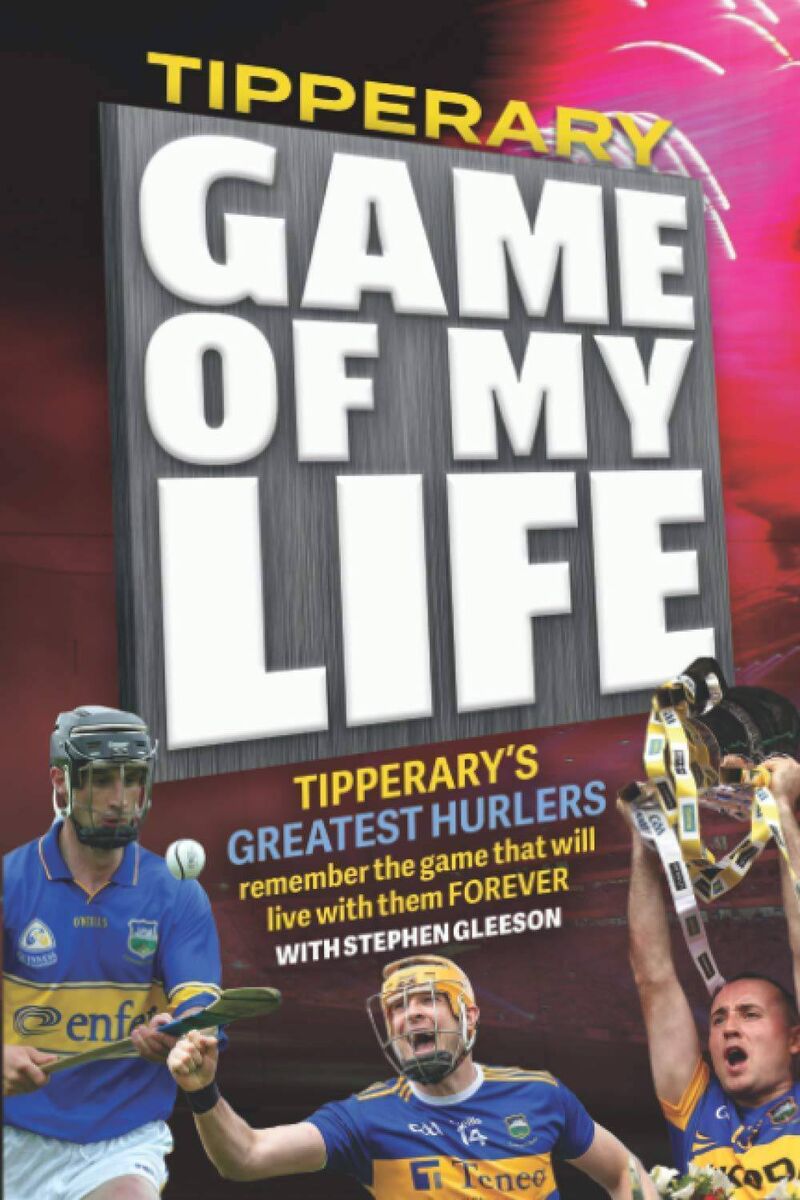
- Tipperary: Game of my Life is published by Hero Books

Looking for a thoughtful gift?
Irish Examiner Gift subscriptions are now available.
Already a subscriber? Sign in
CONNECT WITH US TODAY



Be the first to know the latest news and updates