Michael Gleeson won't give up on Fitzgerald Stadium homage to Kerry's sporting heritage
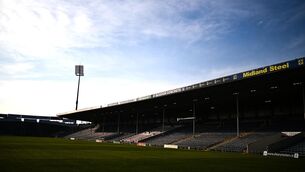
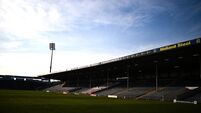
Nine years after receiving planning permission, and 17 since it was first mooted, a fresh drive is underway to construct a 1,350 sq metre Cultural and Sporting Centre at Killarney’s Fitzgerald Stadium.
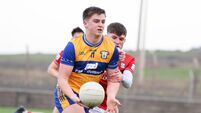
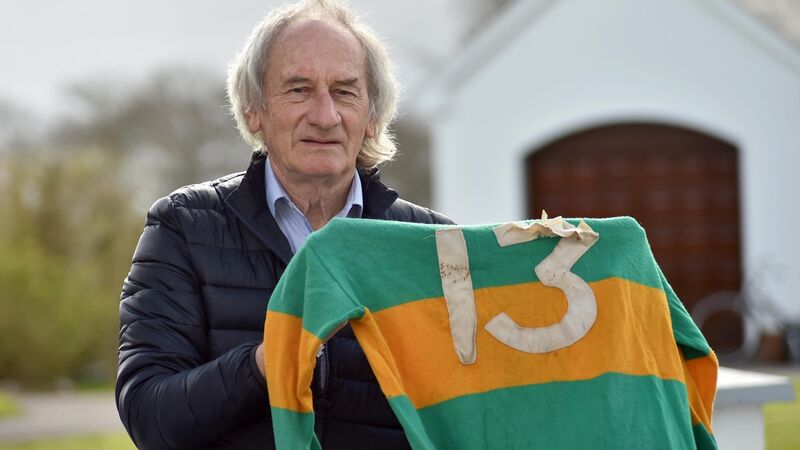
Michael Gleeson, a former Kerry captain and All-Ireland winning forward in 1969 and 1970, is the long-time lifeblood of the project which he notes isn’t a “museum” or an ode to Kerry football but rather a celebration of the area and its history.

His hope is that when completed, the two-storey complex — with 701 sq metres on the ground floor and 649 on the first floor, containing display areas, a merchandise shop, an auditorium, and a coffee dock — will both add to the matchday experience and entertain visitors at the tourist hotspot throughout the week.
Planning permission was first secured for the €4m project in 2012 but just as committee members began to dream of finally breaking ground, it ran into unlikely difficulties.
“We met with a representative of Fáilte Ireland in their offices in Amiens Street in Dublin in December of 2012 and he was very impressed with our presentation and promised to come down to see it in Killarney and to discuss things further in mid-January, 2013,” Gleeson told the
Relaying that same story to Killarney Municipal District Council members last month, Gleeson didn’t hide his frustration at being “left high and dry” by the public servant.
Now, nine years on, the hope is that fresh and more favourable eyes from Fáilte Ireland will result in a better outcome.
As a National League-winning captain exactly 50 years ago, Gleeson is aware of time constantly ticking by.
He is desperate to bring the project to fruition and believes it would be a major boost not just to Kerry GAA but to the entire county.
“The ultimate box that needs to be ticked now is for approval from Fáilte Ireland and the Government,” he said.
“We would have to make this very clear — it’s not specifically a GAA centre. The Killarney municipal district includes a very historic and culturally rich area called Sliabh Luachra which has a huge tradition of music, poetry, song and dance and that is all in our thinking with this.
“There is scope for an exhibition on athletics and great athletes like Tom O’Riordan and Jerry Kiernan. You could have a feature on Currow, the great rugby icons who have come from there, or on Con Houlihan, the possibilities are endless.
“There are so many facets of culture and sporting life that could be celebrated and promoted; the great lexicographer Fr Patrick Dineen, Kerry’s rich cycling tradition with a number of Rás Tailteann winners, the history of cricket in Killarney. It could be a potential location for educational and cultural exchange with United States students of Irish descent.”
The possibility of locating a similar centre in Tralee has also been mooted though Gleeson is adamant Killarney is the obvious choice.
“Killarney’s great advantage is that when life returns to normal the footfall will be there to hopefully make this project, if not profitable, then at least pay for itself,” he said.
“The site is ready to go and when completed the two-storey building with glass frontage would allow for a full and spectacular view of the magnificent mountains.
“In a tourist town like Killarney, which gets the occasional wet day, there’s an expressed need for indoor facilities also and I believe this could be a huge attraction for visitors in that regard.”
Gleeson doesn’t suggest it but his own sporting tale could easily form a display of its own. He and Mick O’Dwyer were in the Kerry full-forward line that won the 1969 All-Ireland, with the great Mick O’Connell at midfield.
They retained the title in 1970 and Gleeson captained the league-winning side of 1971. That same year he was full-forward on the East Kerry team that won the first-ever All-Ireland club title, beating Bryansford.
“You actually have two All-Ireland winning captains living within 200 metres of the stadium, Johnny Culloty and Ambrose O’Donovan,” said Gleeson.
“The famous jockey and horse trainer Jim Culloty was born and raised across the road from the stadium.
“I’ve always thought of it as an area and a county bursting with tradition and history.”
When the project was first mooted, back when the Celtic Tiger was booming in the mid-2000s, the advice was that to get serious funding from Fáilte Ireland the project would need to be classified as “iconic” and cost at least €5m.
“In a sense they were saying our project wasn’t costing enough,” said Gleeson. “We tried to make suitable adjustments and of course the entire economy collapsed not so long after.”