Working with David Power: ‘You hang up the phone and say I'd like to play for this man’
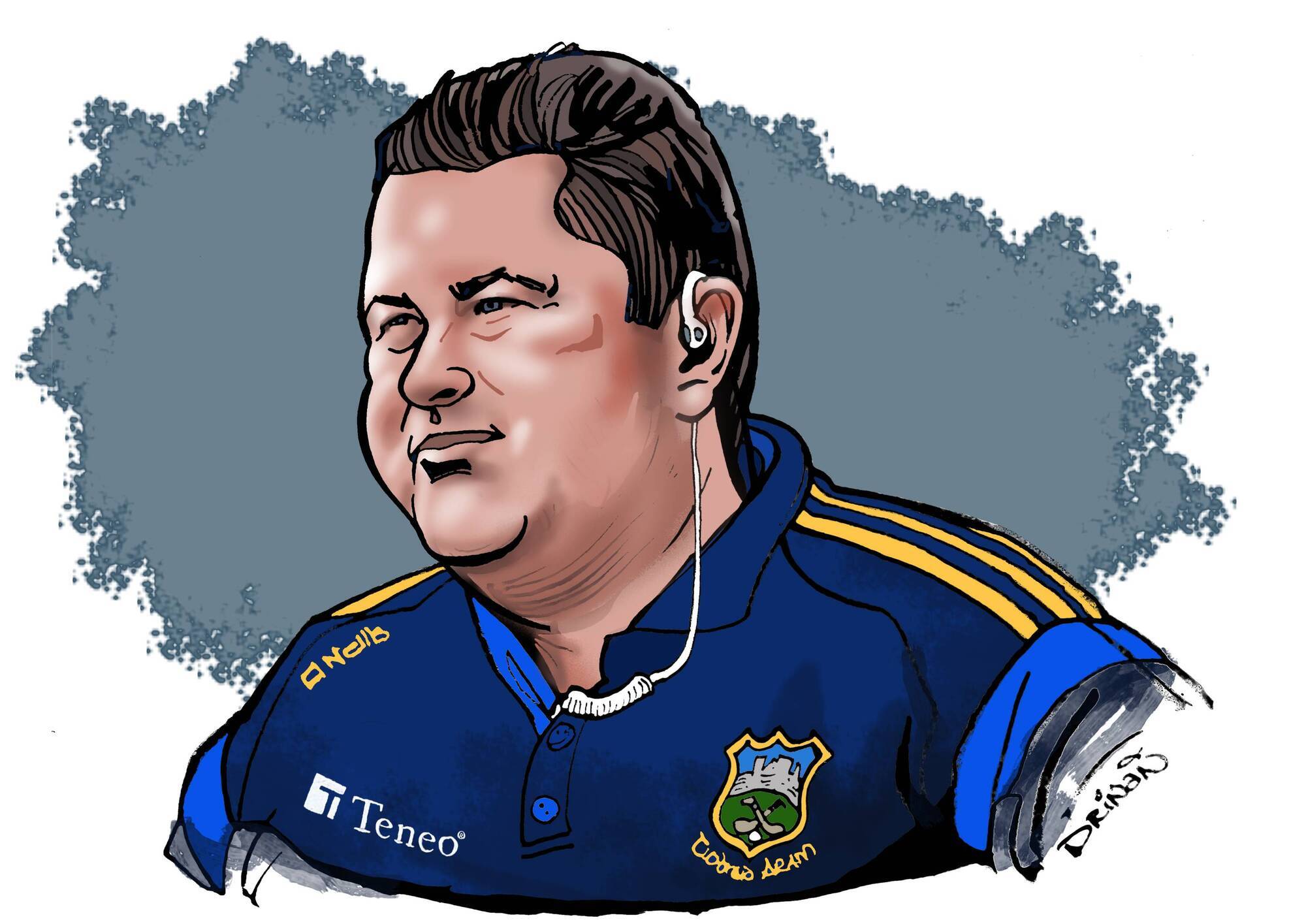
A portrait of David Power, Tipperary senior football manager. By Drinan
There is a picture in the Power household of David, just one-year-old, in that ritual position for a baby in the presence of silverware - perched in the cup.
It was 1984 and the Tipperary minors had just shocked Cork and Kerry to win the Munster title.
It was that same title, achieved with wins over Cork and Kerry 27 years later, that announced the arrival of David Power, football manager, and his multi-talented team to the wider world.
Power’s coaching career with Tipperary began aged 23, although the inner workings of an inter-county team had been revealed to him from his formative years.
“When I was involved with the senior team, he was at all the training sessions,” says Seamus McCarthy, who managed the ’84 minors before taking the seniors to the ‘93 Munster final, the county’s first in 49 years. David’s father, Michael, a long-time Tipperary football volunteer, was a selector.
“He would have been reared very much in a football household and carried on that tradition. It was probably inevitable that he would get involved with underage coaching.”
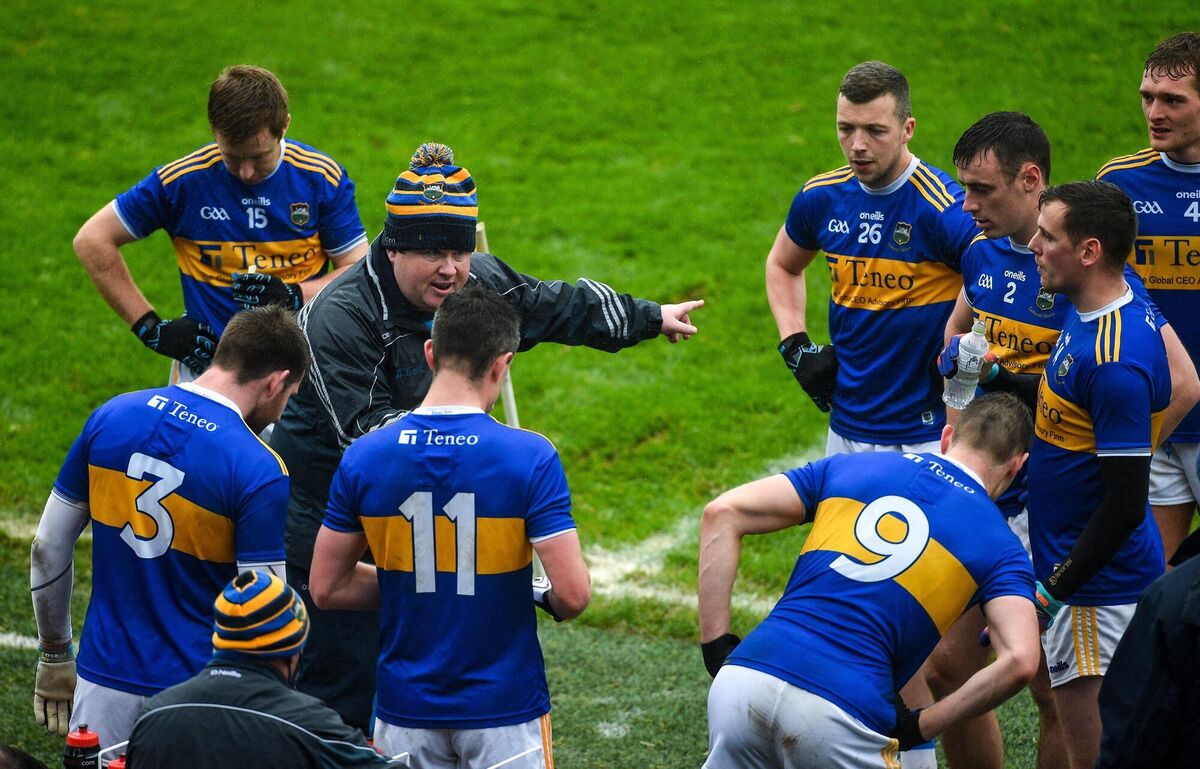
Power’s inter-county career amounted to a year as sub-goalie on the 2001 minor team but a mere eight years later, he was the man delivering the team talks.
There was no great contest to take over the Tipperary minor job in 2009. No-one seemed to want it. Power had been invited to oversee the county U15s in 2007 so he at least knew the scene.
“He'd always be going to matches and training sessions so you'd always have seen him around the place. The football folk in Tipperary will all know each other anyway,” says Tipperary All Star Declan Browne.
“It was fairly daunting, people were saying ‘he is too young’,” Power would later say of his promotion. It was a sign of potential, though, soon franked by an extra-time win over a Cork side featuring Brian Hurley and John O’Rourke.
Some minor teams bring senior riches. Others don’t. Of that Tipperary squad, only one player – Shane Foley – remained when Power named his 37-man panel last month.
The next generation would reap a richer harvest.
Power’s time coincided with the beginnings of a wider rise for Tipperary football under John Evans, a broadening of the talent pool, and the growth of a winning ethos. The seniors achieved back-to-back promotions to Division 2, the U21s won their first-ever Munster title, and High School Clonmel won the All-Ireland B title.
The Kilsheelan accountant, who has served as his club’s chairman and treasurer, had stayed involved at U16 and U17 level and when Tipperary won Munster tournaments at both age grades in 2010, he knew something special was coming.
That they won the All-Ireland in 2011 was only a surprise to Power in that it came a year ahead of schedule. Of the 20 players who featured against the Dublin of McCaffrey and Kilkenny, Mannion and Small, the Dublin that didn’t have room for Brian Fenton, 13 were still under-17 in 2012.
“He was very young but he was a good listener,” says Evans of Power. “In his early years, I wasn't with him but he needed a bit of experience, I suppose, and he asked me to come on board.”
That tendency to seek out expertise and challenging voices has become more pronounced in Power’s backroom teams over the years.
“I remember looking around the bus on the way to Croke Park for the Dublin match and there were 53 people on board,” said Power in 2011. “The thing is none of them were hangers-on. Everyone had a big role to play.
“I’m young and I’ve still a lot to learn so I needed the support of all these people. We all worked together with one goal in mind. And that’s why we achieved it.”
Speaking after appointing his team for 2020, Power said:
When Power was picked to succeed Liam Kearns, it was that backroom team that stood out. In Paddy Christie, he had an authoritative voice from the Dublin production line with experience from Ballymun, DCU, and Dublin minors. It helped, no doubt, that Christie’s mother is from Lorrha too.
In Charlie McGeever and Tommy Toomey, he had united the managers of Tipperary’s last great underage year, 2015, when they reached the All-Ireland minor and U21 finals. McGeever also managed Clonmel Commercials to Tipperary’s Munster Club breakthrough later that year.
Michael McGeehin, Director of Sport Ireland Coaching, former Clare goalkeeper Joe Hayes, and S&C coach Robbie Cannon, who has worked with Shane Lowry, also came on board.
“That has been his calling card,” says Evans of Power’s ability to recruit and delegate. “That is what a good manager does, he brings in good people around him.
“That's how you gain success, you draw on all individuals to create the right atmosphere for the team.”
Eleven of that famous minor panel still remain with the Tipperary seniors, albeit three of those are vying for selection with Liam Sheedy’s hurlers on Saturday instead.
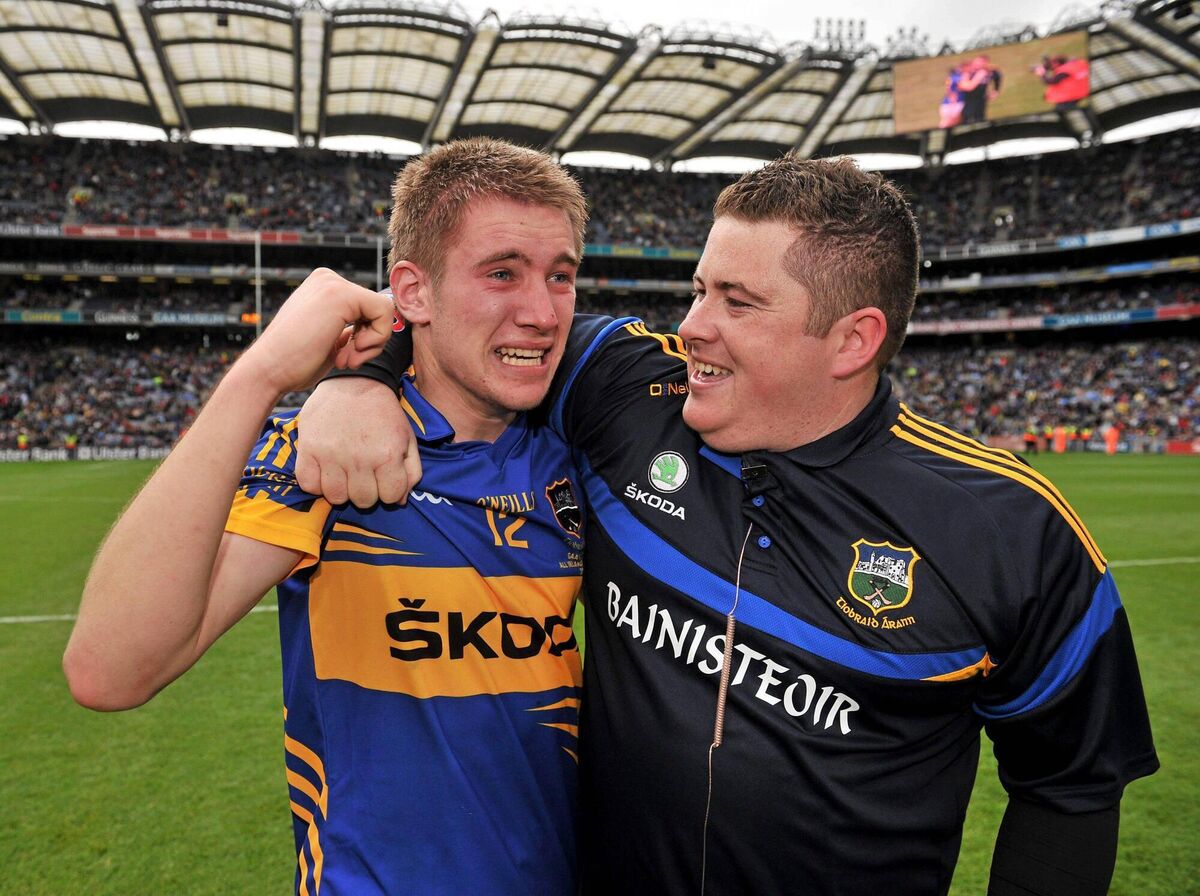
That downside to Tipp’s dual dilemma never put Power off accepting players if and when they come available. There were six dual players in 2011 and John Meagher was taken on at nine days’ notice after the hurlers were knocked for the footballers’ Munster final. Evan Comerford, capped for Ireland schoolboys alongside Seanie Maguire, was promoted for the All-Ireland semi-final.
In 2012, when they became the first Tipperary team to defend a Munster football title at any grade since 1935, beating Cork once and Kerry twice, there were 10 dual players, although a shock loss to Mayo meant it was only the hurlers who picked up All-Ireland honours.
That Power might select Colin O’Riordan to play a leading role on Sunday would not be out of character. He has always espoused the need for a bigger pool of players playing football in Tipperary.
“There can only be 35 players on a senior hurling panel at any one time,” he said this week. “There is a huge amount of other players out there and space there to make the Tipperary senior football team.”
Evans thinks of Tadhg Kennelly’s role against Cork in the 2009 All-Ireland final as a template Power could follow with O’Riordan, using his endurance and work-rate to open up space for the scorers and potentially liberate Michael Quinlivan to push up alongside Conor Sweeney.
Power’s rise through the ranks has not been without setbacks. Disappointments at U21 level bookmarked his two-year term with Wexford which produced just one Championship win – a shock victory over Down – and relegation to Division 4.
Anthony Masterson, now a Wexford selector, spent his final two years of inter-county football under the younger Power. Despite the headline losses, he credits Power, who arrived in Wexford aged 31, with having a broader impact on the county.
During that time Power, with Matty Forde as a selector, also took on the U21 and junior management roles, guiding the latter to back-to-back Leinster titles. Masterson says Power would’ve coached the guts of 80 to 100 players each year.
“I vividly remember speaking to him because I was struggling with injury at that time and I was contemplating retirement. After talking to him for five or ten minutes, you hang up the phone and the first thing you say is I'd like to play for this man. That's a good trait for any manager or coach to have.
“He didn't just have the senior team at heart, he was trying to develop players. There were five or six regular inter-county seniors that came from that junior team.
“He bought into the U21, he bought into the junior, and he put in as much effort with the juniors and the U21s as he did with the seniors. He must have been down every night of the week.
“I think all the players that played under him really appreciated the level of interest and the level of enthusiasm and the level of care he brought to the whole thing.
“He seemed to have confidence in himself. Anybody that leads a county like Tipperary to an All-Ireland football title has to know what they're doing and know what they're about.”
Power has never been afraid to be outspoken on issues in the media since the time, in 2010, he called out his local South Tipperary Board in strong terms over fixture congestion. He has stated his worry over the stall of Tipp’s underage production line since 2015, ranking the county at no. 5 in Munster, only ahead of Waterford. Last month, he said Leitrim had damaged the integrity of the league after failing to fulfil a fixture.
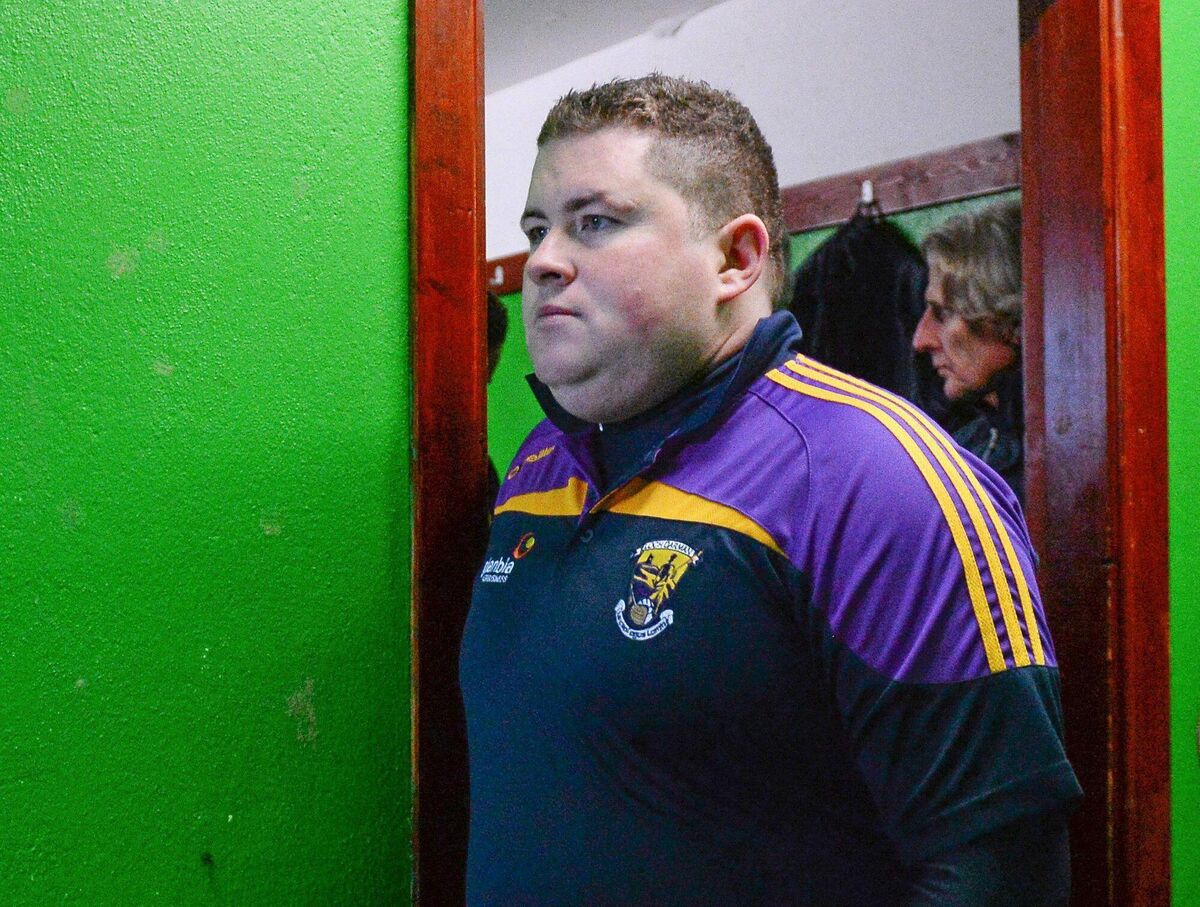
“He was well able to get fired up,” says Masterson. “Everyone that would've seen him on a sideline knows that he's full of enthusiasm, fire and passion. It's a really good trait to have as a young manager, dealing with players that are older than yourself and having the belief to back yourself.
“I'd have no fears of him tactically too. He was able to adjust. If we fancied that we were stronger than a team, we’d have no problems pushing up on the team and going man-on-man, and then if we felt that we needed to drop off a team and defend a bit deeper, we would do that.
“I don't remember having any one certain style of play. It was all to do with who we were playing and he was very, very strong on opposition analysis.”
Those minor teams of ‘11 and ’12 were known for their comeback victories, much like Tipp’s semi-final turnaround against Limerick this year.
“Whatever about the coaching and the skills and the drills and the tactics, the one thing you don't have to put into a Tipperary man is confidence or fight,” says Evans. “Any Tipperary team is most dangerous when they're thrown on their backs and they have to fight.
Power has undoubtedly had the luck of the draw too, and the delayed season has allowed him to gain automatic starters in Quinlivan and Liam Casey.
“Cork will be the favourites but Tipp have played Cork at minor, U21, senior, and have done very well against them so they won't have any great fears going into the Munster final,” says McCarthy.
“Quite clearly, David has a particular bond with this football team. When you go through a year like they went through in 2011 and subsequently at U21, then you develop bonds that are lasting.
“Both games were very similar, very defensive, so quite clearly it'll come down to ability to transition quickly from defence to attack. If we do it very quickly, we'll be in a good place.”
Browne agrees: “Every team is going to be defensive but even going back to ‘16 and Liam Kearns, when we kicked the ball, we're a decent outfit. So I think that'll be the same, we'll try to kick the ball fast into the forwards. I think that's David's style, although at times it's not that easy to kick it in. But you don't win an All-Ireland minor title without being able to play ball.
“I remember 18 years ago in ’02, we'd a right chance to beat Cork, we drew with them, and they absolutely hammered us in the replay. In the weaker counties in Ireland, you only get one shot at the big guns. It'll be the same on Sunday but I genuinely believe we've a right chance.”


CONNECT WITH US TODAY



Be the first to know the latest news and updates