50 shots in the first half but few goal chances: Are Munster shootouts good for the game?
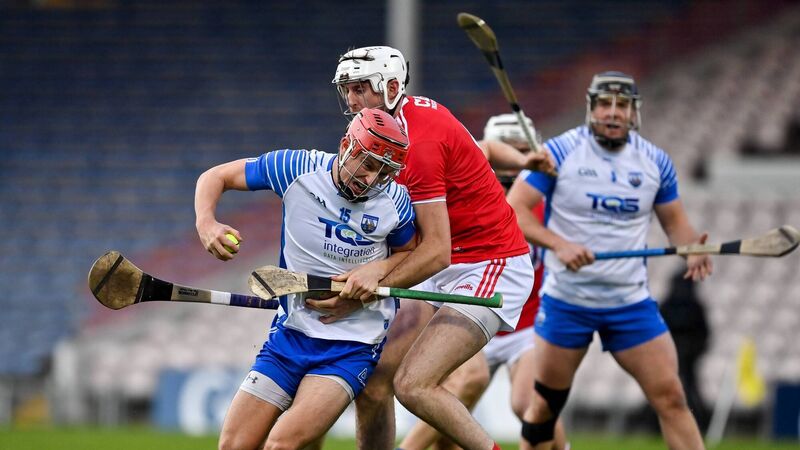
Jack Prendergast of Waterford is tackled by Tim O'Mahony of Cork. Picture: Brendan Moran/Sportsfile
By one reliable count at half-time in Semple Stadium on Saturday Waterford and Cork had shared 50 shots.
Waterford led on the scoreboard, 0-15 to 0-12, and had a few to spare on the wides count also, 14-9.
What to make of this shooting rate, which is well over one chance being made per minute? Is it good for the game? Is it bad? Is it because of the empty stadia, or the virus, or the first full moon on Halloween since 1955?
Your guess is as good as anyone’s. After last weekend’s shoot-outs - and the Limerick-Clare game in particular - there was a certain amount of huffing and puffing about the speed of restarts and the lack of intensity, and whether it was good for the game to have so many scores.
Can we finesse the question, though? Is it based on a false premise, one that suggests having the ball in play as fast as possible is always a good thing?
Consider the evidence and allow for the small sample size.
Cork had one horrific patch halfway through the first half when they managed 10 shots on goal; they scored one point. Waterford were more efficient, but at times it was a close-run thing. After Cork had finished spraying wides in that period of play Waterford took over, hitting seven shots and scoring one point.
More to consider: is it significant that neither ‘keeper had a shot on goal to save in that first half? Are hurling management teams deciding that high-percentage points are the optimum?
We saw how this remedies itself in real-time last week. Limerick came out of the dressing-room at half-time and dished out some punishment to Clare with half a dozen points in a row.
On Saturday night there was more of the same. The game had barely resumed when Waterford’s Calum Lyons, who had already hit two booming points from wing-back, made the significant intervention of the evening, travelling a long, long way into Cork territory before finishing from close range.
Late on Patrick Horgan forced home a free to bring Cork within three points of the winners, but Waterford added an insurance point from the puck-out.
To underline their improvement, they didn’t hit one wide in the second half. Waterford were physically stronger and more aggressive than Cork, they had the game’s dominant personality in Tadhg de Burca, who gave a master class in positioning and distribution, and they now have the luxury of watching Tipperary-Limerick to see who they’ll face in the Munster final.
Still, Liam Cahill will have seen his side give up too many scoring chances to Cork: Chances that neither Tipperary nor Limerick will spurn.
Cork have pressing issues all over the field, and late changes enforced by injuries didn’t help their cohesion.
But taking a leaf from the victors’ book - specifically the chapter on work rate - would be a significant step in the right direction.
CONNECT WITH US TODAY



Be the first to know the latest news and updates