The Big Interview: How Cian O'Neill established a connection with Cork's footballers during lockdown
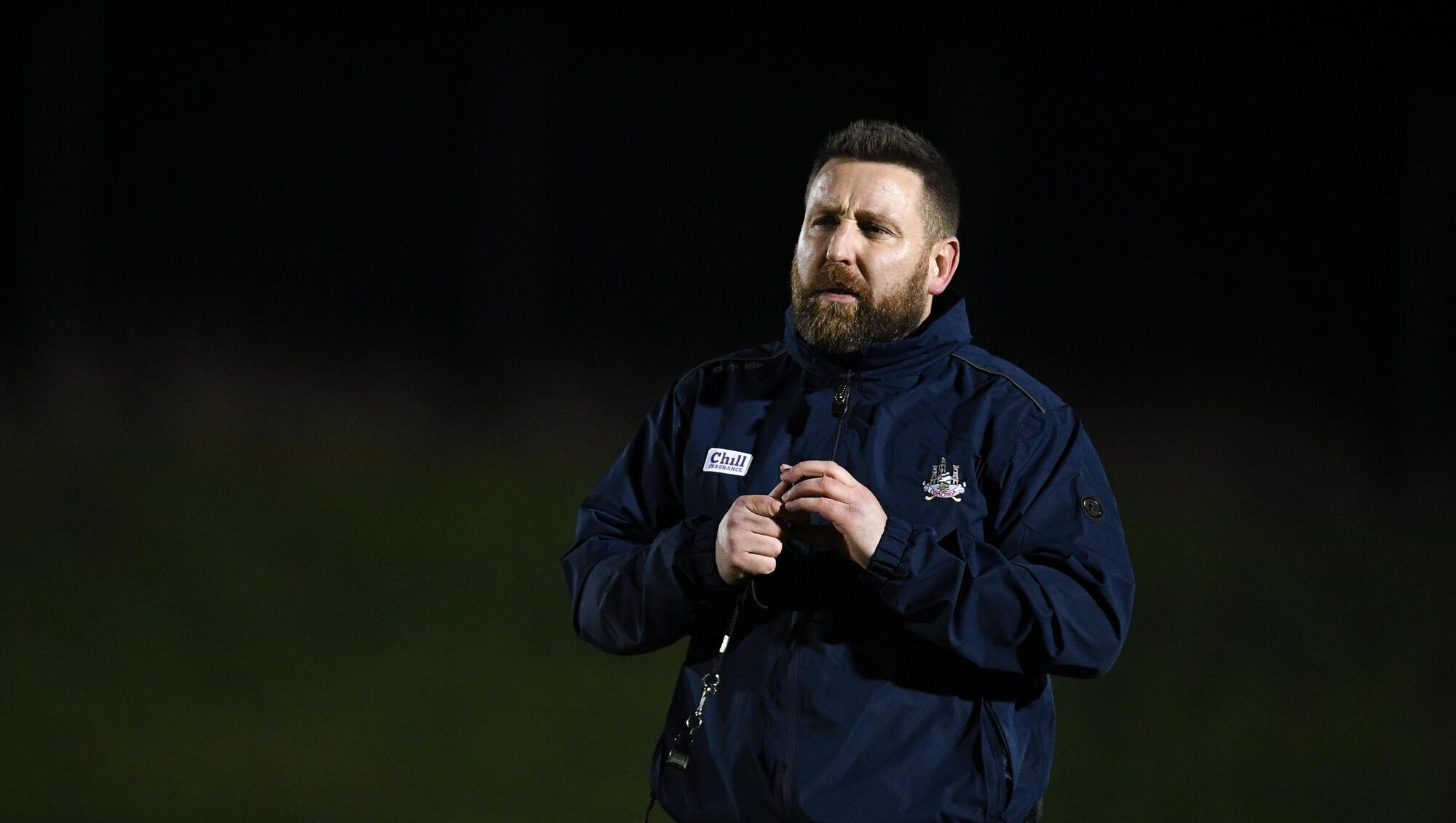
After 15 years working and coaching at the elite level of Gaelic Games, Cian O’Neill looked set to put the feet up and watch the championships as a mere spectator. Then came a call from Cork football boss Ronan McCarthy and he was hooked again. But then came a global pandemic...
The Big Interview: How Cian O'Neill established a connection with Cork's footballers during lockdown

One upside of the lockdown for Cian O’Neill is that it has given him a chance to become more familiar with the Cork players. Picture: Eóin Noonan/Sportsfile

Both parties have been nomads for some time but finally they seem to have found a home in one another.
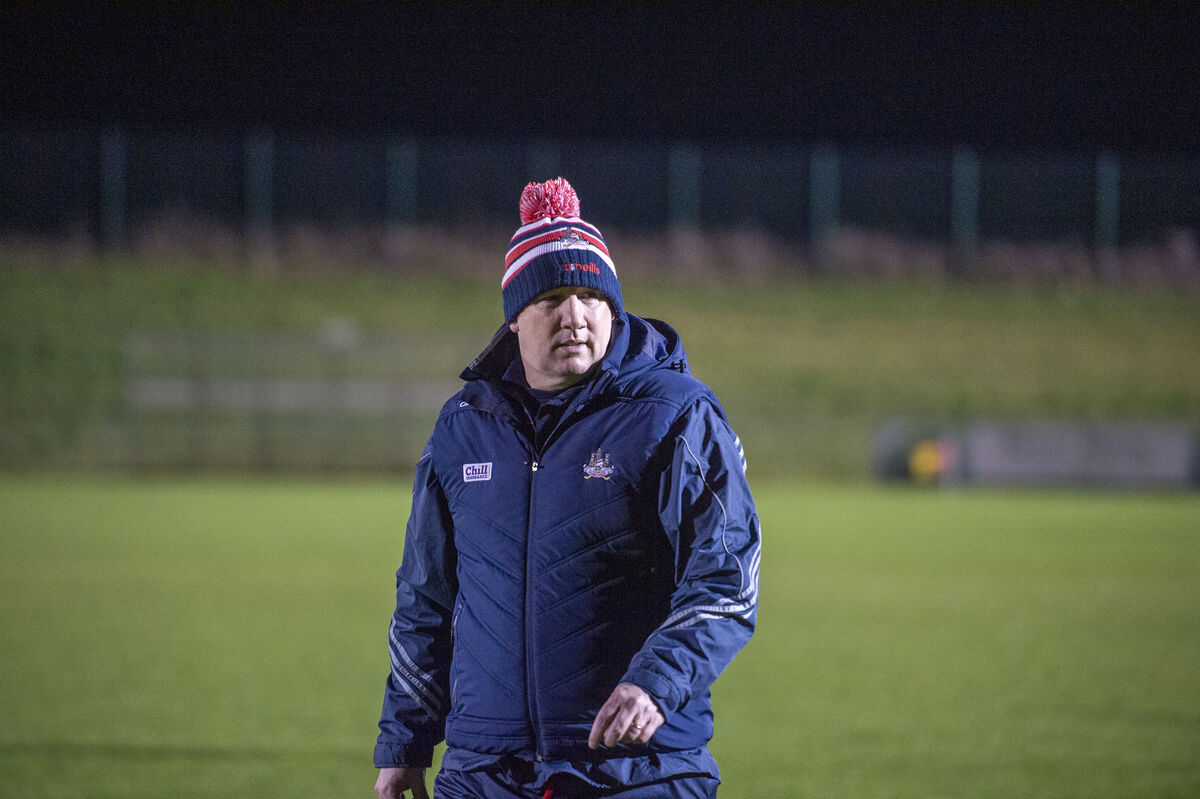
Cian O’Neill has been on the senior inter-county rollercoaster a full 15 years now but while he’s never stepped off it, he’s constantly been switching carriages.

Limerick football. Tipp hurling. Mayo football. Kerry. Kildare.

For basically the first half of that ride he was based in Limerick where he was a sports science and physical education lecturer in the local university. Then in 2013 he and his now wife Tammy relocated to Cork upon him being appointed head of CIT’s department of sport, leisure, and childhood studies. 

But while he had the inclination to discover the beauty and charm of the county and its coast, he never had the time. With Kerry he had another team to coach to All-Ireland finals and then as a Kildare man he couldn’t resist managing his native county even with the four-hour round-trip it entailed.

In the summer of 2019 it appeared as if he was finally going to step off the roller-coaster after he stepped down as Kildare manager.

“I was out,” he says. “I had promised Tammy that. The first year she moved down to Limerick, her fiancé was hardly around, travelling three hours up to Mayo and back. Then Kerry and Kildare came up. She had been incredibly patient and supportive to me. So after Kildare I had made a clear decision to take a step back and for us to catch our breath.”

They went away for a break on a Mediterranean cruise. Switched the phones off and recharged the batteries, taking in the likes of Barcelona, Mallorca, Cannes, Rome. The plan for 2020 and beyond was to then take in the majesty of Cork.

Glengarriff. Glandore. Baltimore. Barleycove. Ballycotton. Every nook and cranny of the place.

Then Ronan McCarthy rang.

At first, O’Neill thought the Cork manager just wanted to sound him out for a couple of recommendations to bolster his backroom team. But towards the end of their conversation in O’Neill’s office in CIT, McCarthy floated the idea of O’Neill himself re-joining the rollercoaster, only this time in a red and white carriage as team coach.

O’Neill said he’d made a promise to his wife, and indeed himself, to take the year out but McCarthy said he’d leave him think about it for a few weeks. When O’Neill mentioned the offer to Tammy, there was no wooden spoon produced.

Tammy herself was going to be busy completing the final year of a psychotherapy degree. There was no point in him just sitting around at home.

“She knew there was a nervous energy about me. I’d be twiddling my thumbs, looking at the clock in the evenings. I don’t watch TV outside of sport and the news. What was I going to do?”

Answer: Same as he always has. Working with — and usually improving — county teams.

In O’Neill, Cork and McCarthy were not only getting the last non-Dublin man to coach a team to Sam Maguire glory. With his CIT connection, they were also getting access to top facilities and expertise.

Like O’Neill, the Cork footballers had been living something of a nomadic existence in recent years. Former players like Paddy Kelly and Derek Kavanagh have spoken publicly, lamenting how Cork players might not have known in the morning where they’d be training later that day. During Peadar Healy’s tenure there were occasions where the team couldn’t get access to either Páirc Uí Chaoimh or Páirc Uí Rinn ahead of key championship games. At one stage the players had to convert a Fermoy warehouse into a gym. 

They had no regular training base. Or as Kavanagh put it powerfully in a column in this paper, no place to call home, somewhere that says This is Cork.

Now they do. CIT.

“I always joke with Ronan that the only reason he wanted me in was so we’d have a grass pitch to train in,” O’Neill smiles. “But joking aside, we love it here.”

It was something that Kevin O’Donovan, back when he was a mere coaching officer, had envisaged for Cork GAA: developing mutually-beneficial partnerships with the third-level institutions in the city.

In his new book, Bernard Brogan identifies and explains how one of the most underestimated factors in the rise and transformation of Dublin football was the emergence of DCU as a hub for GAA in the county.

Would the Limerick hurling renaissance have been possible without tapping into the resource that’s UL as they have?

As head of sport and leisure in CIT, O’Neill had been thinking along the same lines as O’Donovan and had already collaborated with the county board on numerous research projects. But this season, with U20 manager Keith Ricken also a CIT man, the partnership has gone to another level.

All season the seniors have trained here. The 20s and minors too. If the college team is training, the county teams have to settle for a back pitch, but otherwise they have access to the stadium pitch too.

And then there’s the expertise the college provides, like Cork’s current head S&C coach Kevin Smith who is completing his PhD there and also lectures part-time.

“It’s worked out really well having here as a base. Players will attest: There is nothing worse than not knowing where you’re training that night. But now they know how long it’ll take them to get there and get back home. And when they arrive, everything is familiar. Nothing is throwing you off. 

You become familiar with the dressing rooms, the physio rooms, the fact there’s a gym right beside the pitch for the rehab group. You get to know the pitch, the groundsmen. It creates that identity. ‘This is our space.’”

It also meant O’Neill himself wasn’t constantly on the move. CIT is only a 20-minute commute from his house on Maryborough Hill. In his previous three county gigs the average round-trip commute would have been nearly four hours.

“You can underestimate the stress on the body and the mind that travel induces. With Kildare, I’d be in a meeting at work and I’d be thinking: ‘I’ve to get on the road here in the next 10 minutes because if I don’t get through the (Jack Lynch) tunnel I’m going to be screwed for 40 minutes.’

“Managing Kildare wasn’t just about the stress of results. It was the stress of even trying to get there before the actual stress of games and the results that might come with them. And I’d imagine most managers would be the same that the bit they least enjoy about the job is having to deal with ancillary matters like logistical conversations with the county board and so on. It has to be done and it’s part of the job but it’s the least favourite part of the job.

“With Cork, I don’t have to those parts of the job. And I don’t have to travel. I’ve really enjoyed this year. Loved it.”

Ronan McCarthy’s humility has impressed Cian O’Neill. Picture: Dan Linehan

McCarthy has been a huge reason why; O’Neill has been taken by the man’s capacity to cope with pressure — both in the Cork job and the day one, as a principal of a school with 1,000 students — and how he marries ambition with humility.

“Ronan genuinely has no ego but what’s best for Cork.”

Even the lockdown had its upside. It allowed O’Neill become more familiar with the one thing more important than the team’s facilities — the players themselves. While Cork had enjoyed an impressive league before the lockdown, winning all five of their games, the relentless schedule meant with so many games and videos to analyse, there was less time to hang with and get to know players.

“We actually had a very kind NFL schedule this season in that we didn’t have huge long distances to travel. We had Derry at home. Down at home as well. But there can be an upside to playing those kind of teams away. 

“If they were road trips we’d have been staying in a hotel. And to me they’re precious moments and windows in the development of a squad. You have that one commodity you don’t have during the week because of work and coaching or playing — time. Just hanging out in a hotel lobby or at the table eating, chatting.

“With the lockdown, I had that time.”

While the Cork management had roughly only one collective Zoom meeting a month with the players before they resumed playing with their clubs, O’Neill spent that early lockdown period having Zoom meetings with every individual player on the panel while simultaneously drafting a skills manual for them to use.

“I learned more about the players in those 40 to 80 minute chats with them than I had in the previous four months training them. You just learned so much about them: about their family, their partners, what they worked at or were studying in, their interests. Things you just would not have known otherwise.

One of the most important aspects of coaching is intangible: connection. There are very few books that tell you how to connect. And even then every group is different. And it’s something that happens over time, that’s organic; it can’t be forced. 

“I was beginning to get to know the players during the pre-season and league but then bang — everything stopped. So it meant you had to rethink: How can we re-forge or reestablish some connection with the players? Because to me that’s the reason I’m involved in coaching: To connect and collaborate with people, be it the players or the rest of the management.”

For O’Neill, it was a case of making the days count rather than counting the days until the resumption. His skills manual had a series of progressions that acted as the players’ own kind of skills challenges and their own involvement in making it a living document was another buzz in an otherwise surreal time.

“The manual would have only given some structure or direction but the best bit was the interaction and feedback from players. After we’d move off the personal interaction into what were their strengths and areas for improvement. 

“Chapter one in the manual, say, might have been on first touch, two on handpassing, three on kick-passing. The players were very resilient and intelligent and would come up with ways to work on those aspects of their game. They might be at home. Or as restrictions eased, they were saying: ‘I’m on this task, I might partner with one of the other lads and try this out to make it more authentic and game-realistic.’ 

“Those conversations were very exciting. You’d love to have been able to finish that chat and then jump onto the pitch with them the following night.”

Instead he’d have to wait, patiently, for September 14. Ronan McCarthy has said that since the resumption “Cian has come into his own”, possibly because of that connection he established with the players while they were either in lockdown or back with their clubs, but even the resumption of collective training was a real challenge of his coaching prowess.

That first week back only seven players were on the field in CIT. Everyone else was still playing for their clubs either trying to win a championship or trying to avoid relegation from one.

I’m not going to tell a lie, because of the nature of the club championships in Cork, the restart was particularly challenging for us. I’m still getting my head around just how massive Cork is in terms of all the teams and divisions and dual clubs it has. But I have to give credit to those seven players. You were trying to make it as challenging and match-realistic as possible and to a man they responded superbly.

“In week two it only increased to 11: There were still quarter-finals and relegation play-offs going on. In week three it went up to 13. The players were fantastic but you were thinking: ‘God, when are we going to be able to get up to 20, 30?”

Then suddenly, drastically, it happened with the halting of the county championships. By the Thursday after the two county semi-finals the numbers were back up to 30. “The transformation was incredible. I won’t say the first three weeks were soul-destroying but since then it’s been fantastic. The energy and quality of the sessions has just skyrocketed.”

The narrow window means that unlike every other county team in the country, Cork have yet to have a challenge match: It’s only in the last four sessions they’ve been able to play 15v15 among themselves.

Not maybe the ideal lead-in to today’s game against Louth that would guarantee promotion to Division Two but an optimist and pragmatist like O’Neill is happy just to get on with it and be back out there.

At least half the starting 15 might be unfamiliar to anyone outside Cork but what matters is O’Neill knows them.

Better than he did back in March.

More in this section

Cookie Policy Privacy Policy Brand Safety FAQ Help Contact Us Terms and Conditions

© Examiner Echo Group Limited