GAA seeks proof of link between spectators and Covid spread
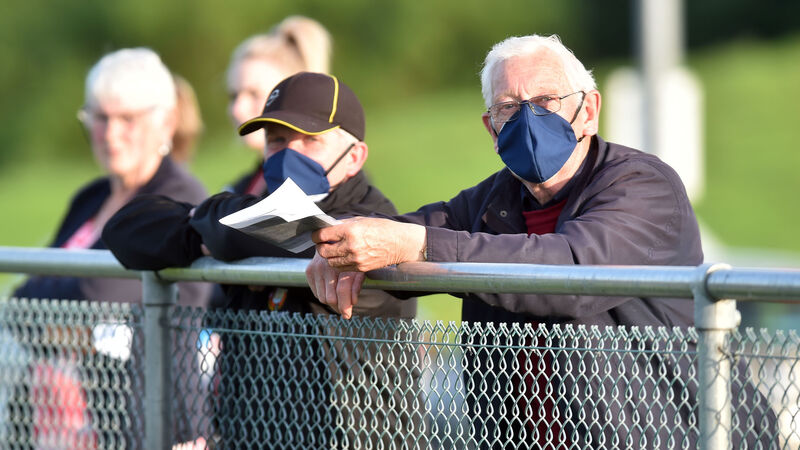
The Irish Examiner understands GAA president John Horan wants to give a clear indication about the 2020 Championship to counties before their squads are officially permitted to resume training on September 14 ahead of returning to competitive play in October. Picture: Eddie O'Hare
The GAA are seeking proof from the National Public Health Emergency Team (NPHET) that limited numbers of spectators are congregating and contributing to the spread of Covid-19.
As the Government endorsed NPHET’s recommendation to stage all outdoor sports fixtures games behind closed doors, the GAA have invited acting chief medical officer Dr Ronan Glynn to address them and provide the reasoning behind the latest restriction, which the Government endorsed.
The statement read: “Following this evening’s unexpected announcement, the GAA invites Dr Ronan Glynn and NPHET to present the empirical evidence which informed the requirement for the Association to curtail its activities.
“The Association will tonight be issuing an invitation to Dr Glynn to meet with its Covid Advisory Group in this regard without delay. The GAA and its members remain at all times committed to protecting public health.”
As September 7 is shaping up to be D-Day for the All-Ireland inter-county championships, the news was yet another blow to supporters and financially-stricken county boards. The Irish Examiner understands GAA president John Horan wants to give a clear indication about the 2020 Championship to counties before their squads are officially permitted to resume training on September 14 ahead of returning to competitive play in October.
September 14 is a day after the latest restrictions concerning sports and outdoor events is set to elapse. On the basis of NPHET’s guidance, the Government ordered with immediate effect that all games must be played behind closed doors and training should be limited to 15 people outdoors and six indoors.
The GAA previously interpreted such training limitations as a panel being able to share the same pitch providing the players are divided into groups of no more than 15. Non-contact outdoor sports training with numbers limited to 15 remains in place in Kildare, Laois and Offaly until Friday at the earliest.
Dr Glynn said he was not aware of any case that can be linked to the playing of sport. He added NPHET recognised the fundamental role of sport in Irish society but said there had been cases linked to crowds at games.
“The measures recommended were not aimed at stopping sport,” he insisted. “As long as sport continues with all the protective measures that are around that already in place… we are saying that sport can continue.
“It’s what has been happening before and after matches. It’s households congregating and travelling together. Yes, of course you’ll say team-mates will travel to and from and 30 people will come together (to play) but that’s 30 people rather than 230 or 250 people.”
The 30 people Glynn spoke of were included in the previous crowd restriction of 200 players and officials. Maybe it was a slip of the tongue but the perception that he failed to take that into account the guidelines that had been in place didn’t help.
The GAA have been striving to translate mixed messages from the Government and NPHET and this latest announcement provided a number which their Covid advisory group will have to make sense of if games are to go ahead. Under-age matches may come under threat if parents aren’t permitted to supervise them. Kerry’s Coiste na nÓg postponed all of their U14 football league games scheduled for Wednesday evening as they await clarity on the matter.
There is confusion too about what a positive coronavirus case means to a club. Following Dublin secretary John Costello’s message to clubs in the capital that they need not stand down if a single case is linked to a club, the GAA’s Covid advisory group reiterated the same direction. As players and management are considered casual contacts and therefore need only monitor their health, the club need not take such a drastic measure.
As for county boards, if the extension of the 200 crowd limit was a body blow this was an uppercut. Their attempts to generate revenue via streaming have been positive yet fledgling and are only a fraction of what they would have received via gate receipts. Games were virtually behind closed doors as things stood but bringing in crowds of 80 to 120 people at least helped pay for the upkeep of grounds. For the next three and a half weeks at a minimum, there is nothing in that regard. For so many, funding inter-county teams off their own bat is a shuddering thought.
Upon becoming GAA director general two years ago, Tom Ryan highlighted that in terms of gate receipts organisation at central level make money from approximately 40 of 400 games. That number is closer to zero now for county boards and will likely be zero if there is to be a Championship.
If anything, the latest news strengthens the GAA’s case for state aid to assist in staging inter-county competitions from October. Going by the reaction to the announcement, this Government may need a Championship more than the GAA.
CONNECT WITH US TODAY



Be the first to know the latest news and updates