Paul Flynn: 'You have to have balance...a happy player is a better player'
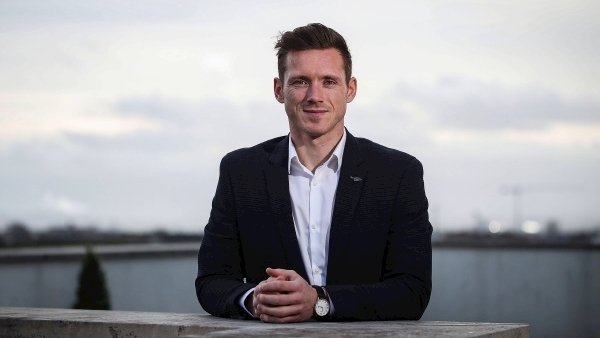
GPA chief executive Paul Flynn on the importance of maintaining amateurism in the GAA, the importance of the club player, and challenging the misconceptions surrounding the work of his association.
Before there was Paul Flynn the Dublin footballer, there was Paul Flynn the Waterford hurler, which is why the younger of the two was a big supporter of the Waterford hurlers.
It wasn’t just any hurler he shared the same name with, it was with the consummate stickman, and it wasn’t just any team that consummate stickman hurled with.
They played with abandon, personality, and passion: Flynn, Ken, Kelly, Mullane, Dan. And then there was Tony Browne.
There was this grace as well as steel about him, as if he was operating above the fray even when he was right in the thick of it.
Even when Waterford’s season would inevitably fall short of winning it all, Browne would always be back for the next one, ready for and to give more.
Twenty-two years he gave at senior level to that white-and-blue jersey — and the GAA — helping pack Thurles, Cork, and Croker on countless summer days.
And then? When he stopped playing with Waterford, the phone stopped ringing.
Work was hard to get and it wasn’t always in what he was really into. But sure how could he be fussy when he had no qualifications to his name?
Education, like work, had been secondary to the goal of trying to win Liam MacCarthy and now that he was in his forties it was surely too old to redress that.
But he would, upon hearing the GPA offered scholarships for past as well as current county players.
Which is why Flynn as that body’s CEO takes such satisfaction in Tony Browne’s testimonial in the GPA’s 2018 annual report for how they supported him in completing a masters in sports science (“I can’t thank [them] enough for their non-judgemental approach to my situation from day one,” he’d vouch. “I now have put right what should have gone hand in hand many years ago — sport and education”).
“I had so much respect for Tony Browne the player,” Flynn says, “and I have even more respect for him now as a person.
"Was it easy for him going back to college after all these years? No, because he was playing catch up. Yet he did it and we were able to help him.
“But we want to catch and help guys earlier.”
Flynn himself was that soldier. He lives this – speaking with such passion about the person before the player and the duty of care the GAA and the GPA has to that ideal – because he has lived this.
Like Browne, he worked the building sites before he ever saw a lecture hall.
You might have assumed by his current position as a CEO, his previous one as the commercial director of a recruitment company, and his clean-cut persona, that he’s your prototypical Dublin footballer: middle class, white collar; in school, bright, mannerly, then straight onto college and then into the workplace. Not so.
“I was a bit of a messer in first, second and third year – after the junior cert, I was playing catch-up. I was just hyperactive. I found it hard to sit in a classroom.
"That’s why sport was such a form of expression for me. It allowed me to release all this energy. And you could see that in the way I played. I was all energy.”
The family was distinctly working class. Flynn was the youngest of eight kids with none of the others before him going to college.
Their father Peter was and remains a mechanic. Their mother, Helena, is a housewife who makes wedding dresses on the side.
The same day an 18-year-old Flynn came home with a CAO offer to study marketing in DIT, he got offered an apprenticeship with a local plumber.
What choice did he make? What choice did he have?
When I was talking to my parents, sure they only thought, ‘Sure get yourself earning, it’s a good job.’ They didn’t know any different and the economy was booming at the time.
"The expectation just wasn’t there to go to college. I had a bit of an itch myself to go but I would have felt guilty putting my mum and dad under financial pressure for the four years.”
And so he learned his trade, changing boilers, fitting showers, whatever you needed done about the place.
When he broke onto the Dublin panel the early summer of 2007, he’d routinely arrive into training in his snickers workwear, wrecked.
“All I wanted to do was to lie down. And I remember looking around the dressing room and realising, I was probably one of only a couple of lads in that kind [of attire]. The rest of the lads were in college or had graduated from college.”
That’s where the GPA came in. When Pat Gilroy became manager, one of the ways he tried to create a holistic approach was to bring in a business friend, Padraig Byrne, to act as a kind of guidance councillor for players.
Their conversations confirmed for Flynn his desire to go to to college and then from another with backroom member Niall Moyna he’d learn the GPA were offering scholarships.
And so Flynn would do a degree in PE and biology in DCU, ending up with a first-class honours. But after completing his dip in teaching, he discovered he’d literally taken the wrong course.
“I signed up for teaching because all I wanted to do was to have the summers off to play football. It wasn’t a decision predicated on having a real vocation to be a teacher.
"Teaching can be a really rewarding, brilliant job but you really need to want to do it. So in retrospect it was a bad decision and one we [in the GPA] now would seek to pre-empt and prevent.”
The older GPA would still help him out. After opting not to pursue teaching, he landed a job in HR in Aer Lingus who’d allow him to upskill by doing a course run by the Irish Management Institute.
The GPA would partly fund it through a scholarship. And so, within a couple of years, he was the leading commercial director of Lincoln Recruitment.
Only he’d leave it too to become GPA CEO. He felt that strongly about helping players the way the GPA had helped him.

“As a player it would annoy me when anyone would have anything negative to say about the GPA. I mean, it’s there to support inter-county players who are amateur athletes who help fill stadiums and bring joy to so many people.
"But it can be a pressurised place to be. People might think, ‘Jesus, he’s on the county panel, sure hasn’t he everything going for him?’ but with that comes a swell of challenges.”
He knows, you might level it at him that it’s been easier for him getting such scholarships and support, being from Dublin.
Colm O’Rourke in a recent column accused the organisation of being “Dublin-dominated”.
“I’d love to see the breakdown of where all [their] scholarships have gone,” the Meath great would write. “I suspect there would be a weighting towards Dublin.”
You know what they say though assumptions make of you and me. As Flynn points out, the breakdown of such scholarships is a matter of public record and accessible for O’Rourke or anyone else to see.
And it shows: in 2018 six Dublin footballers availed of GPA-supported scholarships. Twenty-four of the remaining 32 county football squads had that many or more players on scholarship.
Antrim and Leitrim had 10. Wexford and Limerick had 11. Derry had 13. Sligo had 15. The Wicklow and Down hurlers had 11.
“I don’t care what colour jersey a guy wears, we’re here to support them. As our slogan goes, you see players, we see people.
"Others maybe sometimes don’t know who the GPA are or who they represent. The GPA is the inter-county players. That’s what it is.
"And all we’re trying to do is put programmes in place for them to be able to live what we now call that Dual Career – a life on the pitch and a life off it.”
He knows there is still a lingering suspicion out there. That the GPA’s ultimate aim is some form of professionalism.

That it can be viewed more as a drain on the GAA’s finances than its members are a source of most of the GAA’s finances.
That it has created a wedge between the county game and the club game. That it is a commercial, corporate beast.
But one by one Flynn rejects such perceptions.
A word he likes to use is ‘symbiotic’. The GAA and the GPA have a symbiotic relationship, just as the club and county game help and depend on one another.
Taking up a whole wall of the GPA’s boardroom in an office block here in Santry is a giant overview snap shot from above Hill 16 of Croke Park while Colm McFadden is slotting the ball to the Mayo net in the 2012 All-Ireland final.
The players — who make up the GPA — helped fill that stadium. The clubs provided those players who filled the stadium.
Those county players and the county game generate 80% of all GAA revenue so the clubs can have their ball wall and extra pitch.
For it all to be sustainable, the game has to remain amateur. But in turns the players need to be supported and so its representative body needs some form of financial support from the GAA.
While the GPA has shaken its previous image as being something of an agency, one maxim of Jerry Maguire’s remains at its core: help us to help you.
“Why would we run the programmes that we run if we wanted the game to be professional? Because all the programmes that we run are to help the guys to be amateur athletes.
It’s about maintain a sustainable form of amateurism where guys aren’t being paid to play but also players don’t have to pay to play.
It often starts with college. Over a third of county players are in third level.
Right now the GPA offer scholarships to any player on a squad for a full year who is undergoing an undergrad course.
Typically such players receive about €500 for each of their two semesters, meaning the GPA annually pays out about €500,000 in scholarships.
“A lot of other students take a part-time job to get through college because it is one of the most financially-straining periods of their life.
"But a county player won’t be able to have a part-time job. There’s just too much time training, playing, travelling.
"So that €1,000 they get on a scholarship makes a difference.”
The support can be a lot more ongoing than that for students.
Colm Begley, the Laois footballer, is one of the 11 staff the GPA has and one of his current projects is linking up with the University of Jordanstown where they have an existing mentoring scheme by which current players can link up with former graduates who studied the same course.
Sean Cavanagh, for instance, has volunteered to assist accounting students. Conor McCann is another mentor.
If Flynn had his way, every player whatever age would start of by meeting up with a GPA project manager and setting up a needs analysis.
What course do you want to do? What profession do you want to do? What do you want to do?
Everything else stems from that. From that you might want to set up your own business. Again, the GPA can help you.

They can’t provide you with any finance but they can help you with advice and how to come up with a marketing plan, maybe link up with the local enterprise board that they didn’t know existed.
“Everything we do here as the player, the person, at the centre of it. That’s why we seek funding, because there is such a demand for these programmes from the players.
“One of the great things about Jim Gavin was that at the very start of his tenure he showed us this [slide] where you had what he called the holy trinity: the player on the pitch, the player’s career and then the player’s relationship with family and friends.
"You had to have balance in all three, he’d say. Because he knew from research, a happy player is a better player. If you have something going on at work or at home that’s negative, it’s going to come out in how you play.
"I know that when I enjoyed my game, I always played better, and I always enjoyed it more knowing my work or study and my key relationships were in a good place.
“In that dressing room we would have spoken a lot about chasing our professional careers. And it’s there to see how successful lads are being off the field as well as on it.
"In the GAA there’s a fierce copycat culture; if the All-Ireland champions play such a defence or have such a kickout strategy, others try and copy it.
"I’d love if people tried to copycat that culture we had and counties looked how much we valued career development and education.
“And I’ve often said this — if it got to a stage where players have to finish playing their inter-county career in their late twenties because they went into a management position in their job, I’d have little issue with it.
"Because it means they’re having a very progressive career off the pitch.”
Yet there is a view out there: is there really a need for this? Especially when it costs so much.
Someone is going to win the All-Ireland anyway. There’s going to be 82,500 at the All Ireland final anyway.
There’ll always be 30 players willing to play for their county anyway.
I strongly believe there is a duty of care to the player. People are connected to the amateur model because they like the idea that these guys are working in the local school or they’re a local accountant and they’re brilliant ambassadors for the locality.
"That’s the beauty of our games. But we have a duty of care to support them.
“It’s about sustaining an amateur model to develop these guys as people and not just players. The inter-county game generates in excess of €60 million a year.
"The least the sport should do is to help the players’ association should be able to run the programmes and services to support them.
“Because you know why? If we don’t, they’ll become cynical. They’ll leave the game. ‘You screwed me over, you didn’t support me when I fell on hard times when I gave my heart and soul to the county. I wasn’t looking for any payment, I was just looking for support.’
"But if they feel supported, there’s going to be that stewardship where they give back. Players aren’t looking for pay for play but they shouldn’t have to pay to play.”
He’s making these comments the same week the Donegal footballer Luke Keaney told his story.
About how he played with county teams from when he was 15 yet had to finish at 24, just after coming on in the 2014 All-Ireland final, because of a chronic hip injury.
It severely left him out of pocket and having to learn how to walk again. The county board didn’t want to know. But the GPA did and covered his costs.
Chris Kerr, the Antrim goalkeeper, has also spoken this week about how the association’s 24-hour counselling line helped save his life.
Yet other articles in recent weeks have accused the GPA of creating “an over-the-top counselling culture”.
Such comments tend not to irk Flynn the way they once did but the timing of that one meant it rankled.
“The same Sunday that article appeared in the paper we were dealing with and trying to help a current player who had unsuccessfully attempted to die by suicide that night.
Interventions were put in place within hours. And that player availed of our services because they didn’t want to go into the pubic system because he might be identifiable. With us they felt protected.
The criticism, he believes, is out of kilter with all of sport these days.
Sport Ireland’s Institute of Sport now prioritise the mental health of its athletes and try to provide suitable resources.
The GAA itself through the work of its community and health manger Colin Regan are similarly holistic and compassionate.
“It’s the same in the work in the place these days. You can’t just treat an employee as an employee.
"You have to think of their life outside of work as well. So that criticism just doesn’t cut it with me.”
He’d like to think he hasn’t lost his connection with his club, another charge often levelled at GPA leaders.
At the moment he’s on a committee putting together a development vision programme for Fingallians; for a club covering as big a town as Swords, they should be contesting at A level at all grades.
He’s also on the club’s finance and sponsorship committee and runs an annual camp for kids, the proceeds of which go right back into the club.
And he’d contend that the GPA are also looking out for the club player. Just yesterday they issued a joint statement with the CPA calling for a six-week break from inter-county action in April and early May.
“The reason the April club month worked well in Dublin a few years ago was because we had no competitive game until the third week of May.
"But on the first weekend of May you had Mayo and Galway having to play each other in Castlebar. So of course those county teams were going to be training for some part of April.
“What we’re calling for now is to push back the championship until mid-May, so you’re allowing clubs play all through April and then you’re allowing county squads have the three-week run-in they need for championship. They can’t just go into a game cold.”
At the moment the GPA are in negotiations with the GAA over a new deal but a fortnight ago GAA president John Horan revealed that they had “hit a roadblock”.

Flynn concedes that talks “haven’t gone as well as we’d like” but is “confident we can all do a deal that will suitably support the players”.
It’s not as if anyone is getting rich from the services the GPA provide, he points out. Every cent they raise and get goes towards the programmes for players.
That’s why he’ll stand over the fundraising trips in America.
It’s not as if they were a junket and excuse to take in Hamilton and the Knicks on Broadway. And what’s wrong with getting 30,000 people into a hallowed baseball stadium to watch hurling, even if it’s just 11-a-side?
Every major sport, he points out, now champions a smaller version of itself — seven-a-side rugby, 3x3 basketball, futsal and beach football.
“When you’re over there, you soon realise that people over there get what the GPA is trying to do.
“They can see how unique and brilliant our amateur athletes and games are and believe supporting them through the programmes we do is the least they can do for them.
"This year we’ve been able to support the WGPA to the tune of €190,000. We would not be able to do that without going to the US.”
Another milestone for @ExaminerSport as we broadcast our first inter-county GAA game on Facebook Live this Sunday: @TipperaryGAA v @GaaClare in the Munster SHL in association with @MunsterGAA and @CoOpSuperstores.
— Irish Examiner Sport (@ExaminerSport) December 13, 2019
LIVE from Nenagh at 2pm. pic.twitter.com/8DLzPcTEiA
He could go on even if he hadn’t to go to the funeral of a teammate’s father.
About the conference they put on for backroom teams last month to help raise their standards and thus the welfare and development of the players — 250 delegates were present.
Or about the rookie camp they hosted to help educate newcomers on the challenges county hurling or football can present.
Or about the gathering of recently-retired players that Begley facilitated last month in Killarney helping put in place some protocols for county boards and players as to help ease their transition from finishing up with the county and scene that they love.
Or about his views on ‘competitive balance’ — contrary to what one critic claimed, he wasn’t looking for the GAA to ape the AFL or NBA’s draft or salary systems but adopt a similar spirit, by possibly having a ceiling and floor of how long county squads could train and spend.
Or about how his mentors and colleagues in Australian Rules now have 70% of its members take up its career coaching; if he had his way every GPA member would avail of its coaching service.
His conviction and passion is striking to any observer, and probably contagious to colleagues.
Instead of being an oasis of commercialism as the GPA could have been perceived after its Club Energise roots, the office here under his beat is more like a sort of commune.
Where the motto seems to be Springsteenian: We Take Care Of Our Own.
They just need to remind or convince the GAA hierarchy and some others that they’re their own too.

CONNECT WITH US TODAY



Be the first to know the latest news and updates