Traditional white sliotar set to be replaced for 2020 Championship
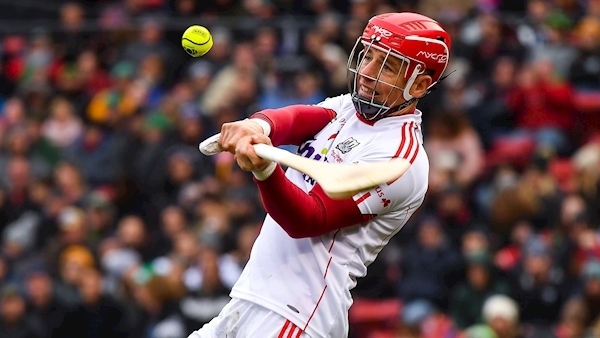
The traditional white sliotar is set to be replaced by a yellow âsmartâ ball for next yearâs Championship.
Following an exhaustive eight-year process, the project is awaiting final approval from Central Council next month.
A few outstanding matters such as deciding the price point of the sliotar are all that stand in the way of the ball being put into action when the Leinster and Munster, Joe McDonagh, Christy Ring, Nicky Rackard and Lory Meagher Cup competitions begin in May.
GAA director of games development Pat Daly confirmed the ball, which will incorporate a microchip in its core, has passed a series of rigorous tests in DCU having also been used in the last two stagings of the Super 11s as well as the Celtic Challenge.
It had been hoped that the sliotar would be ready for market in March of this year but designers were not fully convinced the smart sliotar could withstand the stress of being hit regularly.
But following a further battery of tests Daly is in a position to present it to Central Council for endorsing. âWe took our time with HawkEye because we wanted to get it right,â said Daly. âWe werenât going to give it the green light until we were satisfied and itâs the same with the sliotar. The testing that has been completed in DCU canât differentiate between the traditional ball and the new sliotar. We are now in a position where we are now satisfied to go ahead with it.â

The benefits of the smart sliotar, produced by Kilkenny company Greenfields Digital Sports Technology, are primarily two-fold. After previously describing the sliotar market as âThe Wild Westâ where balls have carried the GAA stamp despite not being officially licenced, Daly explained the new ball will be standardised. A simple scan of the sliotar using a smartphone app will reveal if it can be put into play or not.
Upon receiving the green light, the GAA are expected to put the production of the ball out for tender initially to a couple of companies with a recommended retail price. It has been suggested in the past that it could be set at âŹ10 or less so as to ensure attempts to replicate it will not be worthwhile.
With some sliotars varying considerably in how far they can be pucked and according to Daly âcompromising the gameâ, the smart ball will be consistent in its performance irrespective of which brand it carries.
Sliotar controversies were regular in the 2000s but two years ago there was the infamous issue of a Clare backroom team member tossing Corkâs bag of sliotars into the Killinan End of Semple Stadium prior to the Munster final. Since 2006, counties involved in All-Ireland senior semi-finals and finals have been able to nominate their officially-licenced ball.
The luminous colour of the smart ball will be of assistance for the purposes of score detection, particularly at venues where the HawkEye system is not available. The change in appearance could also benefit both players and match officials in terms of sighting the ball under lights, which has often been criticised as unsuited to hurling.
In the future, it is hoped the embedded technology will also be able to provide data on the speed and trajectory of the sliotar. In the worldâs fastest field game, such information could be used for entertainment and education purposes.
Daly, who is expected to move into his new role as head of innovation and research in the GAA following next monthâs coaching conference, is also focusing on the ash dieback crisis facing hurley manufacturers. In an answer to the difficulty, the production of hybrid and synthetic hurleys is expected to accelerate in the coming years.