'We need to ask the difficult questions of ourselves. What are we? Who are we? Why do we exist?'
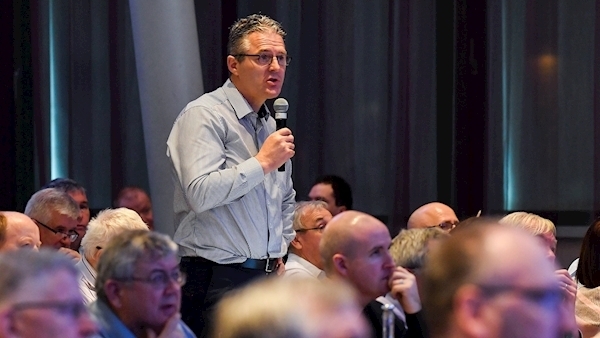
Former Armagh star Jarlath Burns is bidding to become one of the youngest Presidents in the GAA's history. While he has never been a county or provincial chairman, the 52-year-old believes his experiences across various strands of the Association leave him best placed to succeed John Horan as Uachtarán Cumann Lúthchleas Gael.
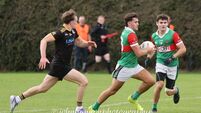
A balmy June evening last year and a Championship feel around the air of Keeley Park,Silverbridge, south Armagh.
Well, Reserve Championship at any rate. Clann na Gael came down from Lurgan and to those taking part, this was the centre of the footballing world.
Nineteen years on from when he ledArmagh to an Ulster title, Jarlath Burns arrived with wife Suzanne to cheer on the boys but his heartbeat quickened a little once the team ran out.
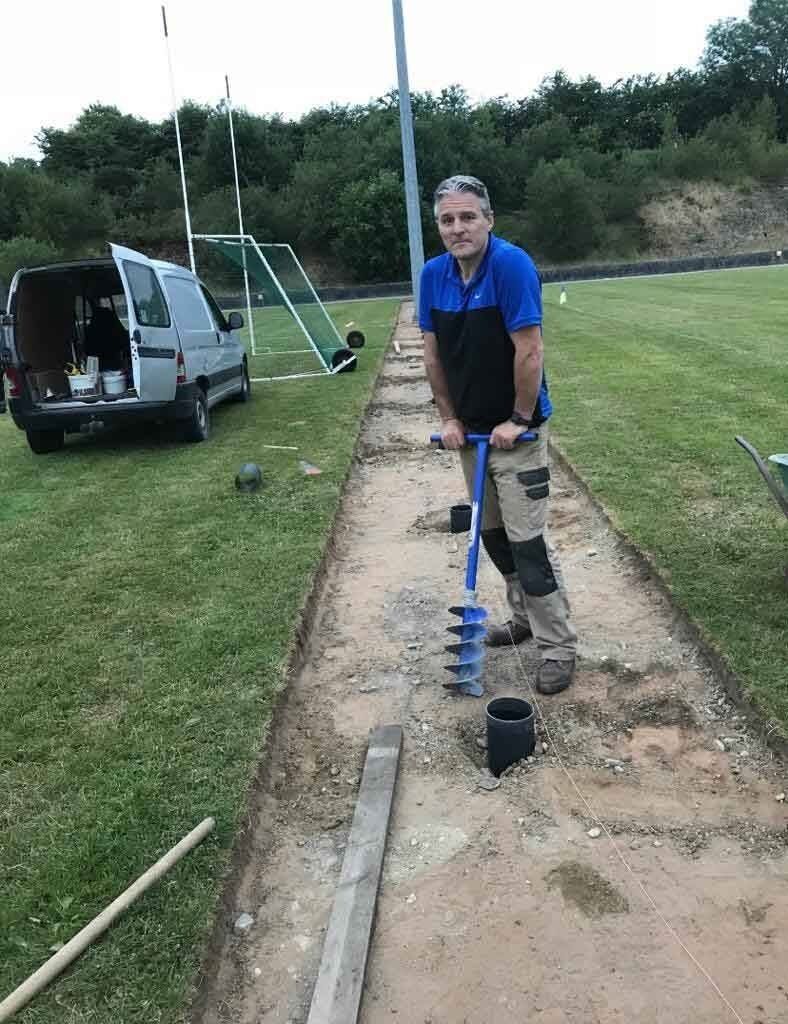
His brain started cutting deals with his body. ‘17 players… One of the boys gets a black card… The boots are in my boot of the car… The car’s just over there…’
Sure enough, a black card was produced. His hands began to get sweaty. A couple of yellow cards were flashed. The manager had to go on. So he did the only thing he could do.
“I got togged out at half-time,” he says, and chuckles; “Suzanne nearly had to be dug out of me!”
One week shy of his 51st birthday, Burns went up and fetched a kickout.
The Silverbridge Twitter account even captured the moment and once the catch was made, a big cheer followed. And then laughter.
“And I was as proud of that catch and the big cheer as I was ever,” says Burns.
“It wasn’t until I went home that I realised it was a cheer of fun and hilarity, rather than anything else. But I enjoyed it. There is no better thing than getting into a changing room and going out to play a game.”
Burns is that rare creature that never lost his enthusiasm for pulling on the togs and lacing up the cogs. But GAA president?
It’s been talked about since forever and yet, the news came a little out of the blue when Armagh announced his candidacy in the race to take over from John Horan.
There’s an identikit image of GAA president. Capable people in certain areas for sure. Some canny operators. But at the same time, a bit, how would you say… suity?
Certain elements that have the potential to hold him back; while it’s true he has never been county or provincial chairman, such familiarity carries the threat of groupthink.
Burns was a decorated player. A Sigerson Cup winner. A captain who raised the Anglo-Celt for Armagh.
He has held every office in his club. He is a father of five who all play, including Jarlath Óg who is a current Armagh senior.
He has chaired the Standing Committee on Playing Rules and came up with the midfield mark — the very thing that allowed him a breather after he caught that kickout last summer.
He has sat on dozens of other committees and his phone constantly hums with the dozens of WhatsApp groups relating to club business.
Potentially, his breadth of experience is superior to almost every past president and at 52, he’s possibly one of the youngest-ever.
You can ask ‘why not?’ Or, just ask the man himself, ‘why?’ And what he arrives at is quite revolutionary. Proactive.Challenging. Not very… ‘suit.’
“I think we are at a crossroads really with the GAA. With where we are, and where we want to go to in the future,” he says.
Under Sean McCague’s presidency, he was involved in the 2001 Strategic Review. The GAA, indeed the world has been through an awful lot since and Burns believes it’s time to hold the mirror up to ourselves once more.
“I think we need to go down that road again of asking all the difficult questions of ourselves. What are we? Who are we? Why do we exist and how do we see ourselves going into the next 20 years?
“We are going to be 150 years in existence in 2034 and even from the 2009 125th anniversary, we have changed. In particular with how we prepare teams and the science of how we prepare teams.
“There are two organisations essentially in the GAA. There is the heavily competitive side of the sport and there is the other side, the side that galvanises communities, gets the best out of communities, creates the big society.
To be honest, although most of my adult life was spent in the first one of those, playing it, it is the community part of it that really excites me about the GAA and in this modern era, we need an awful lot more of.
It’s aspirational stuff. Ambitious. But how does it manifest itself?
“I feel that Government — and I am not referring to any particular party — the institution of Government hasn’t properly given the GAA it’s place,” explains Burns.
“I’ll give you an example of that. Every time there is some new initiative rolled out, the Government will see that the GAA has a footprint in every village in Ireland, (and say) ‘we will do that through the GAA.’
“The other side is, you are left with a situation where there is no tax relief for hurley making, which we all know is a proper art.
“If you are a sportsperson in an amateur capacity, you see all the other sports getting tax relief. Our players are not offered that despite the fact they make massive sacrifices.”
He begins to get really animated as he continues: “The one that gets me the most is there is no understanding of the volunteer ethos. The help that goes into running a big event on a Sunday in a big town like Thurles where millions come into the exchequer.
“But yet, Revenue went to one of the workshops in Congress last year and said that the stewards that arrive and get €30 for their expenses to buy a meal and help with diesel costs, there was going to have to be tax paid on that.
“All of that sort of stuff seemed to me that there is lip service being paid to the GAA, as the community driver in Irish society but there is no real robust listening on it so as to put the GAA right at the heart of decision-making.
“Look at the various development plans that there have been. The National Spatial Strategy that there had been in the early 2000s which created a lot of hub towns, it was a really good example of building communities.
“The target was de-centralisation and they started that but it didn’t work and it was abandoned.
“Now there is an action plan for rural development which we are two years into and it is supposed to be finished next year. An awful amount of money has been spent but it hasn’t achieved its goals because of bureaucracy.
“Now I am not saying that is easy. You have a big place like Dublin that is pulling everything in. But when you hear that rural post offices are being closed, rural Garda stations are being closed, you ask yourself how much of a commitment is there, how much of a priority is it to maintain this rural economy and rural society?”
So his solution is to get right in there. Spit on the hands and get to work.
“We can only do that if we put ourselves right at the heart of Government and I would like to create a unit within the GAA that would interface at all times with Government. It would be constantly over what is going on in the Dáil and the Senate, reading reports, absorbing reports, responding robustly, putting the GAA right at the heart of the conversations we all are having.
“Because we have an awful lot to lose if it continues in the next 10 years.”
That’s fighting talk. Revolutionary almost?
“It is, but I think we might need to be a wee bit grittier. Sometimes we are seen as passive and acquiescent. While, as a direct result of what is happening in Ireland at the moment, the very bedrock, our base, our grassroots is being lifted from us.”
Burns fizzes with ideas and categorises them into long and short-term goals.
With rural clubs struggling to stand on their own feet he sees the need for a fresh idea called an ‘amalgamation toolkit’ where one club minor team with a panel of 17 won’t have to face the combined players of three clubs with 20 subs on the bench.
Spreading hurling above the Mason-Dixon Line that is Galway to Dublin would be done on a case-by-case basis with investment readily available if units have clear-eyed plans. He enthuses over the success of the Celtic Challenge so far.
He proposes the establishment of a National Fixtures Plan that might have to impose competition structures upon some counties. Proper restructuring of GAA staff across the country to allow for job development and growth.
There are enormous issues staring the GAA in the face right now though, chief among them the October 31 deadline for Brexit.
For Burns in particular, there is huge relevance for a man living on the fringes of the border. He could become the first ‘six counties’ president since Peter Quinn, although he thinks of himself exclusively as an ‘Ulster’ candidate.
“As Brexit comes along, you could say it sends out a strong message that in our association in the GAA, we see the border as an irrelevance. We never, ever accepted partition, but we haven’t accepted it because we just ignore it,” he explains.
In Silverbridge, there are two gates accepting admission in Euro and Sterling. When they organise an annual jamboree, they go with the southern bank holiday at the end of June.
We don’t know what the impact ofBrexit is going to be. If anyone thinks the GAA is going to allow itself to be diminished by what is happening across the water, I think it would make us even stronger and we have to make sure we are not affected by it.
In the past, Burns has taken part in some interviews where his reflective side put emotive issues such as flags and anthems up for debate.
He wasn’t the only one. In 2016, then president Aogan Ó Fearghail stated to a group of journalists on the All-Stars trip in Dubai that he would be prepared to reconsider both in the event of partition ending in Ireland. Both ended up getting some heat about it when the comments were not considered in the fuller context.
“Well, the Tricolour is my flag. My national anthem is ‘Amhrán na bhFiann’ and I am very proud of those,” Burns states.
“What I was trying to say was that in other areas, when the GAA was asked to be imaginative and do it’s bit, it did. Rule 21 is an example.
“If we were in a position where partition was ended, and we were re-imagining what a new Ireland would look like, all of those things would be up for debate. And I think the GAA would not be found wanting when it came to that.”
His own appetite for understanding the views of others are well established. Last Friday he brought a group of pupils from his St Paul’s High School in Bessbrook where he is principal, to the museum of Orange Heritage in Loughgall where the Orange Order was founded, as part of an outreach programme with Newtownhamilton High School.
The Orange Order organise on a 32-county basis, “and could teach us a lot in the GAA how to do it!” says Burns.
If educators are key to breaking down barriers, then he looks at the potential of the GAA to do this in a world of ever hardening-positions.
“You look at my own county, there are places like Richill, Hamiltonsbawn, vast areas, almost two-thirds of our county where we have no footprint whatsoever,” he says.
"In order to achieve that, that will be a very long-term plan. There is a lot of antipathy and disrespect shown towards the GAA from sections of Unionism which is very disappointing.
“There is an awful lot more sections of Unionism that will say the GAA is what it is; specifically Irish identity, there is nothing subversive about that, it’s a perfectly valid perspective to have.
“The GAA is based on love of place — of your parish and your club. So that is definitely a challenge but the GAA shouldn’t be seen as having to be the main driver in that.
“I am here at a shared education conference, we don’t have an integrated education system in the six counties either and there are lots of other things that need to change before the GAA could see itself as being totally cross-community.
“But inclusion is one of the six values of the GAA. There isn’t one element of the constitution that should bar anybody ever from playing our games, and nor is there, when you look at it.”
How do you explain that to those that use 1.2 of the official guide and that language; ‘strengthening of the National Identity in a 32 County Ireland…’ as a stick to beat the GAA with?
“My answer to that is if you go to Mass on a Sunday, you could ask others, ‘what do you think of this article of Catholic doctrine? How about Transubstantiation? Married priests? What do you think about celibacy?’
“You could have a very different perspective given to you on that as well. We can’t beat ourselves up because our constitution says one thing.”
Spiralling costs of preparing county teams is another issue on the table, Burns sensing that: “At the moment, we are in control of it and we hope to retain control of it, but we don’t know how long that is going to last.”
How can the genie be crammed back into the bottle?
“You look at the first thing — the game as it is played at the moment. There were times over the All-Ireland final and replay and all you can do is sit back and marvel at the skills, the shooting, the handling, the passing, the catching. It is at a higher level than it has ever been at,” he begins.
“Now, that comes at a price. I suppose the question for us running an amateur organisation is how much of a price are we prepared to pay to allow that to continue?
“I think we have to allow to continue the game to embrace science. I know when I was training, the attitude of training was, ‘well, just continue running until you cannot run any more.’
“Nowadays there is a much greater emphasis on player welfare. Jarly Óg (his son) goes to Armagh training and they do an analysis of each player and judge them on a 1-10 scale of whether they are fit to train, prior to training.
“And all of that is good in terms of the welfare of the player. There is a narrative that players are being hassled more than they ever were before. It doesn’t really stack up whenever you consider how well teams are training and how scientific their training is in comparison to how it used to be. And how well they are being looked after — and I welcome that.
“I suppose the question is, the amateur status we talk about all the time as being an important thing and one of our values. We look at that in the sense of ‘well, as long as our players continue not to be paid, we still have amateur status.’
“But amateur status if you look at it from the back end of it, it means that our games should be accessible to all to play.
That’s not the case at the moment because it is mostly students and teachers who are playing the game now. Anybody who is working on agriculture or construction or living away from home is finding it harder and harder (to commit).
One area that work might begin is to look at the funding involved. But all of this began a long time ago and requires addressing.
“In funding, go back to 2001 and read the Strategic Review, one of the things it said was the GAA were well behind in Dublin in terms of marketing share and Dublin itself was well behind in terms of its corporate abilities and how it was marketed,” says Burns.
“They did a number of things which got it to where it should be. It’s beyond that now, a big juggernaut.
“So as part of a Strategic Review, all of those things have to be put into the mix. That’s what I mean by reimagining what we are as an Association. People talk about socialism, it is very easy to create that within the community side of the GAA, we are very good at that side and how to develop our clubs.”
More locally, the inertia around the Casement Park Project has caused anguish among Ulster GAA people, but Burns is confident it will be resolved.
The initial plan to have it at The Maze, all the other organisations pulled out and it left the GAA the last man standing. That’s why we got £67m from the Northern Ireland government,” he notes.
"Then, the space that was there for a stadium was very tight. We know that and we always wanted to be focused on the health and safety and egress and all of that. At the time in the GAA’s haste to get the project done, there were a whole lot of decisions made that did not take cognisance of the realities out there.
"But again I think we can be too self-critical.
“If you look at White Hart Lane, the new Spurs Stadium has been beset by strategic and planning difficulties.
“The first concept of that was back in 2003. It’s the same as Wembley Stadium, it was seen as a metaphor for failing Britain that they couldn’t build a stadium.
“Stadia in built-up areas are controversial projects because you are bringing thousands upon thousands of people into a residential area.
“So, we have to be very respectful towards residents, respectful towards people who are going to be impacted in their daily lives by a stadium.
“I hope that under my presidency, if I got it, one of the things I would love to think of is opening the new Casement Stadium.”
For Burns’ candidacy to be a runner, things had to fall into place for him.
The present Ulster GAA president Oliver Galligan has no intention of running, and neither has the last, Michael Hasson.
Burns’ five children are all but reared and he wants to do it when he still has the energy.
One thing he would like to keep on, if successful, is the current role of secretary of Silverbridge Harps and for good reason too.
“Silverbridge is in my DNA, that’s what informs everything that I am. I feel more a GAA man in Silverbridge than I sometimes do in other parts of the GAA.
"The people of Silverbridge keep me grounded. I play ‘45’ on a Monday night with several people who inform all my GAA thinking and I would be very keen to stay on a secretary.
“And at this point in time, I have a desire for the job and for leadership. I have been in leadership all my life and I think it is the right time for it.”
CONNECT WITH US TODAY



Be the first to know the latest news and updates