‘Kilkenny won 11 out of 15 All-Irelands but I heard nobody talk about splitting them in half’
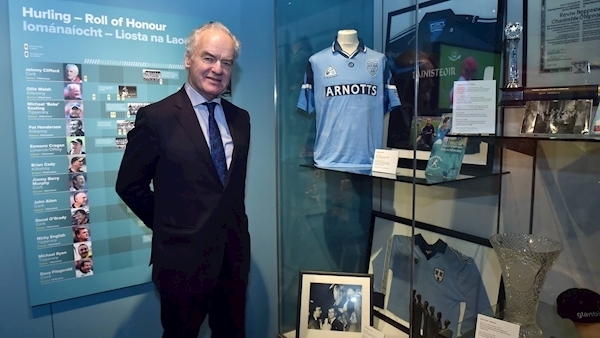
Dublin legend Tony Hanahoe spoke to Michael Moynihan on football in the capital, why he doesn’t favour professionalism, and remembering the late Anton O’Toole.

‘Kilkenny won 11 out of 15 All-Irelands but I heard nobody talk about splitting them in half’

Dublin legend Tony Hanahoe spoke to Michael Moynihan on football in the capital, why he doesn’t favour professionalism, and remembering the late Anton O’Toole.

It is one of the stone-cold, ultra-dependable sportswriting cliches.

‘I met X for coffee last week and he looks like he could still do a job for Y even if it’s over Z years since he won his last All-Ireland.’

Well, your correspondent met Tony Hanahoe for coffee last week and he looks like he could (etc, etc) for Dublin even if (etc, etc). The man who captained the capital in its era-defining games against Kerry during the seventies was happy to talk about tomorrow’s game.

“Given the history, obviously a Dublin-Kerry final has a certain significance. Dublin are going well at the moment and Kerry, traditionally, are never too far away. The question is how much Kerry have improved, what are Dublin going to do on the day? Going into the game as favourites is not the position one wants to be in — we’ve all had bad days before, and it doesn’t take too much research to find those.

There’s no such thing as a sure thing. Dublin have a good team at the moment, they have been playing well, they’re in a unique position, one few teams have been in, but the question now is can they deliver?

This was almost pro forma, though. Chatting about Hanahoe’s All-Ireland weekend plans sent the conversation in a more interesting direction.

“The last few years I’ve been involved with the past players and the GPA, and we’ve established a lunch on the Saturday before the All-Ireland. It was for hurlers and footballers, but this year the hurlers branched out to a lunch on their own before the hurling final, which was a natural direction for them to take.

“But we now have about 50 tables, about 500 people — a lunch for ex-players to meet ex-players. I won’t say that that was neglected, because that would imply a duty, but it was an area that didn’t happen and it should have happened.

“Most other disciplines have had this kind of event from one end of the year to the other and it (the GPA event) was an immediate success. It’s now fine-tuned itself into an event that people want to go to, and it’s for players: not everyone in the room is a player but there’s a ratio of about 7:3 on the tables, with seven ex-players.

“We’ve also organised a Hall of Fame award, which to me is the ultimate — that your fellow players should nominate or suggest you for the Hall of Fame award.”

The rational explanation with deep feeling behind it. That was how he played (and managed: people overlook his player-manager role when Dublin won the All-Ireland in 1977).

“All these things develop — it’s a frightening statistic, personally, to think those days are 40 years ago, or more. Back then, a lot of our players would head to the races in Listowel, until they put the races ahead of the final.”

A dry pause.

Quirke's All-Ireland Final Preview: Kerry's matchups. The Fenton factor. Walsh wildcard. Gough controversy

“My own in-laws were north Kerry so maybe Listowel didn’t have the same appeal for me.

“This Saturday’s lunch is well attended by all the provinces, and a lot of the ex-players are delighted to attend because the mingling didn’t happen, really, in our time. It’s not the same as going to a match and shaking hands with the fella a couple of rows behind you, and saying ‘we must meet up some time’, because the next time you see them you’re both at a funeral. There’s more interaction between players now, which is a good thing.”

The conversation continues along those lines: discursive, analytical, rewarding. Hanahoe’s view of the GAA — what it is now, what it was when he played, what it should be — is worth hearing, in particular the change in the Association in the last couple of decades.

“On a social basis I give huge credit to a couple of people, though naming names is always a dangerous game.

“One is Sean Kelly, the former president of the GAA, and the late Moss Keane. The latter played all disciplines with aplomb and said the highest thing on his agenda was being a Kerryman — he wasn’t influenced in any situation.

“I know the GAA ultimately made the decision to allow rugby and soccer in Croke Park, but I think that was a very good social decision and — between Keane and Kelly — it brought Ireland forward by about 60 years. It was the right thing to do and was part of the development.

“I think a lot of people heaved the chip off their shoulder and realised there wasn’t that much difference between each other.

“It was great for the GAA to be able to say, ‘we have the stadium that can cater for this situation, and other situations, and we can be depended upon to participate — these are our commercial terms and this is where we are’.

Tony Hanahoe in action in 1975. Picture: Sportsfile

“I thought it was a great development to be able to say that — you could walk away then, feeling neither superior nor inferior, but having had a business arrangement with another discipline which worked out very well.”

Another name worth mentioning is that of the man behind the redevelopment of Croke Park in the first place. Does Peter Quinn — then GAA president — get enough credit, though?

“No,” says Hanahoe. “He had the unique ability to make the brave decision to say ‘we can do this’ and the business nous to handle it.

“A lot of people were talking nonsense then about developing the stadium but Quinn and his committee made the right decision — there was also an architect, Des McMahon, who was up to the job — and this is now part of our heritage.

“People come to look at this stadium and ask ‘how can they do this?’, they see teams playing and ask ‘where does the passion come from’. Its equivalent is not really there in other sports and disciplines.

“And that was a very emotional afternoon (Ireland v England). One thing that impressed me was that I never heard the national anthem sung with such fervour.”

This year comes to a head tomorrow on the big field in Jones’ Road, with Dublin looking to join the immortals. Win or lose, this team has recast the capital as the power in the land.

“To quote Christy Ring, it’s very hard to beat tradition, and it’s twice as hard to make it.

“Maybe Dublin are on the road now to making that (tradition), and maybe they’ve achieved it.

“People accept that there are certain traditions associated with certain areas such as Kerry, Kilkenny, Cork, Tipperary, Galway, Mayo. Counties emerge and slip away as well. Down, Armagh, Tyrone, and Donegal have emerged in the North.

“But like it or lump it, Dublin are going to be a traditional stronghold, which is a great thing for the city. People are genuinely interested. You have to make allowances for the percentage who follow a winner, but a fair proportion of the people who’ll be there Sunday will want to support their team and will be involved.”

To focus on one of this writer’s obsessions, though, is the GAA now a middle-class pursuit in Dublin?

“Maybe they’ve matured into what they are. One of the things that Dublin got right was starting at the grassroots, while other sports might have started at the elite level and moved down.

TonyHanahoe1976DublinGAA_large.jpg

“But the GAA by its very nature starts at the grassroots. You can’t say that’s not true, because it is.”

With that in mind it’s no surprise to hear Hanahoe say he doesn’t favour professionalism: “It would be hugely destructive and unsustainable for the GAA. I’m all in favour of players being looked after properly, and people might say ‘he’s looking at that from an elitist perspective’, but I’m not.

“Whatever way the funds are filtered, it should be filtered into the clubs: the old saying, that you never see the spokes until the wheel is stopped — to me the clubs are the spokes. They have to be looked after.

“There’ll always be a market for what happens in Croke Park this weekend, but where are those gladiators going to come from?

“It’ll take very careful financial planning to ensure you don’t lose the spokes. It’s come a long way from the days of someone almost taking the jerseys off players in the dressing room after a game, or counting the hurleys.

“There comes a time when you can’t have amateurs running a serious professional business, with serious decisions to be made on a commercial basis on income, resources, expenditure coming you need people who are used to making those kinds of decisions, not someone whose biggest commercial decision apart from raising a mortgage on their house was buying a car.

“It demands an awful lot more: these are serious economic decisions being made by an organisation which is not only fighting for its market share nationally, but internationally as well.

People talk about the team I was involved in, but it’s true to say coming and this isn’t a complaint coming that all we ever got was tea and Marietta biscuits after training sessions. Those and a determination to win were what made that team. But we’ve moved on from those days.

Well, he brought it up. Heffo’s Army, Dublin and Kerry, the Jacks Are Back. It can be indelicate to put the question, but how does Hanahoe feel about his team being replaced in the Dublin pantheon by the current side?

A shrug.

“It’s the way life is, on a personal basis I’d have no issue with it. Intergenerational comparisons are dangerous — everybody must answer the question themselves but I think they’re an excellent team, they perform very well on the field in terms of discipline and everything else.

Film stars, politicians, sports stars, the danger is always when you step off the podium and you realise you’re yesterday’s man. How do you cope with that?

That’s the big lesson for people in all those categories.

“In essence people must have something else to step into because some handle it better than others.

“This Sunday, the adulation of stepping in front of 82,000 people... everyone can do it in Parnell Park or St Anne’s or a pitch in any part of rural Ireland.

“But I’ve seen that there are people who can’t hold it together when they’re in the dressing room and there are all those footsteps coming in over their heads, like the Coliseum.

“Come out and there are 80,000 people looking at you, and there’s no room for mistakes. They might be amateurs but they’re analysed professionally; in our time we often complained about what was happening off the ball, but now there’s no escape.

“I have no issue with today’s players. I wish them well.”

The game is different in many ways now, not all of them better. Is it fair to say modern Gaelic football can be a hard watch at times?

“Yes. You go to a hurling match and there are 22 scores in 20 minutes. People want to see that. They want action. Whatever’s happened to hurling is improving hurling, and it should be allowed to continue improving the game.

“But these are also two different games. The most difficult aspect for football is defining how you can legitimately dispossess a player. If a player makes clean contact with the ball in an opponent’s grasp, it’s nearly always a foul if he appears to be using the fist to do so — irrespective of whether he strikes the opponent, but simply because the fist is seen.

“There’s also an emphasis now on the possession game, and it may be fine, but it’s boring.

“People are talking about counting handpasses, for instance, but the referee can’t do that. It can’t be down to him. The sin bin was a great idea but it didn’t continue to be used because it was favoured by another discipline. But why not copy something if it’ll improve the game?”

Hanahoe points out experimentation is necessary: “The Super 8s... anything with a trial period, I’m in favour of it. The Super 8s is not perfect but it’s an improvement. My only criticism is that expecting teams to play three weeks in a row is not sustainable physically, but that’s correctable.

“We have to move away from our fixation with provincial finals and to get counties the maximum number of matches. There are various issues — geography and so on — and I’m not saying it’s easy, and whatever division of counties which has to be made to keep teams competitive, or another trophy, but it should be done.

If you went back a few decades you’d say hurling was dying, but it if weren’t for hurling in the last few years the GAA would be dying. I chaired the football rules committee a few years back but it’s a different game now, and I’m not sure if that’s for the better.

The same goes for suggestions about dividing Dublin: “It’s very easy to be critical of a successful team. Kilkenny won 11 out of 15 All-Irelands under Brian Cody but I heard nobody talk about splitting Kilkenny in half because they were too strong.

“Any successful team, the objective should be to reach their standards, not to pull that team down, or to change the rules which ‘level things out’. But ‘levelling’ always means levelling down.

“Resources are a bigger question, and resources should be made available to the weaker counties.”

Hanahoe leading his team in 1978. Picture: Sportsfile

The coffee is getting cold. Did he ever foresee the current climate, with Dublin’s footballers as integrated into the city’s sense of itself as they are now?

“Frankly? Maybe, honestly. In my lifetime, if you looked back, when I was young the Dublin-Kerry rivalry in the fifties matured into the sixties where we only won one.

“It would have been a great psychological boost, by the way, if Dublin had won the 1961 hurling final. That’s a psychological chip that they’ve been labouring under ever since then.

“But in football the seventies was a new development — in the eighties we won one final but contested three, and one in the nineties, and now. ..

“Was it inevitable? People will say look at the population, but I think you’ve got to look at the playing population. Since the development of Dublin as a unit you have a new situation as against 40 years ago in that there are major strongholds in south county Dublin.

“If you think about it, if someone had said that a hurling club from Killiney would not just win the All-Ireland club hurling championship, but retain it, you’d have said they were nuts. Never happen.

“But it has happened.”

There are other considerations this year. Tomorrow will be the first All-Ireland final Hanahoe and his old comrades will not have Anton O’Toole with them: the flying wing-forward passed away last May. Will that make it a different experience?

The answer to that is yes. I spent a lot of time with Anton before he died, as did some of his teammates.

“David Hickey, in particular, made a huge effort to come back from the Middle East to take him out for a couple of days.

“A lot of people liked him, a lot of his teammates liked him... I suppose he wasn’t the first of the group to go, in that Mick Holden passed away a few years ago, but Mick only came in towards the end of our time playing, and Kevin Heffernan went as well.

“In that sense the slide has begun, in a way, and yes, it’s sobering.”

Rational. But the deep feeling is always there.

Former Kerry footballer, John O’Keeffe, will receive the award at the seventh annual GPA Football Legends Lunch this afternoon.

Quirke's Extra-time podcast: The final predictions. Who calls it for Dublin by eight or nine?

x

More in this section

Cookie Policy Privacy Policy Brand Safety FAQ Help Contact Us Terms and Conditions

© Examiner Echo Group Limited