Derek McGrath and the importance of being earnest
The question that just begs to be asked is how could it ever be the same for Derek McGrath.

Derek McGrath and the importance of being earnest

The question that just begs to be asked is how could it ever be the same for Derek McGrath.

How could he ever devote himself to another bunch of players as he did to Waterford these past five seasons?

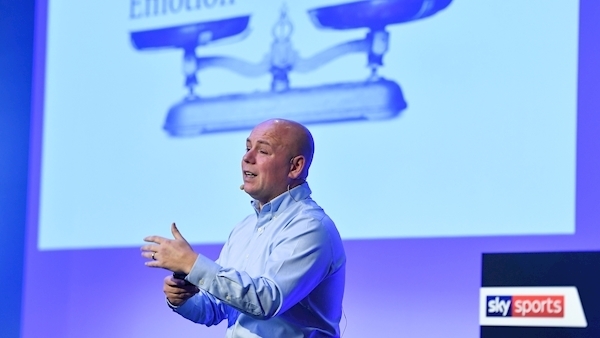
“Treat your men as you would your own beloved sons and they will follow you into the deepest valley,” he said, quoting the ancient Chinese philosopher and general Sun Tzu in his presentation to the GAA national coaching conference on Saturday.

But how many sons can one man have?

Of course, things would be different, but the goal would be the same. His ideology too.

“I think it will be difficult, but the only way you can do is immerse yourself in getting to know people. I don’t think it could be naturally correlated with Waterford, based on the relationships I had with the players from the age of 12 in (De La Salle) school and the club. Copying that would be difficult, but the powers of communication and forming a bond within a group of players would have to be done in stages.

“I wouldn’t rule it out. I wouldn’t see it happening in one year, the falseness of getting a team into a huddle after being there two nights at training when you don’t even know the players. You have to think of the practicalities. You have to create the bond first and show to the players how much it means to me and lead by example for a while and then bring them with you.”

To surmise McGrath’s tenure as merely a labour of love and affection is to pigeonhole him. To consign him to one role as the players’ manager and Brian Cody to the other as the manager’s manager doesn’t allow for nuance or reality.

The McGrath that barked at his players in the dressing room following wins over Cork and Clare last spring wasn’t the affable man known to the public, but then misconceptions apply to others too.

“Reading in Jackie Tyrrell’s book that when it came to Jackie picking up Lar Corbett in the 2011 All-Ireland final Brian came to him and said: ‘How do you feel about it?’ The compassionate side of a Cody-like figure, sometimes we don’t see that, but it’s real.

“I referred to Noel’s (Connors) thesis on Saturday in relation to the combination of leadership styles. I was asked to proofread Noel’s thesis and it was almost like an affirmation of the types of leader you can become. You can’t be any one set style. Cody, Alex Ferguson can’t be any one set style. You can be authoritative, coercive, but they can be conciliatory or pass things over and empower the players and just because you might be seen to create more harmony doesn’t mean you lack the ruthless edge.”

Sorry didn’t seem to be as hard a word for McGrath to say to his players as it might have done for rival managers, but it was never gratuitous.

I would have done it, not frequently, but when the occasion demanded it. You can’t rule by consent, you can’t want to have them all like you, but if I felt if I made a genuine mistake or overcooked anything or over-thought something or omitted something I would [apologise].

“I’d do it without putting emphasis on a lack of authority. You want to get the balance right between the styles of leadership you bring to it.

“If it came to things like our body language being better on the line or decisions we made
 I showed a picture in the presentation of me on the sideline with 12 minutes left in the Munster final in 2016 (Tipperary 5-19 Waterford 0-13) with my head in my hands. It’s not that you could be chirpy at that moment in time with the way the game was going, but you can learn from that in the message you convey.”

Not that it suits how he is portrayed, but he senses the way managers in general are viewed is changing.

“Players are more informed and are keen on learning more than ever. We’re dealing with lads who are more in the way of thinkers now and getting a balance between treating them in the manner so that they can enjoy is important.

“I genuinely think the depiction of managers being all-conquering and all-authoritative in their dealings with people is fading. You look at Limerick and the fun element that was obviously evident, with Cian Lynch and Shane Dowling talking about the ice-cream van. I think that’s there in a lot of managerial set-ups, but perhaps not as openly espoused.”

McGrath’s speech at the weekend was peppered with references to literature, chief among them Robert Frost’s poem ‘The Tuft of Flowers’, which ends with the lines: “‘Men work together/I told him from the heart/Whether they work together or apart.’

“Some people might think it’s corny drawing an analogy from a poem which is about nature, but for me it works on a deeper level. It’s about having an appreciation for what you’re doing, who you’re representing. Complete inclusivity. The philosophy is ‘whatever way it goes, I’m in it, I’ve bought in, because I believe in it’. People talk about club being family, county being family and it’s about bringing those relationships out onto the field in a manner that frees up the players, almost because it doesn’t matter, we’re all in it together.”

More in this section

Cookie Policy Privacy Policy Brand Safety FAQ Help Contact Us Terms and Conditions

© Examiner Echo Group Limited