Snap judgements that define the GAA year
The late Raymond Smith is the man responsible for A Season Of Sundays..
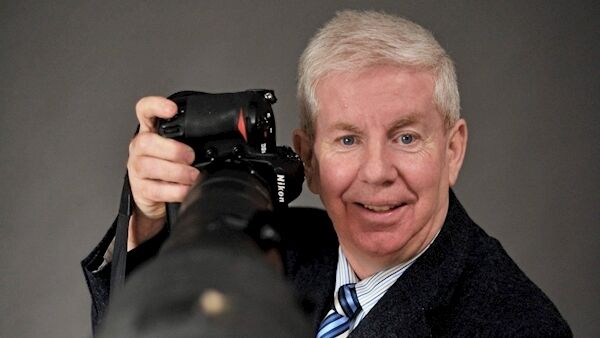
Ray McManus elaborates.
“Every year, Raymond brought out a GAA book, and he’d ring me and say, in his Tipperary accent, ‘Ray, have you any pictures lying around the floor of the darkroom? I’m doing a book.’
“He was a very nice man, but a photographer would take that as an insult. He was great to deal with — he’d come in a taxi, looking at pictures for 10 minutes, pay me, and leave — but that put it into my head: I’ll do my own book.”
This was 1996. McManus, of the Sportsfile photographic agency, rang his mate Peadar Staunton, of Design Gang, and put the process in motion.
Now, 22 years later, A Season Of Sundays is part of the GAA calendar, a marker of the nearness of Christmas. The mix of pictures — dazzling action and offbeat observation — is an accurate picture of the Gaelic games year, from the frost of January to the big shows of September (and beyond).
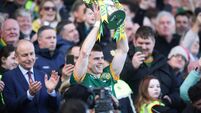
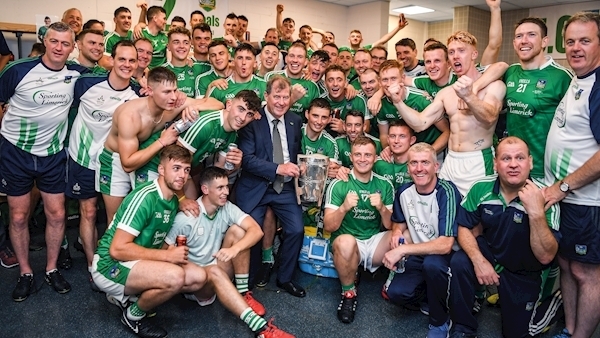
Sitting in his office on the South Circular Road, McManus flicks open the 2018 edition and we land on the Limerick senior hurlers celebrating a first All-Ireland title in 45 years.
How did he get that one?
“Nobody’s allowed into the dressing room unless you’re invited in by the secretary or the manager.”
“I’d have a good relationship with most county boards and managers — I wouldn’t be dirtying people’s bibs, and as a consequence I’m reasonably respected.
“I said to the Limerick secretary, Mike Riordan, ‘I suppose I wouldn’t be thrown out of the dressing-room,’ and he said, ‘no, go ahead’. I was actually the first one into the dressing-room, before anyone.
“I thought of it like this — I had staff out on the field running around, and at my age I don’t find the running too attractive: one lap of Croke Park would do me. So I went in and sat in a corner.
“They were all cheering and so on outside, until one player came in and sat down opposite me. He had a drink and soaked it up for three or four minutes. All on his own.”
After decades in the business, McManus’ judgement of a situation is sharp. There was a picture in the solitary player, but not a picture for general consumption.
“I don’t drink myself, but a fella is entitled to a beer if he’s been off it since the previous October or whatever. I understand what I call ‘achievement fatigue’, a player comes in and relaxes for a minute after the event is over.
“I took a picture of him but I sent it to him personally. I wouldn’t use that.
“But eventually they all came in, but you’ve to wait for the cup to come in. There’s no photo until that’s in the dressing-room. When it comes in all hell breaks loose, and that’s where a picture like that comes in.”
The arrival of the gent on the left in the shot was the clincher, though.
“What added to it was JP (McManus) came in,” says McManus.
“He made a small speech, congratulating everyone — he said if he had his way he’d make the following day a bank holiday, and you can imagine the reaction. Now, they probably had a bank holiday for the next three weeks, but it brought the emotion to a head.
“Experience is everything. Technically speaking you probably shouldn’t set up a picture, though those rules apply more in other countries, where you wouldn’t be allowed to invite someone to come into a photograph.
“I said to JP to sit on a box and they all crowded in around him, not surprisingly — he’s their sponsor, their hero, but he’s a very modest guy, he wasn’t making it all about him.
“I could have had a picture earlier but I knew the probability was that JP would arrive. He came in, said a few words, and bang — the picture was there.”
“And I left immediately then. They were entitled to their privacy, and I’d been there 20 minutes, maybe, at that point. Could I have gotten a better picture? I don’t think so, but it’s like trading stocks — there’s a time to sell and a time to buy, and that was my ‘sell’ time.”
Another shot which attracted a good deal of attention was the picture of Patrick O’Connor of Clare consoling Seamus Callanan of Tipperary after the former side had won their Munster Championship tie.
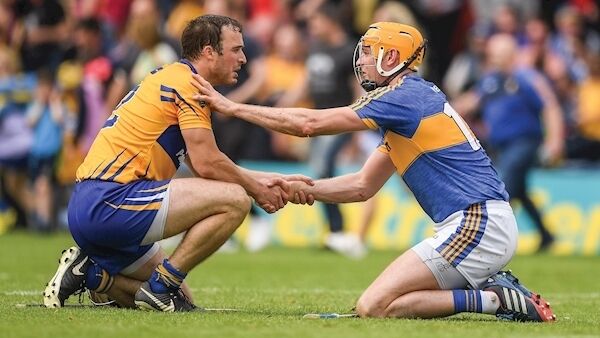
“A lot of the time we go to a match and one of us is at one end, another guy at the other, or if it’s a big game at the four corners of the field.
“But with all the round-robin games this summer, and staffing them all, I was on my own at this one. I had a knee operation in January so I was conscious, for instance, at the final whistle of whether to start running around the pitch for another shot.”
There are other considerations when it comes to rubbing shoulders with supporters after a game, McManus points out.
“Photographers love shooting in Croke Park because there aren’t any pitch invasions. When there are you’re in danger of being trampled on — and I’ve seen children trampled on at games, that’s a real issue.
“While I understand why people want to come onto the field, I’m a great supporter of not letting them onto the field. The players get a better time to enjoy themselves, too.”
So, Thurles, crowd spilling onto the turf, knee aching, what’s a man to do?
“I said I’d wait on a reaction, and it happened right in front of me.
“The more you practice, the luckier you get. Why did I decide to stay there, though? I don’t really know.
“It’s probably one of my all-time favourite pictures. I took a picture of a small child crying in Croke Park 30 years ago — he’d conceded about 11 goals, and the tears came — and that stayed with me.”
“So does this. There’s something about the way Patrick O’Connor has both hands involved in commiserating with Seamus Callanan, that sense of ‘I’m really sorry for you’. It was just total respect.”
There’s a lot to admire in the picture: the blurred background hints at the crowd invasion, there’s a slight angle to the two players as their heads incline, and it’s hard to work out who’s consoling who.
“There’s an element of that, who won and who lost — and in a way it almost doesn’t matter.”
“I’ve heard Patrick say since then that he’d been in that position before himself. He knew what it was like, and the value of someone offering sympathy in that situation.
“You don’t really see the situation develop: it happens and you record it. I went on and joined in the wide-angle celebrations, if you like, and while I knew I had a picture of the two lads commiserating with each other, I didn’t know how good it might be.
“With digital cameras I often have people say, ‘oh you must take loads of photographs, click click click — but I don’t. In an action sequence you might take a few, but you wouldn’t be taking that many.
“The picture is special. There are so may different elements — the GAA talks about respect, and there it is. Out of focus you can see people coming in over the hoardings . . . Seamus had his head down on the ground originally and Patrick came over and tapped him on the shoulder, so there was some development in it, a couple of things happened.
“The game is over a minute or two and it’s about to go mad, but the picture was there for a second, and we got it.”
Other events were more dramatic. There was an outcry when Waterford had a goal awarded against them in their game with Tipperary when the ball didn’t seem to go over the line. Piaras Ó Midheach’s shot stoked the controversy even further.
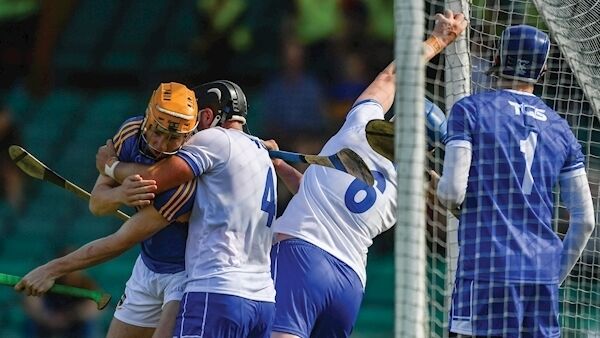
“He got the picture, and if you look at it, there’s a lot of jostling going on, but everyone wanted to see the other side of the goal, to see what had happened.
“I’d say it was one of the most-used pictures on Twitter — the most-robbed, maybe, because we make our money selling pictures — but our newspaper clients were delighted with it.
“I don’t know if it proves conclusively whether there was a goal or not. What happened a split-second before or after? But the picture was taken at probably two-thousandths of a second.
“‘Austin Gleeson appears to catch the sliotar’ before it crosses the line, as the caption goes. We just record it — we’re not at anything malicious, we put the picture out there and if someone wants to interpret it in a particular way, that’s up to them.
“Our job is to take the picture. Sometimes an incident can be exaggerated because we’re in the right place at the right time. We can’t definitively say here that it crossed the line, or it didn’t, but when I heard we had the picture I was delighted. And if I’m delighted the clients will be delighted.
“It’s there for debate. You could say it wasn’t a goal, it was a goal. That’s another person’s call.”
A personal favourite is an atmospheric shot of Dublin football boss Jim Gavin — remote, mysterious — emerging from the shadows before a game like a counsellor to the Medicis in Renaissance Florence, or an extra in Wolf Hall.
“This one was taken by Ramsey Cardy. Jim’s a good fella, we get on well with him: if I needed to ring him he’d take a call.
“But he doesn’t really do photographs, outside of those 8am press calls or whatever. You don’t really get a chance to take a picture of him.
“Here he’s just coming out of the tunnel in Portlaoise. It’s a nice portrait in that it’s a good picture of a guy who’s difficult to photograph. The light is coming in from the left, the tunnel in the stadium for the players has a shaft of light getting pulled in and it lends itself to a good shot.
“Jim would know Ramsey but here you can tell he’s not posing, he’s got his head in the match or getting ready for the match. He’s coming out of the darkness, he’s going about his business and not interfering with anyone.”
Then there are what McManus calls the ‘oddball’ photographs. Images often taken off-Broadway that may not be action shots but which tell a lot about the GAA.
“This one struck me because it was before the Kilkenny-Dublin senior game. The minor game was on and the two senior panels came out to have a look at it.
“Darragh Brennan took the shot and in what other sport would you see two groups of players, who are about to go out and hammer the lard out of each other, standing with no great tension between them as they watch the curtain-raiser?
“You don’t get a classic shot every time you go out, but this is a very simple shot. There’s nothing special about it in terms of access or equipment, but it shows what Gaelic games are about.
“They can chat away before the game, cut the heads off each other for the 70 minutes — and it’s done then. Over ’til the next time.”
It helps, though, if the photographer knows the hinterland between teams and players.
“There’s a good one, Dean Rock and Lee Keegan in the league this year. That’s a knowledge-based picture, because Stephen McCarthy would have known that the previous time they met, in last year’s All-Ireland final, the circumstances were quite different.
“He’d be aware of that. Not everybody gets the picture, but it’s a smart one. Watching out for what might happen, and then grabbing it.
“Same here, Evan Comerford late to the huddle. He’d usually be a sub to Stephen Cluxton, and he didn’t realise there’s a team huddle before every game, so he’s late arriving to the huddle here.
“Darragh Brennan got this. You have to be lucky — he’s up in the stands, and that angle makes it. If he were on the ground it wouldn’t be half as good.
“But you also have to be observant. I’m not sure how many people would have noticed that, and there’s another meaning to it — he’s new on the scene and doesn’t realise this is part of the pre-game set-up because usually he’s a sub. So it shows how a fella has to learn.”
Being alive to the possibilities is something that can’t be taught, but it can be encouraged.
“Here’s a Kilkenny supporter walking around before the league game with Waterford. We have a rule that you have to be at a game 90 or 100 minutes before it starts — the thoughts of being late and parking two miles away and trying to get the teams as you land.
“And that’s what you can get, pictures like that. A Season Of Sundays starts in January with grassroots, then it moves to the club games, the national leagues, the championship games. So towards the end of the book there are fewer ‘oddball’, single person in the stand pictures because the action takes precedence.
“But the book is there to portray the GAA year good bad or indifferent — rainy days in Ballyhaunis, sunny day in Croke Park, it doesn’t matter. Some of the pictures are obvious, like that lady walking on the terrace, but by February-March we start thinking of them.
“Take these two, one taken in Cork and one in Dublin, on the same night. Both photographers made an issue of the skyline, though there was no communication between the two of them, so they were taken on the same the night. They’re miles apart, different photographers and different games, and it works well because of the coincidence.
“Here’s another — I’m in Freshford and someone else is in Ennis, and we have two pictures of people with flags. Total coincidence.
“In mine they’re going for a cup of tea at half-time, but instead of getting a cup of tea myself I went looking for a photograph, and I got that.
“The first picture in the book is Brian Cody arriving for a league match in January, a steward shaking his hand. Work on to the last shot, which is two Cork girls consoling each other after the ladies football final.
“We didn’t set out last year to organise the book like that, it happened like that. There’s a mix in it.
“Look at the picture of Dr Noel McCaffrey and Dr Jack McCaffrey, to give them their titles, right after the All-Ireland senior football final.
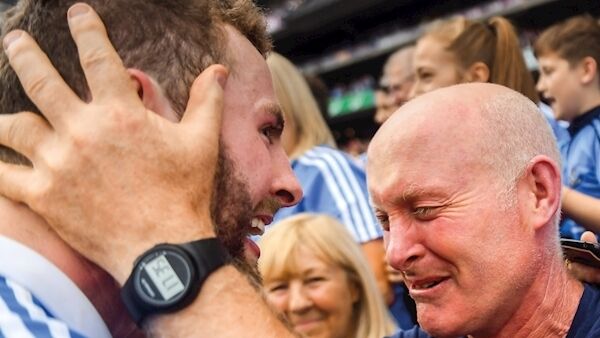
“Which of them is the prouder? They’re in the first flush of victory, and you know that because you can see the time on Noel’s watch in the picture: 5.35 on September 2.
“That to me is quintessential happiness. It has a caption, but it doesn’t need a caption.”
It doesn’t need a caption? The photographer’s dream comes true.

CONNECT WITH US TODAY



Be the first to know the latest news and updates