Johnny McGovern a lifetime at the heart of Bennettsbridge
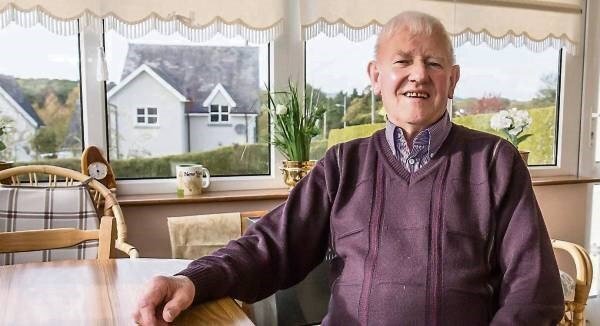
Johnny McGovern is famously self effacing and pleasant, modest to proverbial fault.

He smiles now at the memory, much as he smiled to himself, 66 years ago, walking up Station Road in Bennettsbridge. Barely begun, the June day was creaking with birds. He might have been disorientated but not for the usual reason.
This young man of 20 was in his first season hurling senior with Kilkenny. Dublin had just won a Leinster semi-final by three points. The wait since 1947âs All-Ireland senior hurling win had lengthened.
Now he is a quite remarkably hale 86-year-old. âI wasnât even playing,â he says, head tilted back and face crinkled.
âA sub, not brought on. The car stopped, coming back, in Kilcullen for a dance. Then they drove across to Carlow afterwards, to give someone a lift.
âThe car didnât arrive back here until seven in the morning. And I not drinking or doing anything⊠My father and mother were wondering what was wrong with me at all, that I wasnât home.â
There was no time for anything but a quick bit of breakfast: âI was working at the time down the road in Bennettsbridge Creamery, and I had to be in at half eight. But I got myself down there. I slept well the following night.â
He tells me the other players in the car but wants names unmentioned. Seven decades have left Johnny McGovernâs courtesy untouched.
He was not daunted by the experience and his potential counted as plain. The same young man featured with Kilkenny in two All-Ireland minor finals, flopping to Tipperary in 1949, unexpected winners over Tipperary in 1950. McGovern proved one of the best performers on both occasions. Bennettsbridge were coming and this lad was rising with them.
Modesty is salted by success, by the challenge success presents to any sense of entitlement. Between 1952 and 1971, Bennettsbridge met nearly every gauntlet. They won 11 senior titles in that 20- season span. Johnny McGovern started on each one of those winning sides, with this haul still a record.
Born on March 7, 1932, he grew up in a parish not noted for producing top players. His was a Kilkenny life because dad Joe McGovern, from Newcastle in County Dublin, found a job in neighbouring Thomastown. He married Bridget Jackman, from Bennettsbridge, and they settled on Station Road in 1940. Their son still lives in the same house.
He has seen the placeâs hurling in all weathers. Back then, the only senior win lay as far back as 1890. Johnny Dunne, the first native to win a Celtic Cross, did so in 1933âs triumph over Limerick, when he scored the decisive goal and was a Mooncoin clubman.
All changed in the 1940s. The two pivots were Edward Lyng, a schoolteacher, and Fr Nugent, the curate.
âThey were absolute fanatics for hurling,â McGovern relates.
âFr Nugent came after Mr Lyng but he kept on the same system of play. We won a school league in 1944 and proceeded from there. We won junior in 1948 and 1951. It all took off after 1952.âÂ
There were other influences. Jimmy OâBrien, a Cork native, was manager of Bennettsbridge Creamery. A friendship ensued with his young employee and they would travel together to see matches. One memorable trip involved going to Limerick to watch the 1951 Munster final between Cork and Tipperary.
That day, Christy Ring hurled midfield on Séamus Bannon. Producing one of his finest performances, Ring saw off the highly rated Bannon, even though Cork went down by two points.
As McGovern recalls: âJimmy knew all the Cork players, Christy included. We went to their hotel afterwards. I was there, a young lad of 19, and a bit overawed, standing so close to Christy Ring.
âThen Jimmy called him over and said: âBy the way, Iâve a fella here with me and he could be out playing against you some day yet.â Christy had a look at me, like that [indicates sharp glance]. He mustnât have been too impressed, because he said: âNever count your chickens before theyâre hatched.â I mustnât have looked like a prospect.â
Cork and Kilkenny never met in the championship during Johnny McGovernâs career. Still, this exchange swerved into history, because he is now Leinsterâs oldest living captain of a successful Railway Cup team.
He is amused and level in recollection: âThree years later, in 1954, and it came to the Railway Cup final. I happened to be captain because Iâd been captain of Kilkenny the season before. I went down for the toss, and Christy was captain of Munster.
âHe came up to toss, and he looked at me. âWell, Johnny, howyah,â he said. Jimmy OâBrien had been talking to him, filling him in. He knew that it was the same young fella from the hotel.
âWe beat them, anyhow. And it was the first time Leinster had won for years. So at least one of those chickens hatchedâŠ!â
The day might easily have been tragedy rather than triumph. Paddy Phelan, Kilkennyâs superstar wing back during the 1930s, drove up four players, including Leinsterâs captain and Jim Hogan, the Tullaroan man who was Ringâs chosen marker. A terrible accident was barely avoided: âComing down a steep hill near Ballylinan, the brakes went on Paddy. Heâd had the car serviced the day before but all the brake fluid leaked out, because the mechanic hadnât tightened it back up properly. There was a sharp bend at the bottom of this hill, and we didnât think weâd make it.
âJim Hogan was shouting: âLet me out! Iâll jump out!â Jim was inside me on the seat and I said: âDonât, Jim! Itâll be worse.â I held him back from the door.
âPaddy had the gear lever up, the old sort of one that was on the steering wheel. He was tugging at it, trying to get out of gear. And he barely did it, and we barely got around the bend. We got more brake fluid in a nearby service station.â
Drama stiffened into shock.
âWe made it up to Barryâs Hotel. The first thing Jim Hogan did was to go into the bar and order a glass of whiskey. I think he might have got two of them⊠I suppose it was the sheer fright of it.â
Shock released into virtuosity: âWe went over to Croke Park. Jim just ignored Ring and went out first for every ball. Grabbed it, sent it 70 yards down the field. He had a blinder, the best game he ever had. He was âSports Star of the Weekâ in the papers for that performance.
âWe were lucky. We could all have been killed. It was a tight one.â
Kilkenny hurling experienced far more lows than highs during the 1950s. There were many disappointments before 1957âs All-Ireland win over Waterford.
âI got on the team at left half-back in 1953,â McGovern notes.
âWe were close but lost a lot of big matches, and were under pressure with the supporters.
âTen years is a long time to be waiting in Kilkenny. Winning in 1957 was a relief more than anything.â
They lost to Tipperary in 1958âs All-Ireland semi-final, to Waterford in 1959âs All-Ireland final. For Johnny McGovern, injuries started to nag. But he was so determined and versatile that he started at centre-forward in 1963âs All-Ireland win over Waterford. He ended up a sub for the heavy loss to Tipp in 1964âs senior final.
Then he retired from stripes, staying in Bennettsbridgeâs green and gold hoops long enough to win that unique 11th medal. This enduring achievement befits one of the countyâs most popular figures.
Like so many former stars, Johnny McGovern found an afterlife on the sideline. 1970 excepted, he acted as a senior selector with Kilkenny every season between 1967 and 1978.
âI really enjoyed my playing career,â he states.
âBut I donât know whether Iâd do the selecting all over again. You just canât please everyoneâŠâ
Now Bennettsbridge are back. The club was hurling junior in 2014, lodged there since 2004, but face Ballyhale Shamrocks in tomorrowâs senior final. He is the same level man on their chances: âWe have young lads coming along, which you always need. Two minors with Kilkenny this year, CiarĂĄn Brennan and Jamie Harkin. Theyâll be eligible for adult hurling next year. And we have younger lads again coming as well.
âWhatever the result against the Shamrocks, I donât think itâll be the end of this Bennettsbridge team.â