Tackling high dropout rate of girls from sport
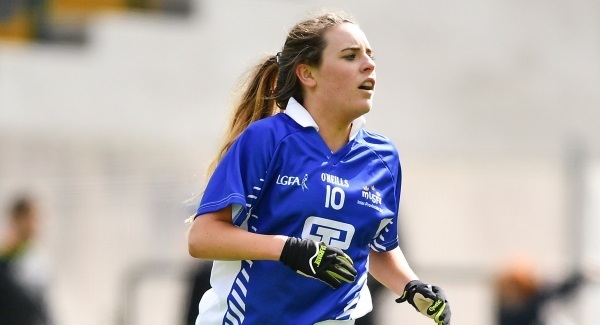
But all sports have their challenges. For instance, is the perceived high dropout rate of girls from sport a reality?
Orlagh Farmer can give some answers. Farmer’s doing a PhD in the Department of Sports Studies and Physical Education in UCC under the supervision of Dr Wesley O’Brien and Dr Kevin Cahill - her focus is on the design, development, implementation and evaluation of the ‘Gaelic 4 Girls’ programme, but you may know her better from her
Farmer’s doing a PhD in the Department of Sports Studies and Physical Education in UCC under the supervision of Dr Wesley O’Brien and Dr Kevin Cahill - her focus is on the design, development, implementation and evaluation of the ‘Gaelic 4 Girls’ programme, but you may know her better from her hatful of All-Ireland medals with the Cork ladies footballers.
“I’m getting a representative picture of where 8-12 year old girls are at in Ireland currently in terms of physical activity, fundamental movement skills (FMS), attitudes to physical activity and sport - why they stay in sport and why they drop out.
“The LGFA runs Gaelic 4 Girls or G4G, a 12-week programme incorporating coaching sessions with fun non-competitive blitzes aimed at increasing participation in the sport, and my research uses that programme as a focus. There’s a lot of research suggesting girls are less physically active than boys, and on top of that there are generally low levels of activity. What sparked my research was the lack of study into this area.”
Last year Farmer went to three schools and found low levels of activity as well as deficiencies in fundamental movement skills.
Fundamental movement skills with a twist and shout 🎵 an exciting snapshot of our 'Gaelic 4 Girls' #research @UCC @LadiesFootball @edsheeran pic.twitter.com/wOPkLk2kT6
— Dr. Wesley O'Brien (@wesleyob1) June 26, 2017
“Research shows that if you’re proficient in FMS, if you’re confident because of that, then you’re more likely to stay with physical activity. What we’re finding now is that only 2.26% of those I surveyed were mastering the seven skills we tested for.
“Those skills were relevant to ladies football, but it’s still shocking. Kids should have mastered these skills by the age of ten, according to the latest studies, so it is an issue. Put yourself in a child’s shoes - if you’re not confident or proficient in these skills then you’re more likely to stay away from those activities and sports. From last year’s sample of almost 380 kids I found that only 28.2% were achieving the recommended 60 minutes of moderate physical activity every day.”
So there’s a perfect storm involved - kids don’t get the recommended minimum of exercise, they’re deficient in movement skills, and all of that undercuts their confidence in exercise?
“That’s it. My research this year also focused on ‘perceived competence’, which is very important.
“In terms of motivators, in interviews with the children I found fun a huge factor. Research shows boys are motivated more by competitiveness, where girls tend to focus on the fun and social aspects. The theme of friends being involved in the sport also came up in interviews, while barriers to enjoyment and involvement included lack of fun at sessions - that sessions were too long or coaches were too strict. Fun is the motivator and lack of enjoyment a barrier. And friends could act as a barrier too - if some children weren’t as competent as their friends, then that could become an issue for girls.”
Diagnosis alone won’t solve these issues, of course. Farmer’s searching for solutions as well. “Based on my findings I worked with the LGFA and the G4G programme and designed a tester intervention which we used in Rockbán this year. I decided fun and the social environment would be important, that FMS would be important, so I designed the test intervention with those in mind, incorporating those. We had 240 girls registered for it, the largest ever, and seeing all of them on the field in one night was fantastic.
“I tested them before and afterwards, and I haven’t analysed those test results fully yet, but next year I’m hoping to run an evidence-based intervention on a national level. It was an eye-opener - one hour a week, but I was on site and able to observe, and I’ve learned so much.”
Farmer’s imaginative training approach got quite the response on social media: “The FMS dance I choreographed got a lot of attention - I picked Ed Sheeran’s Galway Girl and got 50 of the 11 to 12-year-olds to practice it. It was practicing FMS with their friends in a fun way, increasing confidence and social skills - and we performed the dance in Rockbán and it’s gotten huge interest, people have been saying there should be more of this, because girls like to dance and you’re incorporating what they like with those essential skills.”