Does Galway's experience of All-Ireland finals count for much?
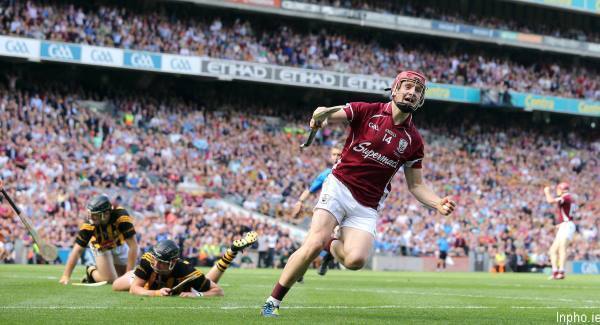
Pressed half a century later as to whether he and his colleagues had been intimidated by the Tipperary full-back line, the now Canon Tom Murphy — parish priest of Ballyragget in north Kilkenny — demurred. “We were youngsters. We had no fear of any those lads. I’d have been far more worried a few years later when I was older and I knew the consequences of defeat in an All-Ireland final.”
That pretty much sums up the dichotomy when it comes to experience and All-Ireland finals. Is being a newbie better than being an old boy? Is ignorance of what’s ahead of you preferable to familiarity? Or is there some kind of happy medium, some exalted state of consciousness, where a player is reasonably familiar with the demands of the big day without being so acquainted with them as to be petrified by Murphy’s “consequences of defeat”?
There is no hard and fast rule. Let’s call it a case of horses for courses.
A team in its first All-Ireland final as a collective can perform admirably without winning.
Think of Tipperary in 2009 or Galway in the drawn game in 2012. The 2013 renewal, of course, saw not one but two sets of novices take the field in the form of Clare and, Brian Murphy excepted, Cork. Here was one of those rare September afternoons — 1994 was another — where experience of the big day or the lack thereof simply didn’t enter the equation.
A final score of 0-25 to 3-16 illustrates the aplomb with which the protagonists succeeded in playing the game rather than the occasion.
Clearly Waterford 2008 remains the ultimate cautionary tale when it comes to stepping into the dark, yet it’s an unfair example. While they died a horrible, and horribly public, death, it has to be remembered they were coming up against the most successful team in the history of hurling at their most unstoppable. This was Kilkenny’s ultimate Terminator performance.
The case of Limerick the previous season is not wildly dissimilar. Visiting Croke Park in September for the first time in 11 years they barely got out of the blocks. When they did eventually manage to right themselves they were eight points down following goals by Eddie Brennan and Henry Shefflin. Gone not in 60 seconds but in 10 minutes in circumstances when Kilkenny’s experience was important in the right way and Limerick’s inexperience was important in the wrong way.
But the cookie can crumble in the other direction too, and in this regard 1999 remains the gold standard. Cork had a bunch of novices, plus Brian Corcoran.
Emboldened by a manager who wanted them to do what came naturally, as he himself had done in his own playing days, they hurled without a care in the world. That mattered.
So too did the fact that their opponents, Kilkenny, had contested the final the previous year, except this turned out to matter for the wrong reasons. Instead of being spurred on by their defeat to Offaly 12 months earlier they took the view, however subliminally, that they were somehow entitled to win this one having lost the previous one. In consequence they allowed Cork to seize the day entering the closing quarter. In this instance a team’s knowledge of the biggest stage became a burden.
Half of the current Galway team were there in 2015. Michael Walsh and Kevin Moran were there for Waterford in 2008.
Will Galway triumph on the basis of their greater aggregated experience of Croke Park in September?
Not a bit of it. If they triumph they’ll do so because they were the better team.
[media=scloud]
https://soundcloud.com/irish-examiner-sport/gaa-show-tactics-and-psychology-of-the-novel-final[/media]
To get the latest episode automatically, you can SUBSCRIBE ON iTUNES