10 myths and moans about sweeper systems in hurling
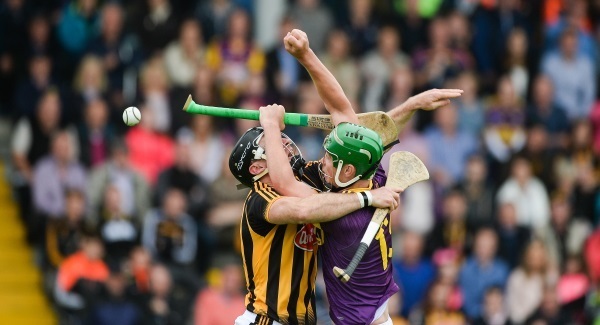
Most want it consigned to the dustbin, but when it delivers, as it did for Wexford last Saturday, as it might for Waterford or, yes, Cork in Thurles this Sunday, it’s not going to disappear in a hurry. Here, we deconstruct 10 myths and moans about the tormented tactic:
Looks are deceiving
It won’t be much of a surprise if on Sunday Luke Meade retreats to act as a third midfielder for Cork, which will leave Waterford with a spare defender. If Waterford’s backlines chose to hold their positions, then they will appear to have an extra player in their midst. Still, the misconception will hold that Waterford are the more defensive team.
It’s not me, it’s you
Furthering the first point, no matter how much a team might want to look square they will look anything but if the other team warps their formation. As Derek McGrath said of last year’s Munster semi-final win over Clare: “We were fairly conventional in that game for a long time. Clare were unconventional, which made us look that way.” Teams have three choices in that case: Mirror the opposition (as Kilkenny sort of did with Wexford), do their own thing, or try to play the orthodox way.
What is normal?
Wind-affected games aside, how many times in this year’s championship have teams retained three forwards in the proximity of the 20-metre line for anything other than the throw-ins? The age-honoured 3-3-2-3-3 formations are slavishly adhered to in newspapers and match programmes and feed into a myopic take on how hurling and football are being played. It’s now common to take a pen to edit the starting teams in programmes, but we also use it to adjust teams’ configurations (wouldn’t it be simpler just to produce a squad list?). Even analysing match-ups is futile when forwards are moving from position to position like never before. Sports are changing, but how we measure them hasn’t. By extension, maybe a reluctance to accept the sweeper is a reluctance to acknowledge Gaelic games have moved on.
Simpler and effective
Analysing Sunday’s Connacht semi-final, Irish Examiner writer John Divilly mentioned it was obvious that Mayo were operating with Keith Higgins as a sweeper, yet it wasn’t clear where Galway, who were just as, if not more, defensively minded, were using their spare man at the back. A sweeper’s role is clearcut in both codes: Put out the fire, protect the “D” and initiate the counter-attack. As self-preservation methods go, it is right up there.
Hiding behind semantics
Our suggestion in reports from Saturday’s Leinster semi-final that Conor Fogarty was acting as a sweeper was met with derision from a number of Kilkenny supporters on social media. Fogarty, it was claimed, was an ‘extra defender’ or a ‘spare defender’, not a sweeper. Just like ‘hard work’ is not ‘a system’ then? Just like how the likes of Tommy Walsh and JJ Delaney did it all on their own when Kilkenny’s wing-forwards made life so easy for their wing-backs by doubling up on the wing-backs’ markers for the opposition’s puck-outs? Right.
Not always the seventh defender
Most people will define a sweeper as a player who marks space between the full-back and half-back trios. In April last year, TJ Reid remarked: “We’ve never had a sweeper, and even against a strong breeze we’ve never had a seventh defender, but yeah, I definitely think it’s something we’ll have to implement in training and get our heads around.”
Reid was later pulled up on that by Brian Cody, who said: “He’s [Reid is] a shrewd tactician, I’d say, alright, so we might get a formulative plan there”, but the point is that a sweeper can operate in front of a one or two-man full-forward line, as was seen by both teams in Wexford last weekend.
Offensively sweeping
Most of the sweeper’s critics have never given consideration to the idea that it can be used as an attacking ploy. By dropping a player back from line to line, there is likely to be more space afforded those upfront if defenders follow their man into the centre of the field. Good forwards relish extra space more than extra bodies in support.
Protecting the young
The way the senior intercounty hurling season is structured, there is scant opportunity to blood new backs, either in the cut-throat Division 1A or the championship. As such, it is pragmatic to give up-and-coming defenders extra protection, as they build up experience. Without it, they could be left out to dry and their confidence obliterated.
A scorned solution
Commenting on last year’s All-Ireland final, a known critic of the sweeper mentioned the gap between the Kilkenny full- and half-back lines and how Tipperary exploited it. He wasn’t the only one, yet Kilkenny couldn’t bring themselves to admit a sweeper would have cut off, or at least interrupted, the supply to Seamus Callanan. Snobbery? Belligerence? Ignorance? Or all of the above.

CONNECT WITH US TODAY



Be the first to know the latest news and updates