The art of man marking is in danger of disappearing
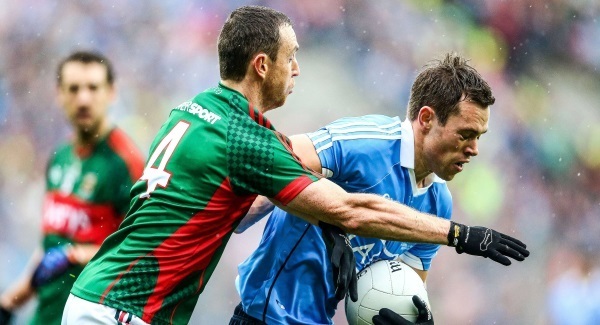
Team turnovers bond the group these days. Not so long ago, it was mano-a-mano at the back, take your forward and mark him. If you had a good day, you kept him scoreless or limited him to a point or two.
A bad day meant being moved to a different position or given the curly finger. Now with an over- reliance on blanket defending, good individual defending is harder to spot, much less credit. But good technique should always merit mention.
What constitutes a good defender making a tackle? The player must have balance, agility, and anticipation. Balances equates to staying on your toes so you can retreat. Agility is the ability to change direction quickly, without breaking stride.
Anticipation is knowing when to actually commit to the tackle. All these qualities can be coached but you need one essential ingredient to implement the tackle – courage.
What is the point in having all the necessary techniques to carry out an effective tackle unless you have the courage to execute it? How and where do you get the courage from? Good defenders are passionate about their skills.
The basic skills of defending – blocking, shouldering, near hand tackle, intercepting hand and kick passes, shadowing, pressuring their opponent into making errors.
Courage comes from the back garden, the gable end of your house, the streets, the ball alley, the training field or wherever you learned your defending skills.
The courage to make mistakes, mistime your tackle, get wrong-footed, fall on your face and feel slightly embarrassed. The good coach in your ear who whispers ‘Next time son, stay on your feet, spread yourself, try and read his mind, don’t be afraid’.
All these experiences build the courage to believe you can tackle effectively and efficiently when it really matters.
How do you coach the tackle and are we spending enough time showing players the basic fundamentals of the tackle?
What is a Tackle? Every few years, new coaching experts and former players spin the same line: “There is no proper tackle in the GAA”.
While that debate rages on, my simple take on a tackle is as follows – If you successfully dispossess an opposing player of the ball by any means necessary within the rules, then you have completed a tackle.
No I don’t have all the answers. During a club league game at home in Galway against Miltown, I was exhorting my fellow defenders to tackle harder, when I heard the opposing centre-back roar “Hey Divo, you couldn’t tackle a worm onto a fishing line”.
The next time the Miltown No 6 came into my general vicinity, I met him with a shoulder. I whispered loudly into his ear, ‘Seeing that you’re on the grass will you find me a worm or two, I need to improve my tackle’.
I am not involved in the inter-county scene, but at Sigerson level we try to work on tackling techniques at every training session. This only takes 10-15 minutes out of a 75-minute session.
We get them to tackle chest high to avoid high, awkward looking tackles. We coach them to watch the player’s feet and not always the ball, so as to anticipate his next move. We try and teach players to be brave and spread their arms wide like eagles so they can legally stop their opponents run. Will they get hurt sometimes?
Naturally. It’s a contact game where physicality is a very effective tool for any good defender. Any back should relish the opportunity to put a forward on his behind, shoulder him out over the side-line, dispossess him cleanly when he’s soloing or block him down when he’s trying to score.
The art of blocking is another that has decreased in recent seasons. As has the art of shouldering. The reasons? Lazy excuses like the fear of a free or a black card. Strap on a pair, lads. Practice your blocking and shouldering techniques.
They are still vital skills every defender must possess. I believe a block is 25% technique, 25% courage and 50% practice. A shoulder on shoulder charge is the same. Make mistakes at training and the experience will help you in the big games.
Talk to your coaches about incorporating blocking and shouldering into S&C sessions during the winter months. Get them to show you balancing, agility and anticipation exercises to make you become a better defender.
ho were the good defenders? Doberman pinschers like Matt Gallagher, Darren Fay, Gary Fahy or Rory O’Carroll were the guard dogs of the team. You feared them, respected them and thought twice about getting physical with them.
Setters like Anthony Lynch, Cathal Daly or Kenneth Mortimer would block you down. Spaniels like Henry Downey, Seamus Moynihan or Tomas Mannion would hunt you down and terriers like Conor Gormley, Sean Marty Lockhart and Francie Grehan would rip the ball cleanly off you if they got half a chance.
And today’s defenders? Well imagine Congress had imposed a 12-month moratorium on blanket defences for the championship. What teams would be able to handle the six on six at the back without major sweepers covering the gaps. Dublin has six excellent backs, Mayo and Kerry four or five, and the best of the rest are Monaghan.
One can dream but excessive numbers of players at the back are here to stay for another while. Plenty of backs aren’t being trusted by their managements to win their own duels. Which is a pity. Are they really that limited?
Or are they not being coached or encouraged enough to win their own battles?
Let’s hope the summer elevates some mean, tough tacklers where they belong - centre-stage. Don’t apologise for being an aggressive defender who can shoulder or block. You don’t need a stats man to tell you if you’ve won your duel or not.

CONNECT WITH US TODAY



Be the first to know the latest news and updates