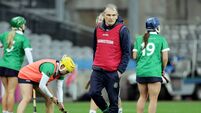
Success, failure, tragedy, joy ... Rosenallis has seen it all
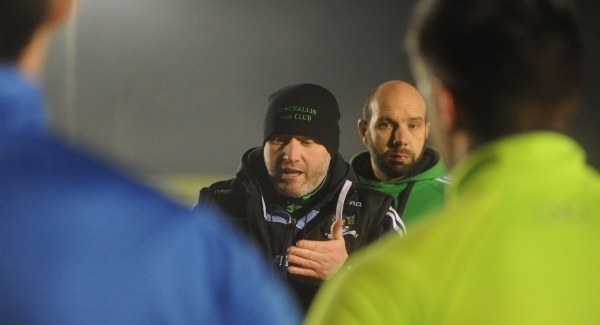
A small Laois community was pulled  together by a memorable dual success in Intermediate Hurling and Junior Football, writes Jackie Cahill
Success, failure, tragedy, joy ... Rosenallis has seen it all

Rosenallis, Co. Laois. A village that lies in the foothills of the Slieve Bloom mountains on the Mountmellick to Birr road. Population 426 at the last census count, down 9% from 2011.

A place that’s known its fair share of tragedy but a place of resilience, hope, and sporting achievement.

In 2016, the hurlers and footballers of Rosenallis, and there was a fair crossover between the two codes, won their respective county championships — junior football and intermediate hurling.

The club’s campaign lasted until Saturday, December 3, when the footballers lost out to Edinburgh’s Dunedin Connolly’s in an All-Ireland quarter-final.

They travelled over by sea on the Friday evening from Belfast and enjoyed a coach ride to the hotel.

“Just a great experience,” says the club’s football manager Paddy Dunne, 32 years of age and a man who transferred from the Rock to Rosenallis three years ago.

“One of those things that will live long in the memory, to go over and represent a small little community like ourselves. The travel took it out of us, and the extra-time the week before.

“It’s unfortunate that we couldn’t push on but we can be proud of what we achieved. We can’t have any qualms with the result. If we’d got a win, it would have been a smash and grab.”

Dunne is a story in himself. As a player, he broke his right leg six times in the space of five years, playing football and soccer. He admits to falling out of love with sport but Rosenallis rekindled his passion.

He played for two years with them but injury struck again when he ruptured his anterior cruciate knee ligament.

“Someone up above was telling me to give it up,” smiles Dunne. “So I gave it up and went into coaching.”

As Dunne made waves with the junior footballers this year, following a successful stint with the U21s, Declan Conroy took charge of the intermediate hurlers.

Conroy hurled with the Laois seniors for over a decade and, similar to Dunne, this was his first year in charge of an adult team with the club.

“I was with the minors and U21s for the last four years,” says Conroy, who worked hand in hand with Dunne to ensure that small ball and big happily co-existed.

If the footballers had a game on the weekend, they’d train twice a week. Vice versa with the hurling.

“We tried to liaise with one another and keep the show on the road,” Conroy adds. “It worked out well. Obviously at times you’d want them more but we had to cut our cloth to measure. There was good, honest compromise. You have to make things work the best you can, which isn’t easy in a dual club at times.”

Back in the mid-1990s, Rosenallis was a dual senior club and winning the intermediate hurling title has brought them back up to senior A, while the footballers will operate in the intermediate ranks next year.

“It’s a culmination of 15 or 16 years,” says club chairman James Dooley. “We started working on our juveniles then and it’s coming to fruition now.”

Back in 2009, Rosenallis purchased land to develop a new field. Previously, Dooley reckons they were playing on “by far the worst pitch in the county”. The old Rosenallis pitch was famous, or infamous as the case may be, for a 12-foot drop, but now they have facilities to be proud of, with work set to begin on a new juvenile field next year.

They’ve come a long way in recent times but they’ve come a long way too since last April, when a much-loved young player, Dillon Creagh, took his own life.

Dillon’s mother, Mary, is still a regular visitor to the local field with the family’s youngest son and Shannen, Dillon’s sister, was a member of the travelling party to Edinburgh.

When Dillon passed away, Dooley remembers contacting the county board “for a little bit of advice.” Suicide has been an unwanted visitor to Rosenallis more than once over the last few years and shortly after Dillon’s funeral, the local hall was jammed as counsellors visited to lend support. Parents of young people in the parish were naturally concerned but Dooley remembers the gathering having a profoundly positive effect.

“Talking to the parents after, they were more reassured,” he recalls.

“They knew where to turn, that there was help out there. That brought ease to them.”

When Rosenallis beat Bracknagh to win the Leinster junior club football final in November, the players visited Dillon’s grave on the way home, and walked into the village from there.

A week later, Rosenallis were in action again, losing out to Meath outfit Ratoath in a Leinster junior hurling semi-final, after extra-time. As Dunne noted, the extra 20 minutes took it out of the legs and Dunedin Connollys proved a bridge too far for a battle-weary group when football returned to the club’s agenda.

Slowly but surely, life is returning to normal in Rosenallis. When we spoke, football captain Cillian Callaly was preparing for college exams in Waterford. Just 20 years of age, Callaly’s a born leader but admits that what the club has achieved will take a while to sink in.

His hurling counterpart, Brian Fitzpatrick, isn’t much older but the average age of the club’s playing pool is in the low 20s.

“A lot of people would be coming up to you after winning these matches, saying ‘you don’t know what you’ve done for the parish,’” says Callaly.

“It won’t sink in until we’re older, but I’ve never enjoyed playing hurling and football so much, winning every weekend. We were talking there at the weekend in Edinburgh and we were nine weeks on the go between hurling and football. It was the most enjoyable experience I ever had.

“They’re an easy bunch to captain. It wasn’t much of a job and while it’s a young team, they all know what to do themselves and don’t need much guidance from me.”

Callaly lifted two trophies for the club’s footballers — county and provincial — and admits that “it might not happen again”. A club dinner dance is planned for early January, exams will be out of the way, and Callaly can let his hair down then. But Callaly, the Laois junior player of the year, also has inter-county commitments to attend to, with the U21s.

“I don’t mind getting back into it,” he says. “After the disappointment of the (Edinburgh) weekend, to sit around and moan for a while is not good.”

The challenge in 2017 is to at least consolidate in the senior hurling and intermediate football ranks, and Callaly admits: “Everybody knows about us now, the hype about us. We won’t have that surprise factor and it’s important to keep everybody together, keep the momentum going, take it game by game.

“Of course you have three or four players more experienced than the rest but the majority are a fierce young team, still not reaching our peak. We have a long way to go yet.”

The hurlers and footballers never looked past their county championships and for Conroy, winning the hurling title was something he’ll cherish for a long time to come.

“I’ve been asked on numerous occasions to go elsewhere and train other teams, and I’ve refused,” he reveals.

“To win something with your own, you can’t do better.”

Relegated last year, Rosenallis bounced back to the senior A hurling ranks in style, hammering Clough-Ballacolla in the intermediate decider.

“We had it a little bit easier than expected,” Conroy reflects. “Then to go and start playing teams in other counties, to set yourself a higher standard and compete with them, that was the biggest enjoyment we were getting.

“We went to extra-time (against Ratoath) and probably the seven or eight weeks on the trot took their toll, playing football one week and hurling the next.

“The footballers won their county final first, we were out the week after. The lads enjoyed themselves on the football weekend but we were back training on the Tuesday night. We were probably worried about that, guys out the previous weekend, but it didn’t seem to bother them too much.”

For both the hurlers and footballers, there were seminal moments along the way.

Conroy points to a tough outing against Camross earlier in the campaign and when their paths met again at the semi-final stage, Rosenallis won by 12 points.

For Dunne, it was the county semi-final victory over Graiguecullen at Tony Byrne Park, the home of St Joseph’s.

“Everybody was saying Graiguecullen were going to win,” says Dunne. “But we won by nine points. That was an unbelievable performance and it took off from there. In every game, we grew in confidence and there was a feeling that ‘maybe this is going to be our year.’

“It’s just pure adrenaline that kept the lads going, the winning mentality. In any game we played this year, we were never down at half-time.

“We started back on February 16 and our main aim was to get over a Rosenallis hoodoo that had been there for 20 years and get to a county final.

“The turning point was the Graiguecullen semi-final, we blew them away. We only beat Park Ratheniska by a point in the final but we always looked comfortable, it wasn’t a true reflection of the game.”

Rosenallis went on to beat Bective from Meath and Westmeath outfit Castletown Finea Coole Whitehall, who were favourites to win the Leinster championship, before seeing off Bracknagh in the provincial final.

As Rosenallis continued to go week on week, the only real headache that Dunne encountered was trying to make sure that some of his players had passports for Edinburgh, while others were busy updating existing travel documents.

“It still hasn’t hit us, it’s phenomenal what we’re after achieving,” says Dunne.

Indeed it is, when you consider that the hurlers hadn’t won an intermediate county title since 1999, while the footballers hadn’t sampled that winning feeling in Laois since claiming back-to-back junior and intermediate crowns in 1994 and 1995.

“And you’re talking about the same bunch of lads,” Dunne explains. “We have a panel of 25, both hurling and football, and nine players play both codes. It’s down to them lads keeping the dual club going. There are certain clubs where you see it, lads prioritising one over the other, but with Rosenallis it’s unreal. One club, hurling and football, shoulder to the wheel.

“I came to Rosenallis three years ago, transferred from The Rock.

“I retired in 2014 and took over the U21s in 2015, and won the U21 B championship with them.

“Then the chance came this time last year to take the junior job and I jumped at the chance. 32 years of age, to be offered a job like that, it was massive.

“They had some experienced managers in there before but lo and behold, we ended up heading for Edinburgh. A small little community taking part in an All-Ireland series — I don’t think it will ever be heard of again for a lifetime.

“Myself and Declan sat down and wrote out a schedule for the year. We’ve had ups and downs, but nothing that can’t be solved with face-to-face meetings. We reaped the rewards with good communication through the year. And credit to the club for the structures put in place all those years ago. The pitch is up to Croke Park standard and it’s just unbelievable — from the chairman and secretary (Mick Lennon) to the juvenile coaches, everyone. It just shows where one small little community can go, once everybody is on board and working from the same script.”

Lennon explains that indigenous managers of both teams was pivotal to the success achieved by Rosenallis, after the club opted for outside bosses in previous years.

“We were going heavy in the two championships but players were given time off and it was more about the quality of training than quantity,” he says.

Success comes at a price, however, and the club is waiting on grant money that’s been promised.

“We need it, trying to develop that second pitch for juveniles,” Lennon adds. “That’s expensive but we’re hoping to do it next year, let the contract in January and have it up and running in the summer. To be fair, in the background, we have a great committee, very dedicated people working on fundraising.

“That’s what probably got the success — building our pitch and then concentrating on building teams. We finished that pitch in 2009/2010 — before that, the facilities weren’t fit for anything.”

Success, failure, tragedy, joy. Rosenallis has seen it all and Lennon says: “It was a very tough year. What happened devastated all the young fellas and Dillon would have been a dual player, he played hurling and football.”

But Rosenallis honoured the memory of Dillon Creagh as only Rosenallis could — and now there’s more history to write. Maybe this story’s only just begun.

Success, failure, tragedy, joy ...

ROSENALLIS: ROUND BY ROUND

HURLING

IHC Round 1, St Fintan’s Mountrath, July 24: Rosenallis 2-20 Camross 2-11

IHC Round 2, Slieve Bloom GAA Grounds, August 6: Rosenallis 1-20 Rathdowney Errill 2-6

IHC semi-final, O’Moore Park, Sept 24: Rosenallis 1-16 Camross 1-4

Laois IHC final, O’Moore Park, October 8: Rosenallis 1-20 Clough-Ballacolla 0-9

Leinster JHC Round 1, Rosenallis, Oct 29: Rosenallis 3-16 Maynooth (Kildare) 0-12

Leinster JHC quarter-final, Rosenallis, Nov 12: Rosenallis 0-16 Clontarf (Dublin) 0-7

Leinster JHC semi-final, Nowlan Park, Nov 26: Rosenallis 1-16 Ratoath (Meath) 1-20 (aet)

FOOTBALL

JFC Round 1, McCann Park, July 27: Rosenallis 0-13 Stradally 0-5

JFC Round 2, Pairc Acragar, August 14: Rosenallis 1-17 Park Ratheniska 1-13

JFC quarter-final, McCann Park, Sept 1: Rosenallis 4-14 The Heath 0-7

JFC semi-final, Tony Byrne Park, Sept 16: Rosenallis 2-10 Graiguecullen 0-7

JFC final, O’Moore Park, Oct 2: Rosenallis 1-9 Park Ratheniska 0-11

Leinster JFC quarter-final, Simonstown, Oct 22: Rosenallis 0-9 Bective (Meath) 0-8

Leinster JFC semi-final, Castlepollard, Nov 5: Rosenallis 2-11 Castletown Finea Coole Whitehall (Westmeath) 1-11

Leinster JFC final, Tullamore, Nov 19: Rosenallis 1-11 Bracknagh (Offaly) 1-8

All-Ireland JFC quarter-final, Edinburgh, Dec 3: Rosenallis 1-6 Dunedin Connollys (Edinburgh) 1-9

More in this section

Cookie Policy Privacy Policy Brand Safety FAQ Help Contact Us Terms and Conditions

© Examiner Echo Group Limited