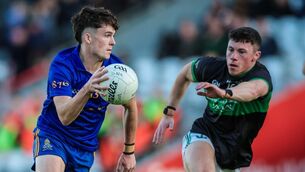
Henry Shefflin and Martin Comerford still strike fear in Kilkenny final
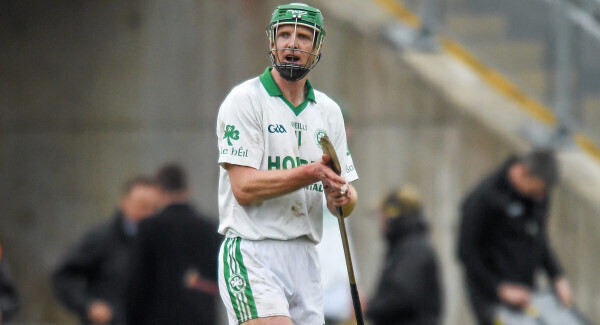
Henry Shefflin scored a goal. Martin Comerford, by far the more talented soccer player, created it for him. The game ended in a draw; Drimnagh Castle won the replay in Dublin. And really that ought to have been where this story ended, with Shefflin spending the rest of his sporting existence as a big and slow, if accurate, forward for Ballyhale Shamrocks and Comerford passing a decade of Sunday mornings scoring goals for Freebooters in the Kilkenny and District League, watched by excited attendances consisting of two men and a dog.
But it didn’t. That was 19 years and a combined 16 All Ireland medals ago. Goes to show you never can tell.
Within two years Shefflin’s career was headed for the stratosphere. Kilkenny beat Galway in the All-Ireland U21 final in Tullamore that September and he was the main man, the top scorer, the number 14. The number 24, down on the programme as Duine Eile, was one M Comerford. It wasn’t so much he was an afterthought, according to Richie Power, the Kilkenny manager, more that the small ball wasn’t his game at the time.
“We knew all about Martin. We’d gone to him at the start of the year but he was tied up with Freebooters. We drove on without him. But he was playing well with O’Loughlins and when the soccer was over we had no hesitation bringing him in. He was a player we wanted and he’d have been very close to the starting lineup but for the soccer.”
By 2002, they were back sharing a pitch under Brian Cody and would continue to do so for the next seven years. They were quite the pairing: Shefflin the most important Kilkenny forward of the noughties, Comerford the second most important Kilkenny forward. Not that they were a double act, quite the reverse; they each did their own thing. But it was in doing his own thing that Comerford made the space for Shefflin to do his.
His lankiness, startled-fawn running style and general ungainliness led many people to underestimate his importance. Donal O’Grady was not among them. The other Kilkenny forwards he respected; Comerford he feared. “Don’t let him get the ball in his hand,” he used to warn his defenders. Sound advice. They never knew what Comerford would do in possession. Neither did Comerford. That, of course, made him even more dangerous.
For a man who wasn’t there to score he had more than his share of high days. The 1-4 that sank Cork in the 2003 All-Ireland final, the 2-4 against Dublin in the 2009 Leinster decider, the goal – a shot he sensibly bounced under Brendan Cummins in preference to trying to burst the net with – that clinched the four in a row.
His point-scoring record with Kilkenny would look substantially better if he’d converted the easy chances. Almost invariably, however, he’d put over the ones from improbable angles. It was part of what made him Martin Comerford. A career total of 6-64 from 41 appearances, or two points from play per match, is commendable going for a domestique.
Yet there was more to it. While Shefflin was idolised as an almost otherworldly being, Comerford was beloved for being himself. One of us. The disarming smile, the sense of fun, the ceaseless and cheerful struggle to overcome his imperfections. Compare with the affection Cormac Bonnar was held in by Tipperary folk during Babs Keating’s first coming. Players who aren’t artists and don’t pretend to be can be appreciated too.
Shefflin long ago became a public man; Comerford continues to be Comerford. They’ll share a pitch again tomorrow, Shefflin at the age of 37 chasing his seventh county medal, Comerford at the age of 38 looking for his fourth after hitting 1-3 against Rower Inistioge in the semi-final.
They remain shining lights for their clubs. In Ballyhale they sometimes have trouble getting Shefflin to ease back on the throttle. “He’s great to encourage the young lads, to tell them to try and get more out of themselves,” says Andy Moloney, joint-manager with Colm Bonnar.
“His fitness is second to none and in training we actually have to try and stop him doing too much.”
Similarly the work Comerford did with Kilkenny over the years is “still standing to him”, according to Aidan Fogarty, the O’Loughlins manager. “Martin leads from the front, on the field and off. He’s a great ambassador. ”
The St Kieran’s soccer strike force of 1997. Still going strong all these years later.
CONNECT WITH US TODAY



Be the first to know the latest news and updates