Séamus Mac Géidigh obituary: ‘He got on with everyone in the GAA community, an achievement in itself’
St Tiernach’s Park in Clones reached levels of acoustic frenzy in the latter stages of Sunday’s Ulster final as Tyrone — at Donegal’s expense — won the Anglo-Celt Cup for the first time since 2010.
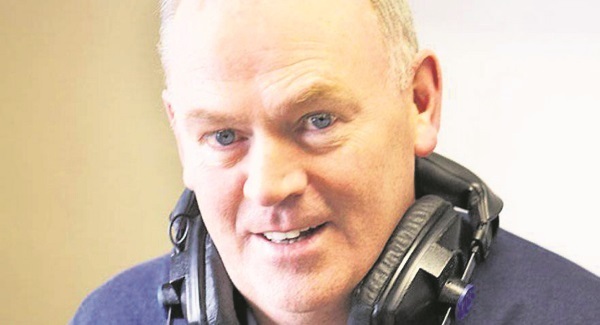
In such tense atmospheres down the years, one of the stand-out memories was the lyrical and unmistakable tone of Séamus Mac Géidigh, broadcasting live in the native tongue — an teanga náisiúnta — for listeners of RTÉ Raidió na Gaeltachta wherever they were dotted on the globe.
On Sunday last, though, the only time all afternoon that the Monaghan ground was quiet was when the rival supporters — whether in green and gold, or red and white — stood side by side before throw-in to pay their respects in an impeccably observed minute’s silence in memory of the late Séamus.
Just 15 days beforehand he had stood with a smile etched across his face in the tunnel at Breffni Park in Cavan, as Donegal sealed their sixth consecutive appearance in the provincial showdown following a close-run 0-17 to 2-10 Ulster semi-final replay victory over Monaghan.
Two days later, on Monday July 4, having broadcast the ‘Barrscealta’ programme from Raidió na Gaeltachta’s Doirí Beaga studios, where he was based as regional manager since 2004 having originally been employed since 1988, Séamus finished his shift.
Séamus went home to Ailt, An Ardaí Bheag, where the picturesque North Atlantic rolls in yards from his front door and that evening went for a walk by Mullaí Nancy. He never came home.
Séamus took ill and was found by a passer-by; taken from this world prematurely aged just 54, and survived by his wife Dolores, his daughters Póilín and Aedín, and his son Dónal.
Gort an Choirce in the north-west Donegal Gaeltacht is far from the biggest town in the county. In fact, you could probably call it a rural outpost.
The village of just over 1,400 people has, in the Christ and King Church — Teach Pobail Chríost Rí — the second largest house of worship in Donegal after St Eunan’s Cathedral in Letterkenny.
The number of seats equates to almost the exact population.
Three weeks ago, at his funeral mass, there wasn’t a seat for everyone who hemmed through the doors of the Teach Pobail Chríost Rí. It was his last broadcast — transmitted live by Raidió na Gaeltachta.
“Séamus Mac Geidigh was a man who got on with everyone in the GAA community,” said Fr Sean Ó Gallchóir. “That was an achievement in itself.”
Although he never showed any favouritism for clubs or competitors, at Donegal press nights Séamus would lean to those who were comfortable in speaking ‘the language of the kings’ — Eamon and Neil McGee from Gaoth Dobhair, and primary school teachers Frank McGlynn and Rory Kavanagh.
Aogán Ó Fearghail, Uachtarán GAA, had appointed Séamus on the Irish Language Committee, and after his passing said he was “the Donegal voice of Gaelic Games commentary”.
Séamus’s famous conclusions from both the win over Monaghan the previous Saturday and the last seconds of Donegal’s 2012 All-Ireland final victory over Mayo at Croke Park rang through the Teach Pobail Chríost Rí as his remains made their way to the adjoining cemetery.
There, the hearse was flanked by those who worked with him at Raidió na Gaeltachta and members of the local Cloich Cheannfhaola club in their blue and white.
As a journalist, Séamus was informative, balanced, respected, and interesting — the same characteristics he possessed as a man. Quite simply, he saw the positive side of everyone.
Four years ago he found himself in Stary Rynek — the Oldtown Square — in the Polish city of Poznan for the Republic of Ireland’s ill-fated Euro 2012 campaign, filing reports also for TG4.
Television was something that Séamus thought mightn’t have come as naturally to him. However, the same solid principles made for flawless reports.
Just two weeks before his passing, Séamus was coming in loud and clear from Bordeaux as Ireland faced Belgium at Euro 2016. He possessed more than a passing interest in soccer having helped University College Galway to success in the prestigious Collingwood Cup in 1983.
He fulfilled a variety of roles in Doirí Beaga and brought his traits to his role. But it was as a commentator of Gaelic games that most will remember Séamus.
For years, before and even during the social media age, it was his voice that could be heard on the airwaves for the live transmissions of the Raidió na Gaeltachta- sponsored Donegal SFC draws.
Even those with only the most limited awareness of the language soon learned the bare essentials to confirm who their respective teams would be facing:
“Uimhir a hAon … Cill Chartha … idir ... uimhir a dó dhéag ... Ard an Rátha.”
The Donegal media is certainly one of the country’s largest in numbers with a host of local newspapers, radio stations and websites. And on trips to Croke Park they have been known to take up half the press box on their own.
Whether there or closer to home at club championship, All-County League or Comórtas Peile na Gaeltachta, anyone who shared the c ompany of Séamus on matchday remarked how his outlook was never that he was working against rivals, but merely that everyone there were colleagues, just working for different outlets.
Now, though, there’s an empty seat in the press box and the Gaelic games scene is a poorer place for it.
As he was described by one Donegal scribe: “Séamus Mac Géidigh was a gentle man and a gentleman all in one.” That, really, says it all.
Ar dheis Dé go raibh a anam.
CONNECT WITH US TODAY



Be the first to know the latest news and updates