It’s time for some mid-term revision on Hurling League form
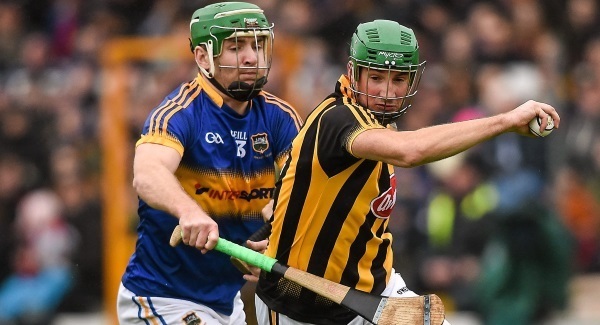
This leaves your correspondent to be the boy who sweeps the floor today.Of the three games in Division 1A, Tipperary/Cork is a potential sharpener for a relegation playoff rematch, Waterford/Galway an opportunity for the visitors to ensure they avoid the drop and Kilkenny/Dublin less a contest to decide who (probably) tops the group than it is a dead rubber.
On the face of it the menu and its limited range of implications suggests it’s been a poor league so far. The memory of Kilkenny/Tipperary, Tipperary/Waterford and last Saturday night in Páirc Uí Rinn suggests otherwise. So while we’re at it, here’s one to get stuck into: Tipperary have hurled better than the table says and Kilkenny have hurled worse. Discuss.
That Tipp have been value for a return rather greater than the three points they’ve garnered is inarguable. After losing at the death to both Kilkenny and Waterford, to have snatched a draw four minutes into injury time in Salthill had a symmetry about it. What’s more, this was a game they began without the services of Seamus Callanan, John O’Dwyer and Patrick Maher, their three most important forwards. Yet they dominated for the first 30 minutes, as they’d dominated for the opening 20 minutes at Nowlan Park.
None of which is an attempt to trigger some existential argument about whether it’s possible for the better team to lose a game or the frequency with which the phenomenon, if it does exist, occurs. Nobody has ever put it better than Donal O’Grady did after the 2003 All-Ireland final: the team ahead on the scoreboard at the end is the better team. Brian Cody said something to the same effect last Saturday, asserting there were “no fair or unfair results” while simultaneously acknowledging Cork had slaughtered Kilkenny at times earlier in the evening (“no doubt about it”). Let’s simply conclude the outcome of any match doesn’t mean the losers didn’t play the more expansive hurling or didn’t control proceedings for long stretches, shall we? And leave it at that?
Anyway, there’s something to bear in mind about Tipperary’s efforts in 2016. They’ve taken place in the complete, total and utter absence of Seamus Callanan. Not a single minute’s action, not even as a sub. And Callanan is, in absolute terms, the most dangerous forward in the country. Now no blue-pencil screeds from Noreside, please. On recent and current form TJ Reid is the best forward in the country. It’s not quite the same thing. In fact, Reid has stepped up to become more Henry than Henry. The go-to man, the quarter-back, the chap who’s there under every puckout and is nowadays as happy – and as confident - to lay off the sliotar as to take it on himself.
But Reid is doing his best work 40 and 50 metres out the field. Callanan does his best work inside that range. On a bad day Callanan would probably add two points to Tipperary’s bottom line; on a good day he’s well capable of adding five or six. Where would Tipperary be with him? Safely into a quarter-final, that’s where.
By a similar token, where would Kilkenny be without the late double-barrelled blasts that saw off both Tipp and Cork? It’s a question prompted by the notable sight of Cody punching the air after a league match in March, and celebrating the result rather than the performance.
The All-Ireland champions have acutely lacked threat in front of goal for vast tracts of the competition to date. They failed to raise a green flag against both Waterford and Galway; it took them 65 minutes to manage one against Tipp; it took them 67 minutes to do so last weekend. This constitutes nothing of much significance for the moment. Come high summer, however, it may do so. Last year Kilkenny managed a goal a game at the business end of the championship and it sufficed. This year? We will see.
That’s not all. Last Saturday marked the second time in the current campaign they were outworked by their opponents. Again, no need to reach for the smelling salts just yet. But most of the county’s All-Irelands under Cody were won because Kilkenny were better than the rest, whereas that of 2015 was the first they won under Cody because they were busier than the rest.
Think about it. Galway barely raised a gallop in the Leinster final apart from a few minutes either side of half-time. Waterford were drowning, not waving, from early in the second half of the All-Ireland semi-final. Galway basically failed to come out for the second half of the All- Ireland final. Kilkenny worked a full shift, plus overtime, every day.
As Cork did seven days ago. An emblematic moment occurred near the end when Richie Hogan was set upon in midfield by Brian Lawton and Daniel Kearney, stripped of possession and the sliotar turned over for a free and a Cork point. Kilkenny outKilkennyed. That Cork would man up on the night was a given. That it would bring them so close to victory was not. Damien Cahalane said something interesting afterwards. “The players took it upon themselves this week to bring a level of performance that was going to be good enough to give us a chance of winning,” he revealed.
All well and good. Now comes the harder part: bringing a similar level of performance every week. The Hogan/Lawton/Kearney incident has to fade with the passing of time precisely because it becomes the norm rather than staying in the memory because it remains the exception. Kieran Kingston’s men have put pressure on themselves to hurl with the same focus, desire and application every time they take the field for the remainder of the year. Starting in Thurles today. Already set for a relegation decider, Cork have nothing to play for? Au contraire, they have everything to play for.
Waterford? Their defeat by Dublin won’t do them a jot of harm. Not that the hype was in danger of building to suffocating proportions or anything, but their winning run in the competition had stretched back to February 21st last year. One thing about winning runs is that sometimes they’re better lost, eventually, than maintained.
In any case Waterford’s form to date has disgorged three items of note. Firstly they haven’t mislaid their consistency of 2016; indeed, they’ve built on it, last Sunday apart. Secondly Patrick Curran, with three points from play against Cork and two against Tipperary, looks as if he knows exactly what he’s doing – not that anyone acquainted with him of old was in the slightest doubt on that count.
Finally, the gambit of starting Austin Gleeson at full-forward against Tipperary. It didn’t work. It wasn’t going to. Gleeson is one of those players sufficiently adaptable to wear a range of jerseys, but in his case the numbers start at five and stop at 12. Point is, Waterford had the imagination to attempt it regardless. Hitting 20 scores and more a game isn’t yet their forte. But they’re trying to get there. That’ll do for now.

CONNECT WITH US TODAY



Be the first to know the latest news and updates