Making right calls with defences could be decisive factor
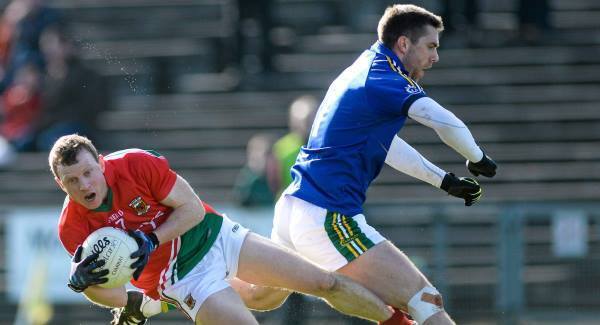
The beauty of team sports is the amount of variables that can occur in any competitive game. Tomorrow’s match, for example, is extremely interesting on many levels, but the defensive strategies of Kerry or Mayo are the deciding factor towards who will emerge victorious. Will this decision, taken by the respective managers, be their Achilles heel?
Not so long ago Kerry were regarded as the bastions of free-flowing forward football, holding strong to tradition and striving to contain the respect, well earned, through generations of gifted footballers. Eamonn Fitzmaurice has realised that time and tide wait for no man or, more accurately, that mighty folklore alone cannot halt the progress of the modern game of Gaelic football such is the emphasis on success as reward. Kerry have adjusted, they have had to.
Fitzmaurice has been clever in changing. Instead of following the status quo his defenders man-mark opponents while in the attacking half of the field. More specifically, the full-back line set up man-to-man, as do the half backs if their opponents are playing in the ‘programme’ position. In addition, Declan O’Sullivan, who may still line out at 11, and Donnacha Walsh or Anthony Maher will position themselves as extra defenders. They position themselves between and behind the centre half-back and the wing half-back on their respective side (for example, Declan on the left, Donnacha/Anthony/‘sweeper’ on the right) creating a box-like format which is very difficult to penetrate.
‘Possession-philes’, teams that prefer to run the ball through their hands, give this structure time to set up and get caught up in the perception that there is a lack of space leading to dispossession or careless distribution.
If the opposition do not occupy an attacking position the Kerry defenders remain in their allotted defensive position, if not slightly more central, and await the inevitable attacking drive from their opponents. This involves exceptional discipline and has been extremely effective to date, but it has reduced the threat of scoring from the Kerry defence — which some may argue is not their role anyway.
When you have good forwards, the key to success is to sort out your defence. Isn’t that what made Jim McGuinness successful?
Turning defence into attack is relatively easy for Kerry as the space is available for a pass into open areas and the first-time ball into the brilliant Paul Geaney and James O’Donoghue is on. But questions need to be asked of this Kerry defence. When you effectively play with two sweepers you are compensating for something else, like Napoleon and his overly aggressive behaviour? I believe the Kerry defence is good. They are predominately fast, agile, mobile, disciplined and comfortable on the ball. But are they lacking size and strength? Is there a question over their ability to defend the early ball? Can they cope against opposition who play high up the field? Brian Kelly is a small keeper so who will deal with high ball on the square if Aidan O’Mahony plays as a half-back? And finally, have Marc Ó Sé and O’Mahony got enough in their legs?
Mayo, under James Horan, have an excellent defence. The jewel in the crown is surely the superb half-back line of Lee Keegan, Keith Higgins and Colm Boyle.
The full-back, Ger Cafferkey is a fine player, clean and technically good. But he lacks the darker elements that Francie Bellew or Ryan McMenamin practiced. Prior to the 1994 All-Ireland final Down captain DJ Kane spoke about how “nice guys win nothing”. Could this be Cafferkey’s weakness?
The Mayo defensive format is more orthodox, man-on-man for the back six with the usual expected supporting role from the midfield pair.
Nothing exciting here until you consider who will mark James O’Donoghue. The obvious choice is Keith Higgins. Move him to a two-man full-back line partnered by Cafferkey instead of Chris Barrett, to mark Kerry’s Paul Geaney and James O’Donoghue, and bring Vaughan from midfield to his more familiar half-back position. While the fit again Barry Moran will rejoin Seamus O’Shea in midfield.
This, I suggest, is too obvious. If Mayo are to win the All-Ireland, being predictable will not cut it. Consider Higgins at No 6, Donal Vaughan at No 8 and Barry Moran at No 14.
Keith Higgins is an exceptional player whose talents go well beyond a damage limitation exercise on James O’Donoghue. From No 6 he will be able to completely control the ebb and flow of the game to suit Mayo, pulling the strings as an unmarked man while his opponent, Declan O’Sullivan/Stephen O’Brien drops back to shore the holes in the Kerry defence and presumably dictate play from deep.
Higgins will also be able to sit back when applicable and interrupt early distribution to the dangerous Kerry inside line and the second phase cross field ball.
Vaughan at No 8 can continue to focus on his attacking game, which I am a fan of, therefore increasing mobility around the middle third and creating a higher attacking platform which may negate that Kerry defensive system.
Finally, the presence of a target man in Barry Moran — or preferably Aidan O’Shea — alongside Cillian O’Connor and Andy Moran (with Alan Dillon moving to 12) will cause a whole new set of defensive problems for Kerry.
Whatever positional selections or defensive strategies Horan and Fitzmaurice decide upon, someone somewhere will readily criticise. Defence may well be where this game is won or lost but expect Horan to exercise his choice and surprise us. A fascinating contest awaits all those lucky enough to attend.
CONNECT WITH US TODAY



Be the first to know the latest news and updates