Evolution makes half-back lines an endangered species
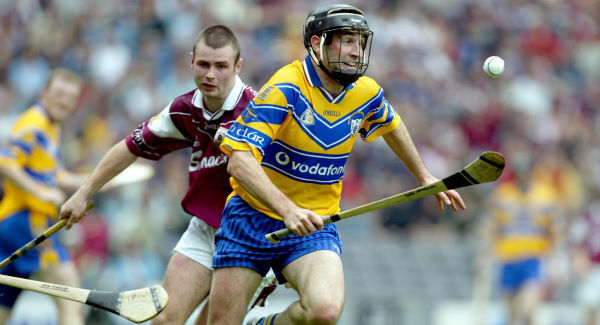
Gardiner-Curran-Ó hAilpín. Daly-McMahon-Doyle.
Great half-back lines have a rhythm to them based on the three names in sequence. Pity they’re on their way out.
Ronan Curran anchored the Cork defence for almost a decade and saw the modern game of hurling challenging the received wisdom of positions in defence.
“The three of us had a good understanding and the movement of forwards wasn’t as marked as it is now — it wasn’t that often you’d find yourself in different parts of the field.
“That’s all changed. Now, rather than thinking of a half-back line, you’d probably need to think in terms of six defenders in a unit.
“The way the forwards interact and move positions now is designed to confuse defences, which makes it even more important for those defenders to communicate with each other.”
His Clare counterpart agrees. Seán McMahon was the best number six around when the Banner were in their pomp. He acknowledges the change in the game.
“Certainly the way forwards are playing now, a lot of them won’t bother just standing next to a defender.
“That’s not all counties — Kilkenny mightn’t rotate as much as Clare, say — but the change is noticeable. It was changing when I was finishing up, but at the start it was definitely a case of the goalie pucking the ball as far as he could, and more often than not, it landed in the middle. That’s certainly different — you can see teams’ puck-out strategies in action every time you go to a game.
“You have to be more flexible because as a half-back, you’ll probably find yourself in the full-back line on your own for a while, or midfield. You’ve to be an overall defender rather than a specific centre-back.”
Curran saw the transformation take place over the course of his service with Cork: “I think it started changing in the mid-2000s, when it became more of a thinking game, more of a possession game.
“Clare have brought that to a new level, where it’s becoming much harder as a central defender because they — and other teams — are trying to pull you out of position.
“The way I see it, you have to have the right balance between holding the centre to protect the goal and marking your man. And on top of that, you have the tactics your team are playing to. Completely different to when I started. You were marking Conor Gleeson, John Hoyne, these guys and the ball was pucked down on top of you. You were there as a centre-back to hold the centre.”
McMahon goes a step further, suggesting even the layout of match programmes could change: “If you lined out the Clare team nowadays in a programme, it could read 1-3-1-3-2-4-1, but you have to have some base for positions. Somebody has to have a number on their back! But that’ll change in time. It depends on the players you have at your disposal, and if they’re suited to orthodox positions, you’ll see teams maybe go back to the ‘old’ formation. It’s whatever works for the players you have.”
At the moment, though the traditional dominant number six is a slightly endangered species, says Curran.
“The way the game has developed, the old centre-back — the old full-back — have gone, in the sense you won’t see fellas dominating from those positions. What you’re looking for is a guy who can do a shift in any position.”
By the same token, the defender can no longer simply clear the ball blindly out of the danger zone.
“Your aim is to get the best possible ball to your forwards,” adds Curran.
“That has probably always been the case, but because it’s a possession game now, you see defenders moving it on 10, 20 yards.
“Because of that, you can’t leave your man — before you could judge the game and judge where the ball was being delivered, maybe, but that’s not an option now.
“Your responsibility is to be close enough to get in the tackle and to mind the space, and the fact those forwards all have pace to get away from you complicates it further.
“If you line up traditionally, if you like, you’re always going to be chasing what the other team are doing.
“I saw Jimmy Barry-Murphy quoted as saying attitude is more important than tactics, and he’s right. But you also need some structure.”
CONNECT WITH US TODAY



Be the first to know the latest news and updates