Memories of a scoring sorcerer: Paul Flynn
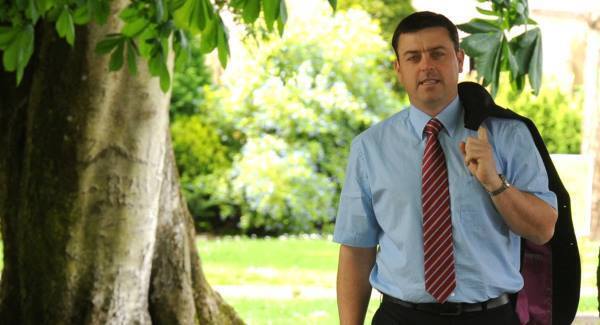
He’ll go to Thurles tomorrow. Bring young Matthew to his first championship game. Probably bring him onto the pitch afterwards as well. He rarely had that privilege or access as a young fella.
When Paul Flynn was a kid going to Waterford games in the Munster championship invariably his father Pat would give the nudge and the order: come on, let’s get out of here, beat the traffic, this is long over.
But then Flynn himself came through, and then Ken and Dan and Mullane came along too, and one of the most charismatic and loved hurling teams ever would bring their supporters to places they had never been, though not quite to one place they yearned to be. Playing for Waterford in Gerald’s and Justin’s time there, you got to see your supporters walk proudly into Semple Stadium, take over its pitch even, not cower and shuffle out of the place like some apologetic, embarrassed downtrodden tribe.
“I think that’s something special, being able to go onto the pitch afterward,” he says. “When the club (Ballygunner) won Munster in 2001 you’d see some of the neighbours getting on to it and it was a thrill. As a kid you’d be trying to rob grass, not that we’d do it often because we’d normally be heading home well before the end. I remember the (drawn) Munster final in ’98 when I had the free to win it from the next parish and afterwards I saw about 20 people hovering around the spot, ‘Jeez, that was a tricky one alright.’ ‘Nah, I’d have got that.’
“There aren’t many sports that allow you do that. Like you can’t walk onto the 18th green in Augusta right after the Masters and say ‘I’d have got that’.” Speckled all over that field in Semple are Flynn spots for Flynn-spotters, a lot of which you or anyone else wouldn’t have scored from but he did. Like another free from the next parish that he landed in the closing minutes of a first round game against Limerick in 2003. Or where he pulled first-time on the ground in 2005 to unleash a shot that would have ripped Donal Óg Cusack’s head off but, thankfully, ripped the back of the net instead. Or, probably most famously, the ‘dipper’ free way out on the right that somehow again eluded Cusack and the rest of the Cork goalline in the Munster final 10 years ago now.
As Ger Canning said at the time “Only Paul Flynn could think of it!” and as Cusack would reflect later, only Flynn could have pulled it off too.
Cusack contributed to the TG4 Laochra Gael programme on Flynn a couple of years ago and his qualified but conclusive respect was apparent. At times while recalling their glory days Cusack almost sounded as if he was paraphrasing Flynn’s beloved Bruce Springsteen: He could throw that speedball by you/Make you look like a fool, boy. Maybe Flynn didn’t live the almost ascetic lifestyle to carve out the body shape and All-Ireland medal count that Cusack did. But, as Cusack would say to camera, “Maybe if Paul Flynn was an extra ultra-dedicated guy (who) looked after himself 24 hours a day, maybe that would have got him into a mental state where he wouldn’t have been able to perform the acts that he performed.” That certain carefree attitude allowed a certain willingness to take chances, fail even.
Take that goal in that 2004 Munster final. He’d tried something like that before; an eagle-eyed archivist for that Laochra Gael programme came across a similar attempt in the 2001 Munster semi-final against Limerick that just clipped over instead of under the bar. It was a worth a try that day. It was a worth a try against Cork too. Because it was something he had tried hundreds of times before.
A few years earlier he had been up at the club with their goalkeeper, Ray Whitty, who pucked a ball back out to him using a bit of topspin, it being Wimbledon time. The ball duly bounced over Flynn’s head who duly hit it back using a lot of topspin, prompting the ball to dive under Whitty’s hurley.
“So I kept at it for a few minutes,” Flynn would recall, “and began to think ‘There might be something in this.’ And I remember one of the club selectors (watching on) saying ‘One day one of those will come off’.”
Often he’d tie a tyre to the crossbar and fire balls through it. That exercise came in handy against Cork 10 years ago. And yet he’ll acknowledge, the moment that sealed him as a legend very nearly made him look like a fool.
“If it had been stopped I’d have looked a right eejit but I calculated that the worst thing that was likely to happen was one of their hurleys would put it over the bar or it would go over the bar anyway. I felt we needed a goal. If I tipped it over the bar with us playing into the wind, down to 14 men and still a point down, we were going to struggle. A goal and we had a right chance. The actual goal changed Cork’s mentality more than ours. Ronan Curran started shooting on the run along the wing. Diarmuid O’Sullivan came out and shot from his own 45.”
As Flynn talks about those days and games, his respect, even fondness, for that Cork team comes through. Asked why those Deise-Rebel battles were so consistently glorious, he observes, “I don’t think there was a dirty stroke in any of our backs – much to our detriment at times. I mean, if you look at the goal Henry Shefflin got in 2004 (All-Ireland semi-final) coming right along the endline, he should have been taken out of it. Diarmuid would have taken him out of it. I know Eoin Kelly went in along the endline against Cork in that (2004) Munster final but he came from an angle and they were coming for him. Another two steps and he’d have been planted. In fairness to those Cork backs they were fantastic players. They weren’t dirty either.
“We used to get good craic out of some of them. When things were going well for Cork, Diarmuid would be funny and sarcastic.
“Then if things were going well for us you’d get a bang in the back of the head. I said to him one day, ‘We’re coming back at you – I’m expecting a dig any second now.’”
Of course some of the lip was to distract rather than amuse you, but that appealed to the daredevil and golfer in Flynn. In the final minutes of the 2007 All-Ireland quarter-final replay in Croke Park, Waterford were two points up with Flynn standing over a difficult long-range free over by the sideline when Ben O’Connor tried to ice him. “Put this over and I might as well go home!”
“You might as well go f***n’ home so,” retorted Flynn before nonchalantly extending the Waterford lead to three.
They would win that day but not the All-Ireland itself. They never would, condemning that side to being the great nearly men of hurling, probably the best team never to win an All-Ireland.
And of course that missing medal jars somewhat with Flynn. He thinks of all the logistical mess-ups on the eve of big games in Croke Park: buses showing up late and at the wrong gates, last- minute supporter-filled trains ordered, tops with the wrong spelling handed out. “Little things like that would frustrate players on a given day. Some fellas it didn’t affect, some fellas it did, but at times it was just a rodeo show. Like with a lot of things in the GAA there was stuff that went on and the players were the least considered.”
But then he thinks of how he nearly missed out on winning anything at all. Go back to this very weekend 12 years ago. Again Cork and Waterford in Thurles, first round of the championship.
All the Sunday papers are filled with coverage of how Roy and Mick fell out. An unfancied Waterford win by a point, thanks to 12 points from man-of-the-match Flynn. They go on to win their first Munster title in 39 years, then another two Munster titles over the following five years. And yet Flynn so nearly didn’t play against Cork that drizzly day in Thurles. Unknown to the public, he almost did a bit of a Roy himself.
“The league had finished bad for us. I remember us going to Ennis for the last game. We stopped off in Newmarket on Fergus and maybe because our manager (Justin McCarthy) had a bit of a sweet tooth we were served cream cakes and vanilla slices! Before the game! Sure we all tucked into our cake. We went into Ennis, were beaten by a point. That was the day Stephen Frampton wasn’t even given a jersey. He walked away after that, Sean Cullinane too. I went to New York with the missus and actually rang Justin to say I wouldn’t be rejoining the panel when I came back. Things were that bad.”
Justin would be one manager called McCarthy that summer who’d be able to coax back and retain his star player and it would make all the difference. Flynn was unstoppable against Cork and would also score the goal from a 20-metre free that would turn the Munster final in Waterford’s favour.
Flynn the player was so many things: an exceptional talent, enigma, paradox. To some he was the worst trainer in hurling; to others he was one of its greatest practice players ever. It has been argued he let Waterford down on the big occasion; the record shows he was probably the best first-round-championship forward of his generation, man of the match in the greatest Munster final ever, and bettered it again the next day out with 13 points in the All-Ireland semi- final. He was the game’s greatest goalscoring free-taker since Ring and Rackard, one of the greatest goalscorers of the last 30 years, one of the most decorated Waterford players of the past 50 and yet some will contend that he underachieved.
Wherever you are on that is fine with him. Like Ring used say, it was never his ambition to play the game for the sake of All-Irelands or breaking records; it was to perfect the art as well as possible. “I never played for medals or awards or glory,” Flynn has said in the past. “I played because the game challenged me and I kept finding challenges in it. People say I didn’t train hard but I’d say I trained sensibly and I practised hard. I’d say if I took hurling so serious considering all the disappointments and mistakes I had and made, I would have given it up a lot earlier.”
He still retains his love for the game and for invention and creativity, still retains a distrust for conformity. He acknowledges there’s some terrific work being done in the schools of Waterford but wonders are all their development squads producing too many piano carriers and not enough piano players. He wonders if he himself would have made them.
“It would seem from watching underage hurling that if you’re not all about running back and hooking your man at U13 you’ll be whipped off and left off because there’s a cup at the end of the game. Is it about win, win, win or is it about developing a player? There needs to be an appreciation that here’s a 12-year-old, he wants to take a bit of a chance, you should want him to be still playing at 17, 18, not frustrate and stifle him. It would seem if you’re on an U14 squad, you’re playing minor. If you don’t make that squad, you don’t play minor.”
Even senior intercounty hurling has changed a lot since he finished up only five and a half years ago. He’s on Liam Sheedy’s hurling review committee and the other week at their first meeting a few of them got chatting about who was the best full-forward in Ireland. They couldn’t come up with one because there’s hardly a recognised number 14 anymore.
“The full-forward spot is nearly redundant now. There’s not great goalmouth action. I watched the league final and people say it was great but all the play was around the middle. It’s now all about working the ball up to the half-forward line and shooting from there. You can’t argue with Clare’s style but to be honest it’s like Chelsea in soccer – it’s not for me.”
But is it not effective?
“Well, you see the scores. Cork on Sunday will score at least 23 points. Clare are going to rack up 23 points or more most days. Which is fair enough, I suppose. But it’s definitely killing it for the inside line.
“And I just feel it’s a bit too contrived. Kilkenny will live and die by their way of playing. Tipp are stuck in the middle of it somewhere. They’re doing a bit of the possession game but they want to let it fly too.”
Right now Noel McGrath is one of his favourite players to see, because he sees and tries passes others don’t see or at least try. Anthony Nash too brings a smile to his face. As a member of the hurling review committee and a great goalscoring free-taker himself, Flynn’s views on the Cork goalkeeper aren’t just anyones.
“Christy Ring did a video 50 years ago in which he said to try to steal as many yards as you could. But obviously Nash has taken it to another level. I think people are overlooking what an exceptional point-taker he is.
“No one talks about the two frees he got into the wind down in Limerick last year but they were incredible strikes. But obviously everyone is talking about the goals. It’s a terrific skill he has but if things go on, there is going to be an injury, no doubt about it. It might not be Nash who does it; it could be a young fella in the back garden. My own view is the ball is too light. The inside of the ball is pure rubber, there’s no rim on the ball anymore, puckouts are landing 100 yards, more, which is too much. But I was at the All Ireland final last year and the excitement every time Cork got a free around the 21 was just brilliant.”
For Flynn, that’s what so much of the game is about. Personality. Creativity. Boldness. And he considers himself fortunate to have played with a team that bubbled with all three. Hurling has taken him around the country since he retired. He coached Carlow to a Christy Ring Cup in Kevin Ryan’s time there and last year coached Down to the same title. He’s still involved with them this year but they’ve struggled. They’ve had injuries to the likes of Magic Johnston. There’s been the retirement of Paul Braniff. And sometimes it feels as if Ulster hurling is purely Antrim hurling (“It’s like Antrim have hijacked it, thinking it is all about them”). Up there he’s come across some terrific players (“Conor Woods is as good a player as there is in Ireland”) and fanatical hurling men, many of whom still have a special grá for that Waterford team he played with.
“Anywhere you go you’ll bump into someone and they’ll have a moment. ‘Remember the day Mullane got the three goals and gave the two fingers!’ Or the day Dan did that or Ken did that. I met a man from Dungiven last month and he said he travelled down for every Waterford match for 10 years. I know next-door neighbours who didn’t go but that man said he’d travel anywhere to go see us play.”
Tomorrow, five-year-old Matthew Flynn will go to see Waterford play for the first time. His elder sister, Rachel, might give it a skip although she’s started training with the Ballygunner U8s the last few weeks. Matthew hasn’t gone down to the club field yet, instead just pucks around with granddad in the back garden, just as dad used to do, an arrangement which suits and suited Matthew’s own dad just fine. But there is one difference.
“When I was growing up, playing in the back garden, I was John Fenton or Joe Cooney. I wasn’t someone from Waterford because Waterford were never on TV. But it struck me when I was at the minor All-Ireland [final] last year, God, a lot of these lads would have been six or seven in 2002. And that whatever player they wanted to be in the back garden it was a Waterford player. Hopefully that will always be the way in the future.
“Hopefully that is our legacy.”
With success like that, did Flynn and his fans really fail?

CONNECT WITH US TODAY



Be the first to know the latest news and updates