What are the key issues facing next president?
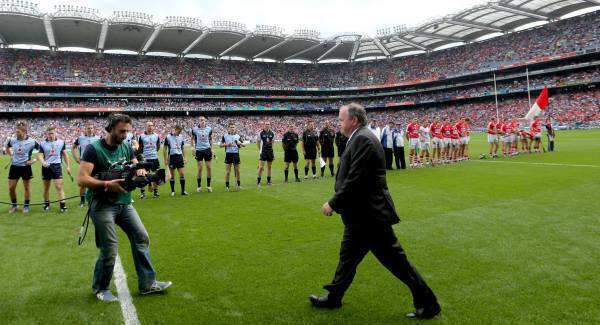
In four weeks’ time, we will know the 38th GAA president. Aogán Ó Fearghail (Cavan), Sheamus Howlin (Wexford) and Sean Walsh (Kerry) will contest the February 21 vote to succeed Liam O’Neill and take office next year. This week, the Irish Examiner posed the trio five questions. Here’s how they answered.

What are the key issues facing next president?

Q 1. Place in your order of priority: finance, fixtures, player burnout, rural depopulation, urbanisation.

Aogán Ó Fearghail: “Our association revolves around families, fixtures, facilities and finance. They are inextricably linked though the priority varies from county to county.

“One is a consequence of the other and like the links of a chain, all are priorities. Without fixtures, we can’t exist. They must be smooth, efficient and well-planned. We need the best possible facilities for our players, administrators and supporters and without financial back-up, nothing can happen. But we are about people, first and foremost. Our players must be respected and protected from poor fixture-making or torturous training regimes.

“As rural communities haemorrhage people, large urban areas increase, the two issues are linked. Rural Ireland is still our heartland and we must always protect and support our rural clubs. We must preserve clubs, reduce numbers on teams to 13 or even 11, allow combined teams but we must keep club names and club identities alive. I do not favour full amalgamations as an option. Rural Ireland has survived famine and land wars, revolution and civil conflict, economic wars and mass emigration; we will survive once again and we need our GAA clubs there for us when new energy returns to this country.

“Every possible support and rule derogation must be given to keep the club alive. Urban Ireland is a challenge for us to embrace and we have to attract more urban dwellers to our clubs by the quality of our fixtures, facilities and our care for families and members.

“I believe we need to work much harder to improve club/school links. Without teachers, the GAA would not be as strong as it now is. I would place strong emphasis on schools and teachers in the GAA. The Department of Education must be convinced of the need to recognise and reward the time teachers give to the promotion of sport in our educational system. I am convinced urban Ireland can be won over to the delights of Gaelic games and culture through greatly enhanced GAA supports in schools.

“We are part of the curriculum in heritage, history, Irish, geography, health and wellness, civics, PE and are a natural fit for all aspects of education.”

Sheamus Howlin: “All of these areas impact on, and are priorities for different members and units of the association.

“They also have significant relevance to the operation of the GAA and the priority can vary from county to county and from time to time.

“As president, I will have to be a president for all our members, for example rural clubs, counties, club and county players and try and give their priorities the focus and attention they deserve.

“It is a major challenge for some GAA units to live within their means. No organisation can operate without adequate finance. It is a major challenge for some GAA units to live within their means — as a current member of the GAA National Finance Committee, I can see at first hand that some units continue to have serious problems managing their finances.

“As president, I would strongly support the role of the finance committee in overseeing and supporting the financial operations of all counties and to implement strict controls where necessary.

“In addition, I am also conscious of the cost of attending games and I would be supportive of looking at new ways of attracting more patrons to our games, while being cognisant of not imposing future costs on our loyal supporters.

“While the overall fixtures programme has improved in many counties, It is not acceptable that some counties practically close down their club programme during the summertime when the county team is in action.

“Except in exceptional circumstances, any county not completing its club programme on schedule should be excluded from not just the current club championship but the following year’s (club championship) also. Whatever penalties are involved must act as a deterrent to ensure club competitions are finished on time and that a fair schedule of games is available to club players throughout the year.

“Player burnout remains a serious issue. Despite many efforts by the GAA at national level the number of serious injuries being encountered by young players remains alarmingly high.

“County officers appear unable to safeguard young talented players who are involved with club, county and college teams. Not allowing any player to participate in the National League while still involved with their college and/or county U21 level are two possible remedies but ultimately a change of mindset by managers is required to affect change.

“Government spatial strategy continues to drive more of the county’s population into towns and cities. The majority of these areas may only have one club and as we have seen for many years, developing new urban clubs is not easy, principally because land for the development of playing pitches is scarce. Some good initiatives have been undertaken with local authorities, and this is an area I would be keen to progress further. In some instances one-club towns may not be able to offer every player an opportunity to play Gaelic games as they may not field sufficient teams and so it is imperative that county by-laws provide flexibility to allow such players to transfer back to their own or their parent’s rural club.”

Seán Walsh: “You have to prioritise fixtures for the simple reason that they affect every club and county player. There is no easy solution and we have to bear in mind we are different to other organisations by virtue of our make-up.

“If we don’t grasp the nettle shortly we won’t have a summer programme for club players. The onus lies on the county boards. Inter-county replays and qualifiers can affect club games but usually come the last weekend in August there are only four counties involved in the championship. If we don’t help the club player, we’re doing them a disservice.

“Player burnout is a serious situation. I believe it falls into two categories: the college player who is answering to the college and minor managers, and the good U21 player who is playing club, U21 and senior inter-county.

“The problem with burnout is not too many games but the amount of training sessions. The only solution is consultation between the managers who have the players at their disposal.

“From my travels around the country, a lot of counties and clubs are in heartache with the debt they have. It’s going to affect us in the long term because these units will find it difficult to be administrated. I know the finance committee in Croke Park are involved with counties and clubs but I believe there needs to be a dedicated section whereby these clubs and counties would have access to the right people on a daily basis.

“It saddens to hear of the demise of rural clubs such as Valentia. It’s happening all along the western seaboard. Did governments work hard enough to put as much industry into rural Ireland? Young people are moving to urban areas and they have to be catered for, but communities are being lost.

“The main identity within any rural area over the last 100 years has been the GAA club. We have to do everything in our power to keep that intact.”

Q2. What is your greatest source of pride and biggest bugbear in the GAA?

Aogán Ó Fearghail: “The greatest source of satisfaction in the GAA and the greatest strength we have are our volunteers.

“The women and men of the GAA who give selflessly for their club and county, they give constantly, they never take, and our volunteers care for their members, communities and clubs with a generous spirit that is truly energising

“I’ve seen GAA members celebrate mighty achievements and I’ve seen them carry each other in times of utter sadness, in all cases the dedication of our membership to each other is absolutely uplifting. The greatest bugbear in society and also the GAA is a lack of respect for fellow human beings.”

Sheamus Howlin: “Without doubt the GAA’s greatest achievement is the manner in which it has continued to be the heart and soul of almost every parish in Ireland, and the legion of volunteers who work day and night to ensure their club/county remains active and vibrant.

“This sense of identity is now visible in many other parts of the world where our countrymen see the GAA as the organisation that best depicts their Irishness.

“As a long-time official in the GAA, I have travelled to GAA clubs all over Ireland and in many overseas territories and the sense of pride one feels when you hear each club’s story is wonderful.

“Our young people abroad look at our Overseas GAA Clubs (400) as a little bit of home from home.

“The biggest bugbear has to be an inadequate club fixtures programme throughout the year.

“As noted above, the situation has improved in many counties but too often the games programme is haphazard and is not considerate enough of family life with a poor schedule of games.”

Seán Walsh: “On a personal level, the proudest day I ever had in the GAA was being appointed chairman of the Kerry County Board in January 1998.

“I was honoured to be elected to the position, which I served for 10 years and during that time Kerry featured in six senior All-Ireland finals.

“What gives me a savage sense of pride at the moment is seeing the levels of fitness, skill and commitment that county players as amateurs have attained. I’m in awe of them.

“The biggest bugbear for me is that everybody has a solution to our championships and almost all of them evolve around a Champions League-style.

“We have problems with the structure but there is no quick-fix solution. Move away from the rivalries of the provincial championships and the championship could suffer irreparable damage.

“The answer has to be found within the provincial system.”

Q 3. What are your views on the state of football and hurling as games? How, if possible, can they be improved?

Aogán Ó Fearghail: “Our games are the greatest field games in the world. They have it all — skill, power, intensity, high-scoring and non-stop action.

“The hurling and football championships demonstrate the excitement and passion our games engender. The best way to improve our games is to play and support them, to celebrate and shout from the mountain tops how great they truly are.

“Our games need to be played in the spirit and letter of the law and the rules need to be let alone, to evolve in a natural way but there is no need for further significant changes in hurling or football.”

Sheamus Howlin: “After the great championship we witnessed in 2013, it is hard to see any reason why changes are required in hurling.

“It is clear that we are witnessing some divergence in rules between the two codes and that is no harm. So while there is no reason for any changes in hurling right now, it is important to keep an open mind because I am sure there may well be some reason to enact such rule changes in the future.

“Gaelic football is undergoing significant change and we will be in a better position at the end of 2014 to assess how well these new rules have impacted on the game.

“I welcome the changes and also the manner in which the changes came about through wide engagement by the FRC with numerous stakeholders and indeed our ordinary members.”

Seán Walsh: “In relation to hurling, I’m no expert and coming from Kerry I don’t intend to pontificate to anybody about how it should be played or can be improved. The only commitment I’m giving to the three years if I’m lucky enough to be president is there will be no changes and no committee set up to look at the playing rules of Gaelic football or hurling.

“We had a committee that sat extensively and looked at the things that could be done with football. I believe it’s now time for us to relax with the games, let managers prepare the teams with the rules we have and let the players play with the rules we have.

“Personally, I’d have loved to see the mark and the pick-up off the ground introduced but people didn’t go with them and there’s no appetite for them.

“Just because you become president of the GAA doesn’t mean you have to set up a committee to look at the games.”

Q 4. GAA president Liam O’Neill believes a cult of manager exists at inter-county level? Do you agree or disagree?

Aogán Ó Fearghail: “A cult is a dangerous thing. The Official Guide is absolute in the GAA. It provides for no other authority in a county than the county committee led by the Cathaoirleach under the guidance of a Provincial and Central Council.

“County managers give hugely of their time to the GAA, they provide top-class coaching and games to our players and the country in general are thrilled by the games and teams, which the team managers help to put on the field. It is the team managers along with the players and county board officials that attract millions worldwide to view our games.

“The vast majority do this within the official guide rules under the control of county committee.

“There are a small number of mercenaries in team management but they are a minority. Heroes are good, we all need them but cults are alien to the GAA.

Sheamus Howlin: “The Uachtarán is correct. Team managers are now the most powerful official in a lot of counties with some county officials in awe of the individual(s).

“Ultimately it is the responsibility of the senior county board officers to develop a harmonious relationship with their managers and players as such a relationship is vital not just in relation to inter-county teams but also in relation to running a satisfactory fixtures programme plus ensuring appropriate management of team costs.”

Seán Walsh: “I can speak from a position of experience as in my 10 years as Kerry chairman I was fortunate enough to deal with some excellent managers.

“I dealt with three senior football managers and all three won All-Ireland titles. Every manager in the modern era is looking to achieve the best for his team to make their team successful.

“I never received a request that was excessive but I received ones I had to refuse because of financial prudency. There are things you can and cannot do.

“The cult of the manager only comes into play when you have weak county boards and no consultation between the county chairman and secretary with the manager when they allow him to run amok.”

5. Realistically, what do you hope to achieve by the end of your presidency in 2018?

Aogán Ó Fearghail: “To have retained all our current clubs and added many new ones to our current 2,566. To have GAA games, all codes for male and female, played vibrantly and with enthusiasm in our schools, clubs and communities.

“I’d like our values to be cherished, volunteers valued, Gaelic ethos embraced and lots and lots of fun and joy in our GAA. I’d like everyone in the GAA to feel part of one very large happy family. To have a streamlined exciting fixture programme, top class modern facilities for our membership, sufficient finance to run our active Association and to have all this at school and club wrapped in a family-friendly, joyful GAA.

“I’d like to see more success, more funding and more opportunities for those counties historically seen as “weaker” or less successful.”

Sheamus Howlin: “To see an adequate club games programme in every county. To see every county adopt a clear and unambiguous set of financial controls which ensures all live within their means.

“To have reviewed the GAA coaching and games development programme to ensure it remains fit for purpose.

“To see the GAA continue its innovative marketing campaigns to promote attendance at our games.

“To see the GAA continue to attract both existing and new sponsors.

“To see the GAA enhance its image through promoting its games through new media/technology channels both in Ireland and abroad to our ex-pat communities.

“To continue and improve our communications line to clubs to keep them informed of key decisions relevant to their day-to-day operations.

“To work with Government agencies including Foreign Affairs and the Sports Council to ensure our Association receives its share of available funds and look towards Europe for direct support and funding for our indigenous sports. Further investment to enhance facilities for patrons, ensuring better comfort and safety for our customers and players.”

Seán Walsh: “There would be two things I’d like to look back on: that after talking with the counties that we would come to a position where there are summer games for the club players who aren’t involved with their counties.

“Whether that is counties accepting they have to play their championships side by side with inter-county fixtures or arranging competitions without the county players, we are duty-bound to find a slot for them.

“Secondly, we’ve invested heavily across the country in a coaching structure and now we need to start the same in terms of county and club officer training.

“The five-year rule has seen a huge level of turnover in personnel and there’s now an onus on us to train them to the standard required.

“It’s being rolled out now but I believe it needs to be extended.”

More in this section

Cookie Policy Privacy Policy Brand Safety FAQ Help Contact Us Terms and Conditions

© Examiner Echo Group Limited