Soul rebel with a cause
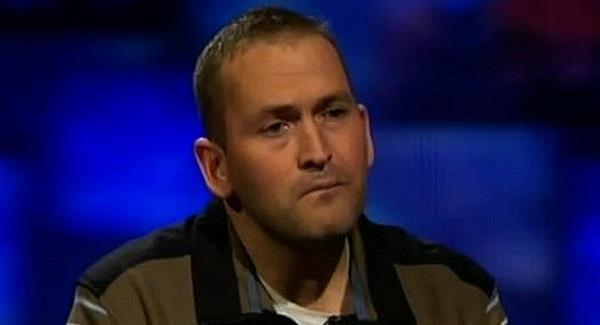
In the weeks leading up to Christmas, there was barely an evening where if he wasn’t talking to some group, he was getting back to people by phone or mail. Since he wrote that blog the October bank holiday weekend, his life has changed, because it has helped to change and save the lives of others.
It’s meant about four or five hours sleep most nights but for him it’s not an inconvenience but rather a privilege and a responsibility. It would have been irresponsible to just write that blog and leave it at that; after he told his story people wanted to tell theirs, very often to him.
He didn’t wish or seek to become a public figure but if it meant being a public or friendly face of something that’s afflicting this country, he was willing to do so.
“I know this will settle down,” he says, “but the reason I’ve been putting so much into this now is because when I was going through this I would love to have had someone I knew who had been in my shoes.”
What he went through in those shoes. And what a journey those shoes and those feet have made.
It all began in Cloyne. His world was Cloyne, and in Cloyne, hurling was the world. His 14 uncles and aunts all played the game. His mother’s seven sisters were all on the Cloyne team that won an intermediate county. His father played minor and U21 for Cork.
“When you left the field, you didn’t leave hurling at the field. It was there when you went back to the house and everywhere you went. I realised from an early age that there was a social status that came from being a good hurler. The postman knew you because you were a good hurler. Before the other fella [a certain Donal Óg Cusack] was ever heard of, I was the guy who was going to ‘make it’.”
He hurled in Croke Park before Donal Óg ever did even though he was 18 months younger than Donal Óg. At half-time in the 1991 All-Ireland final he played in the mini-sevens, scoring a goal and a couple of points in the colours of Kilkenny.
As he and peers sauntered off the field, a wave of applause greeted them. Young Conor was sure it was just the first time he’d take in an ovation from those stands.
In school, he was getting good grades, a sponge for knowledge. Unfortunately he was also wide open to being bullied.
It began when he was seven or eight. A couple of lads from home were bigger than him. They might be playing hide and seek and suddenly they’d start thumping him. For years it went on. They didn’t always hit him but the threat of doing so was constant. Then when he moved onto secondary school and a couple of other lads there also taunted him repeatedly, it compounded the sense that he was the problem, not them.
Later, in therapy, he would realise they were as much victims as him.
“I’d buried all that for years. But one of the great revelations for me during my therapy was that these guys were in darkness as well, they weren’t sure of their own value or lovability either. Bullying is all about control and the person that’s comfortable in himself or herself doesn’t have a need to bully or control anyone else. Don’t get me wrong, what they did was terrible. They turned what was a very happy childhood into an incredibly difficult childhood but in therapy I developed a fierce compassion for them.
“The sad thing was I didn’t have the courage to tell someone about it or there wasn’t an adult to recognise there were two sets of people hurting here and that cycle needed to be broken.”
He sees them every now and then about the place. They seem to be doing fine, getting on with their own lives. A few years ago he broached with them what happened when they were kids, to nip in the bud the possibility that the bullying might transfer from one generation to another, as so often happens. With one of them it was out on the street, with another it was in a bar when both of them were sober.
“It was just to give them that opportunity, to break the cycle. ‘You know, there were things that went on when we were younger and I feel you were a victim as well.’”
And did they appreciate that opportunity?
“I wouldn’t think so. But at least I gave them that opportunity. And I’m glad I was honest with them. I wasn’t anywhere near that position when I was going through the therapy. I wanted to kill them in therapy. But as it went on, I realised those fellas were in a dark place as well.”
It couldn’t have been darker than where he was though. By his mid-teens, he’d grown into a strong young fella so the bullying stopped but then the panic attacks began.
He had no idea what was happening to him; back then there was no internet while a mobile phone was, as he puts it, “the size of a concrete block”.
“I was convinced I was the only person in the world going through this. And when you’re experiencing a panic attack, you’re convinced you’re going to die. Imagine feeling that way several times a day, at 15 years of age. And it was bad enough being terrified about the bullying and panic attacks but I was also terrified about people finding out.
“It got more and more difficult for me to keep up the pretence in school. I’d break into balls of sweat, so I’d sit down at the back of the class with the window open and clothes and books in the seat beside me whereas before I’d always sit up at the front. Recently I was talking to some of my teachers and they said they could see things were changing with me but back then, there was no awareness about mental health.”
That was the thing. No teacher or friend knew what to do because Conor himself didn’t know what depression was until a doctor told him when he was 19 years old.
He was working for a printing firm in Midleton, having quit school at the start of his Leaving Cert year, but one day it too became too much for him and he shrivelled up in the corner. He asked to be taken home. Then he was taken to hospital for tests. That’s where he first heard the D word. The diagnosis helped but the prescribed cure did not.
You’ve heard or read about it already: how he was put on medication, went to a range of psychiatrists, was recommended to take electrical shock therapy, to the point he was ready to take his own life instead. He had the rope and all but then Mum didn’t go to mass. Instead he went to the psychologist she’d heard about.
“I’m not anti-medication or anti-psychiatry but something inside of me always knew medication wasn’t for me. I worked as an electrician the last number of years and let me tell you, I’ve never felt good once after an electric shock! I’ve never thought to grab a wire and say ‘yeah, give me another rattle there!’ My experience of psychiatry was that they had this big book in which everything and everyone is grouped and they’d say, ‘Right, this is this guy’s symptoms, so he gets treatment X.’ It’s a lot easier to prescribe medication for a guy than to sit with him and listen to his story.”
DR Tony Humphreys was different. He wanted to hear his story. He was a psychologist, not a psychiatrist, though to give him a label like that isn’t doing him justice. Tony didn’t seek a label or prescription with Conor. He didn’t see any chemical imbalance. He saw a human being.
“I was invited recently into Pieta House in Cork and one of the things that struck me when I walked in there was that it looks like a home. I was going around all these psychiatric wards and they were all sterile, clinical. Tony’s office is a converted cottage onto the side of his house. There was a fire on. It felt like you were walking into your grandmother’s sitting room. And the way he smiled at me, you felt he had a belief in you and an understanding of you.
“He generated that atmosphere and unconditional loving environment where you didn’t feel judged and you felt that you could tell him anything. For me, that’s what all the great therapists and coaches create; an atmosphere where the individual is allowed to blossom. John Allen created that with that Cork team he coached. And you can’t fake that sincerity, that lack of ego. But the other thing about the likes of Tony Humphreys and John Allen, Donal O’Grady, Ger Cunningham and Donal Óg is that they tell you what you need to hear, not what you want to hear. And it’s one of the things I’ve learned about depression as well. I now view it as a friend, not an enemy.”
Just this past summer, it paid him a visit again. He had broken his hand in three places playing championship for the club and it put him out of work for a couple of months. During his layoff he had started to enjoy himself a bit too much. His diet and training had gone to pot. He knew something was out of synch but didn’t act upon it until one Tuesday evening he could feel the presence of his old friend.
“I didn’t push it away. I literally sat down in the chair with him and my thoughts and allowed myself to hear his message. And basically it said to me, ‘Look, you’re not looking after yourself.’ And I had to go, ‘You know what, you’re right.’” By the morning it had left. Conor himself got into the car, did a gym session in work, came home, ate a healthy dinner, and got back into a routine that worked for him.
For years, that shadow wasn’t just an intruder but a captor. It stole his teens. He remembers Cloyne winning a minor or U21 championship. While he was blocked away in his room he could hear his old teammates going through the street with the cup.
“I just exploded into tears. There were only a few metres between us but we were a million miles apart. The real world was going on fine without me while I was in my own world, a hell world.”
Donal Óg would have been on those teams. While his brother was up in that room, Donal Óg was winning All-Irelands at minor, U21 and senior with Cork. “As his star was rising, it was a reminder of how much mine was falling,” says Conor. “We were typical brothers at that age, all living our own lives. I wasn’t in a position to build up a relationship with anyone. I wouldn’t say any of us [men in the family] were close at that time.”
He didn’t get on with his father back then either. But he was supportive in his own way, as was Donal Óg.
They each gently urged him to see that psychologist mum was talking about. It was Donal Óg who drove him to that first meeting with Tony. Dad paid for it. He wasn’t well off, being a crane driver for most of his working life, but he never once complained about Conor’s situation or the cost of his therapy.
“The other great thing our parents instilled in us was to have a healthy scepticism towards authority. During the [Cork GAA] strikes, a lot of other people might have said to Donal Óg, ‘I don’t know if you should be putting your head above the block like this, you’re bringing unnecessary attention on our family.’ Dad would have fully supported us. And I now have a fantastic relationship with my dad and Donal Óg. It’s one of the great joys of my life, how we’ve got closer by the year.”
There were other rocks of support. Mum was the most obvious and fundamental of them. At work, Victor and Mary McCaffrey at Print Profiles were hugely understanding, easing him back on light duties first.
“I believe if we’re going to deal with mental health issues it’s going to require a lot of knowledge but also wisdom as well. And as [the philosopher Jean-Jacques] Rousseau says, what wisdom can you find that is greater than kindness? What Victor and Mary did for me was unbelievably kind.”
Later on, when he’d train to become an electrician, Ciaran O’Riordan of Valley Rovers was just as kind and wise. Then there was the club and his clubmates. To them, he’s indebted as well.
Just before his first night back training, the team coach that year, Denis Mulcahy, called him to the side. Cusack was 1lb short of being 20 stone.
“Denis Mulcahy was a warrior of a player for Cork and for Midleton but he could not have been kinder to me. Most coaches back then would have been dogmatic. He said, ‘We’re going to get you back in shape, you’re not competing against anyone else, whatever you can do is acceptable.’ He wasn’t going to be mocking me or bemoaning why I wasn’t keeping up with the others. And as we started the laps and lads right away started lapping me, you had the likes of Deccie Motherway saying ‘Keep it up, Bear, you’re doing fine’.
Or Killian Cronin: ‘That’s it, Bear, you’ll be fit in no time.’ “Maurice Cahill didn’t even say anything, he just put his big powerful hands on my shoulder. It was just a recognition of my presence. ‘Great to have you back — we have your back.’ A few months later those same fellas were taking lumps out of me but to me they were just as much warriors that first night when I was a fragile soul. One of the biggest mistakes we make in society is to associate certain qualities as masculine and exclusively for men and other qualities as more feminine and exclusively for women. But the man who can’t match his aggression with tenderness or his ambition with compassion or his drive with love is only living half his life. As James Keller says, a candle loses nothing by lighting another.”
Something else had been ignited the previous night. In the same room he’d been essentially held a captive, Cusack sat down and wrote something of a mix of a letter and a goal sheet to himself which he’d put in a blank envelope. It had five bullet points.
* I want to play senior hurling for Cloyne.
* I want to win at least one senior county championship with Cloyne.
* I want to play senior hurling for Cork.
* I want to win at least one All-Ireland senior championship with Cork.
* If I achieve any of the above, it will bring great joy and satisfaction to me but I will be in a place where they won’t add one jot to my worth as a person. I am again hurling — but I am much more than a hurler.
The fifth was the most important. In the past he’d allowed hurling define him. He was his hurling, he was his grades. When they started to deteriorate, what else had he? What else was he? “It’s one of the great ironies that when you’re able to separate your sense of self from other passions, you actually fall in love more deeply with those things than ever before. When your identity isn’t enmeshed in them, when you’re not dependent on certain relationships or hurling or exams to feel good about yourself, when you’re able to deal with people from the sanctuary of your own self worth, you’re actually able to be more real with them. That’s a big reason why me and my family have become a lot closer.”
Cusack’s transformation was at least the equal of Rocky Balboa’s. He would play in three county finals for Cloyne, become one of the most lethal goalscorers in the county and come on in the 2006 All-Ireland final for Cork, weighing 13 stone 5lbs, more than six and a half stone lighter than the bear plodding around that field in Cloyne.
He read voraciously, on everything from depression to philosophy to sport psychology. He’d plague Cork trainer Seanie McGrath on what was the best way now to train and eat.
Even after he and McGrath had departed the Cork scene and Cusack was recovering from a cruciate operation, he would wake from his sleep every two hours to stretch because he’d read of an Olympian who’d recovered from their cruciate by setting the alarm every two hours as well.
He practised yoga, meditation, visualisation. The ball alley became a second home. He turned down a lucrative full-time job that would have allowed him to have a house of his own but instead he stayed in his part-time job and at home because the overtime would interfere with his hurling. He’s very mindful that he didn’t achieve all his goals he slipped into that envelope. In 2006 Cloyne would lose a third county final in a row while Cork wouldn’t win a third All-Ireland in a row. He didn’t get to some of his intended destinations. But when he looks at what he and Cork and Cloyne became along the way, he can’t help but smile, “What a journey.”
In hindsight that Cloyne team was a bit cracked. Their training sessions were fanatical in their intensity. The Sunday before a county semi-final against a star-studded UCC team, four of them ended up in hospital. They’d come to laugh about it.
Picture it: The medic goes into the first fella. And what happened to you? Then the second fella. Then the third and the fourth. Jesus, what was going on in that field in Cloyne?! The next week they beat UCC.
Cusack especially treasures one May morning in 2007. He’d been cut off the Cork panel by Gerald McCarthy a couple of months earlier having played the Waterford Crystal tournament restricted by injury but that Friday morning he was at peace with Gerald and the world and especially himself.
“We were training at 5[am] that morning on Ballybrannigan beach. It was dark when we started and I remember us jogging away when the sun started to rise and this incredible emotion came over me. Tears started rolling down my face. And it was tears of joy. Here I was, with a group of lads who had lost a third county final and people saying we were this that and the other and yet we all were back on the horse, wanting more.
“That group wouldn’t let failure — if you can call it that — define them or stop them from progressing and striving for our dream. And as lads jumped into their cars and headed off to work I sat down on the edge of the water and reflected on the journey I had travelled.
“Watching the sun come up I thought back to when it would come up before when I was on my Honda 50 and my old schoolmates would pass me in their cars going to college and I’d wave back but behind the helmet I’d be shedding tears because the brightness of the light only made me more aware of the darkness inside. But here I was this morning and as the sun was coming up I could feel an energy inside and an enthusiasm for the day ahead. I reflected on lots of things. My family and my job and my hurling and how I was loving and enjoying them all so much now without depending on them to feel good about myself. I reflected on my bullies and felt this incredible empathy for them. I reflected on my depression, once my kidnapper but now a freedom friend of sorts who had liberated me from the shackles of a persona that I had built to please the outside world. Even now, thinking about that morning, I get a tingle. It was just magical. Magical.”
He continues to see magic in just the most simple of things. Like going for an early-morning walk and then coming in to make some porridge.
One evening last summer he was back at his parents’ house and Donal Óg was pucking a ball against the wall. Conor joined him for a chat. Then their dad joined in, then their uncle and a friend of his. And there they stayed for over an hour, just chatting and laughing away. That night Donal Óg texted him: what a simple but wonderful evening.
He doesn’t want to think or plan too far ahead. You can only plan so much in life; the health of a couple of relatives have brought home that. His career is going well. He went back to school and then college in Cork IT, where three years ago their department of science and engineering gave him an award for best results by an apprentice electrician. He still has a passion for hurling and was only energised from talking to Diarmuid O’Sullivan and Cillian Cronin at the club’s recent AGM that they still have it as well, still a bit cracked after all these years.
Helping others like he once was is another huge passion of his. He became an ambassador for the GPA only when he realised they were just as serious and ambitious in their plans about promoting mental health as he is. He foresees county players first looking out for one another in their own dressing room, then looking out for others in their own clubs and then the whole community, “warriors of the light”, as he puts it, that can light one candle after another.
“To confine this to the GAA is to entirely minimise the issue. I was talking to a 76-year-old woman in Laois the other night who is in a very dark place. So this is affecting old people, middle-aged people and our young people. But I do think the GAA can be a terrific catalyst and beacon for the entire community. The GAA club and its dressing room and committee room can be a sanctuary for our people, to say to members of the community this is not something to be afraid or ashamed of, you’re not going to be ridiculed but rather helped and treasured here.”
So that’s why he’ll continue to tell his story for another while. Not for self-promotion or profit — he turned down doing a spread for a certain magazine recently — but rather to promote the message and remove the stigma and taboo of depression. You do not have to suffer in silence as he did. You can discover there’s so much to live for, as he did.
He’s still learning. About life, spirituality, himself. You ask him how he now is, has he learned who he now is, and like his story, his answer takes you on a bit of a journey.
“You know, it’s been more finding out who I wasn’t and am not. I’ve found that I’m not my hurling, my job, my family, I’m not single or married. One of the things I’m kind of conflicted about at the moment is how I feel about my religion. I’m more spiritual than religious but I like going to mass. I like the peace of the church and I like the sense of community it can bring. But I find myself disagreeing with quite a lot of what church figures say. The original message of Christ was ‘Love thy neighbour as thyself.’ And what the Catholic Church often forgot was the ‘as thyself’ bit. Love thyself. I’m not talking from a narcissistic point of view, where you think the world revolves around you. But rather getting to a place where you’re comfortable in your own being, where you don’t allow yourself to be controlled by anyone. But instead of empowering people, the Church has controlled people.
“I often think that whoever created us and created this unique thing of the human spirit is roaring down at us, ‘You’re missing the point! Forget about this adoration of me and kissing rings and the like! Don’t wait until you die for your spirit to be free! Love thyself as well as thy neighbour!’ When you start to live with that freedom and independent of other people’s views or prejudices of you, well then that’s loving thyself. Maybe this is our heaven on earth.”
Before, he only knew hell on earth.
What a journey indeed.
CONNECT WITH US TODAY



Be the first to know the latest news and updates