Bradley aims to take centre stage at rebuilt Casement Park
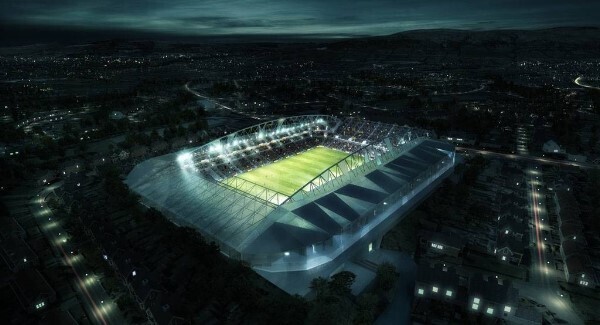
Planning permission was granted yesterday on a £76 million (€91m) development which will transform the west Belfast venue into a 38,000 all-seater stadium.
Although the announcement was disrupted by some local residents who are objecting to the scale of the project, confirmation that the building work will begin in the new year has been welcomed by the Ulster Council.
Bradley, who has recently taken charge of the Saffrons again after a one-year absence, claims a new Casement Park is good news for the GAA in Ulster and Antrim in particular.
“From an Antrim point of view this is ideal,” he said. “The Ulster Council intend to have the stadium finished in time to host the Ulster final in 2016. Hopefully I will still be manager and our aim will be to get to that Ulster final.
“We are at the start of the development of a stadium and of a team as well. The two will be taking place at the same time and hopefully they will be ready at the same time and Antrim can take centre stage on a massive day for the GAA in Belfast.”
Ulster Council chiefs had to move yesterday’s announcement inside as protests by local residents took place on the pitch at Casement Park.
It is expected the stadium will be used to stage Ulster finals and possibly All-Ireland quarter-finals, but residents are angered by the 38,000 capacity which they believe is excessive.
Former Ulster Council president Tom Daly, chairman of the redevelopment project, stated: “We have made changes to the design after discussions with the residents. Significant things have happened such as we dropped the capacity, we pulled the development in from the perimeter, and we have taken their concerns on board.”
Bradley, who led Antrim to their first Ulster final in 39 years in 2009, believes the GAA will have no trouble packing Casement Park out on a regular basis.
“Belfast is Ulster’s biggest city and the second biggest on this island. This is where Ulster finals should be played. It’s a no-brainer.
“The city has been lacking in funding for too long, not just in terms of redevelopment but in coaching as well.”