‘The Tipperary win took a huge amount out of them’
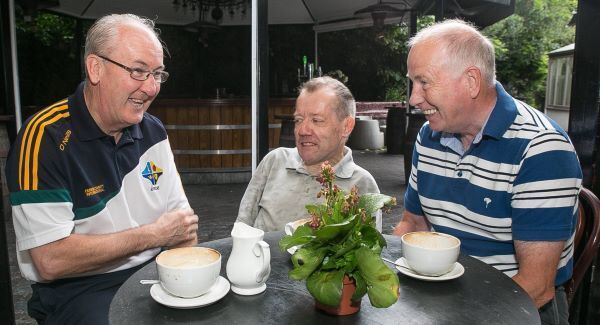
When they get the break from it, just focus on their clubs and look on while someone else wins the All-Ireland, by the time they come back hurling with the county next February they’ll have the appetite back. Right now they probably don’t have that but wait until next year.
We were only just back from America before that Leinster final. We were up in Nowlan Park and we thought we were training as hard as ever but we were only going through the motions and Wexford destroyed us. You’re talking about a different time. Nowadays you have a panel of over 30 training all the time, back then you’d be lucky to have the 20 and could use only three subs.
It’s when they go back for those first few hard training-sessions at the start of the year, that’s when the bodies will tell them whether they want to keep going or not. Even the older guys are relatively young, 31 or 32, but they’ve been through so much, they’ve won so much. The question is simple: Do they have the hunger to come back again? We won’t know until the start of next year the full impact of Sunday’s defeat. But there’s no doubt, if they really want it again they’re well capable of coming back, they have that talent.
In 2012 Kilkenny went to the end of September to win the All-Ireland, played six matches which was unprecedented, for them. This year they played six and a half matches and that was only to an All-Ireland quarter-final. I mean they barely got a break at all, going straight into club county championship action after the All-Ireland final last year, then into a very attritional league campaign which culminated in a must-win game in Nowlan Park against Tipperary. They’ve been going like the clappers for two years.
That will be entirely his own decision — he has earned that right. He’ll give himself some space, see how the club championship goes, how he’s feeling and then decide, but avoiding injury will be a major factor. However, a fully-fit Henry Shefflin would still be a major player for Kilkenny.
I think he can come back and I’d be happy to see him back. A major factor for our team was the retirement of Eddie Keher in 1977; I felt he should have stayed, he was still playing great hurling. I couldn’t believe it when he retired. An injury-free Henry would still mean a lot to the Kilkenny team.
His body will tell him yea or nay. A rest this winter is obviously crucial.
It’s quite a change, not to be thinking of an All-Ireland semi-final, we were starting to take that for granted. It had to happen at some stage but I was still a bit surprised to be quite honest. We struggled in a few league matches but the way we played against Tipperary in the final was impressive. I thought we’d continue to improve, especially with so many still to come back, but the injuries kept coming.
As the week goes on it’s sinking in, people in general are coming to terms with it but it’s a strange feeling, no doubt about it, the first time in 17 years we haven’t been in an All-Ireland semi-final. Suddenly it’s happened. We all knew it would and I suppose the writing has been on the wall for the few weeks, every match was a struggle and injuries taking their toll. In fairness, too, other teams have been catching up. It’s a strange feeling and it will be interesting to see how things go from now on.
Lads are talking about Kilkenny raising the bar every year but you can raise it only so high. Kilkenny did that but I think they went down a bit themselves this year and the rest came up.
Injuries were a key factor this year. Check the programme from last year’s All-Ireland final replay:Of the 14 outfield Kilkenny players Paul Murphy, Jackie Tyrrell, Michael Fennelly, Cillian Buckley, Henry, TJ Reid, Michael Rice, Walter Walsh, Eoin Larkin — every one of those was injured and missed games at some stage or other this year, nearly two-thirds of the team. That all adds up.
I think we were in trouble from the time we lost to Dublin, the road we had to go.
The win here against Tipperary (championship qualifier) took a huge amount out of them, a real scorcher. The atmosphere that day — I’ve never experienced that in Nowlan Park before, it was fantastic. Then they had to go out a week after that and do it all over again against Waterford, another hungry team, in a game that went to extra-time. There’s something too I’ve noticed this year. I go to a lot of Fitzgibbon Cup matches and every year the standard improves, the games are becoming more intense. You look at the last four teams standing this year, there’s a massive number of players from each of those teams who are now starring in Fitzgibbon Cup. The likes of William Egan from Cork — he was only an okay player at minor and U21 but he’s been a star for UCC this year and last. Declan Hannon from Limerick with Mary I, John Conlon from Clare, Dublin have them with UCD and DIT. That’s becoming a very important competition now for gaining top-class experience and we saw that with Seamus Harnedy. If you can survive in that you’ll be able for inter-county hurling.
Tommy Walsh, Aidan Fogarty, even Henry himself, all those boys cut their teeth in Fitzgibbon Cup as well.
Another significant factor about the four teams left — three of them are only at the start of a new cycle, Cork, Clare and Limerick. Dublin have been around for a few years now, are a bit more advanced in their development. Those teams are going to get confidence from how they’ve done so far this year. It’s going to be an exciting next few years and though I expect Kilkenny to be competitive, they’re going to find it difficult to be as dominant again.
I don’t think Kilkenny will get back to where they were a few years ago.
Even if you have a few retirements you’re still going to have a very strong Kilkenny team, they’re not going to disappear overnight.
I agree with that 100% but there will have to be change in Kilkenny. Brian (Cody) reinvented himself in 2001, again in 2006, and reinvented the team; he’s going to have to do something like that again. Cork have the likes of Egan and Harnedy coming through; Kilkenny also have those players but because of the success and the greatness of so many of this team, they haven’t had an opportunity. They’ll get that chance next year.
Very phlegmatic, resigned. People knew it was on the cards, felt it could even have happened before this.
I don’t think people have any complaint with the result but they are upset with the sending-off of Henry Shefflin, very annoyed about that — that’s what I’m hearing anyway.
I don’t think it affected the result though.
Definitely not, there’s no sour grapes, no-one here taking anything away from Cork, they were the better team on the day.
As far as success is concerned there’s no question about that, this team has to be considered the best. They won more than anyone, nine All-Irelands in 13 years, seven league titles — no team has come near matching that. That’s reward for the effort they put in night in, night out, the way they conduct themselves. When we were playing you had a big match only every so often but these guys are training hard almost year-round, going from one huge game to another. They were under pressure to perform all the time and I think they did better for longer than any team I ever saw.
The demands on teams are much greater, in training and in games. It’s been overshadowed now with all that Kilkenny have achieved but Cork winning two-in-a-row in 04/05 was a major achievement, considering there were so many contenders after emerging in the 90s. For Kilkenny then to go on to win four-in-a-row, to win six in seven years — nowadays, with all the strong teams, with the back-door and second chances, that adds to their achievements.
They’re the best team I’ve ever seen, I’ve no doubt about that.
I think the All-Ireland final of 2006 when they came back to beat Cork and deny them the three-in-a-row. Kilkenny went in as underdogs, Cork had developed this new style of play that people thought would dominate for years. I thought Kilkenny dealt with all that very well, the effort they put in that year, the workrate they had.
The 2006 final holds a special place because Kilkenny were under so much pressure that day. It wasn’t just about denying Cork the three-in-a-row but Cork would have gone on to dominate. In that final Jackie Tyrrell was captain but he just grew after that, as did so many others; the likes of Eoin Larkin, they got better and better. Brian might have come under pressure too if Kilkenny lost and no-one knew that better than himself. That game was huge but I think the period from there to 2008, that’s when that particular group were at their peak, they were out of this world. After 2005 when Galway beat them Brian went away, re-thought the whole thing out again, brought a few new lads on board; that team was unbelievable. Okay the finals of 07 and 08 were one-sided but Kilkenny made them one-sided, were able to kill off teams early, completely overpower them. 2007, the way Eddie Brennan took the game to Limerick early on, destroyed them — the game was over in 10 minutes. The same again in 08, Waterford were beaten in 10 minutes. Those three years, Kilkenny were almost untouchable.
I’d agree that 2006 was a more significant victory but it wasn’t their peak. I think the years 2008 and 2009. Their scoring rate in those years was off the scale – in 2009, 2-20 per match. I mean, Tipperary scored 23 points in the All-Ireland final and lost by five! That was a wonderful performance by Tipperary, arguably better than when they won the All-Ireland in 2001, and still they lost.
I couldn’t quantify it to be honest. Look back even to last year’s All-Ireland final, the drawn game — Henry came out to centre-forward and took over, changed the whole thing. Henry Shefflin even playing poorly would take two men to mark him but I never saw him playing poorly. He’s a leader in every way. He has skill but he also has the workrate. He is the complete hurler.
They were similar players. Keher had all the skills too, had the strength, the determination, another great man to take charge and change the course of a game. But remember, the rules were very different that time, the style was different, the ball was different. I’ll say one thing about Keher, he was the best free-taker I ever saw. If he were taking frees with the ball that’s there today he wouldn’t miss one – the ball back then, big bags of things, a big ridge on them, often out of shape, not round at all, and heavy in the rain. I remember him taking a free to win an old Grounds Tournament final in Cork, against Cork, about a week before Christmas on a terrible day, mud and muck. He stood over the free, the crowd were crucifying him. So he knelt down and tied his bootlaces, got himself ready, put the ball between the posts. Henry was similar in lots of ways but more than anything the two of them were so competitive, that was the big thing. I’d see them as being very close.
To me Henry is untouchable, just an incredible player. I’d go back too to last year’s All-Ireland final drawn game, millions tuned in, a packed Croke Park. He wasn’t going particularly well in the first half but the way he took charge of that game in the second half — in any sport, I’ve never seen anything better than that. One man doesn’t make a hurling team but if you look back to all the great teams they’ve had this one fella who stands out — Eddie Keher in Noel’s day, DJ Carey in mine, now Henry. You must remember too though, at the other end of the field you had two of the greatest defenders to ever play the game, JJ Delaney and Tommy Walsh; those three were there together, three very special players. Think of it this way; if Henry hadn’t got injured last year, if he had been injury-free for all of this year, where would Kilkenny be now?
What can I say that I haven’t already said, many times? Nine All-Irelands on the field and he was a significant player in every one of those finals. Even in 2008, when RTÉ gave man-of-the-match to Brian Cody I’d have given it to Henry. I know they won by a cricket score but he was the one pulling the strings against Waterford. He was never a ‘me-me-me’ player, he was a consummate team player, perfectly happy to be provider. You could describe him as a man with a big ego who had no ego when he played, if that isn’t contradictory.
I don’t understand how he can keep it going. The work it takes, the time, the commitment, yet he has that determination, that ability, to just keep going year in, year out, day in, day out. I was four years with him, one as a goal keeping coach, three as selector, and saw first-hand what he does. It is unreal. It’s all day, every day, and it doesn’t stop during the winter either. There might be a break in training but there’s no break for him. He is going to colleges matches, club matches, doing his homework all the time — if he can’t go to a Fitzgibbon Cup match himself he’ll make sure there’s someone there covering for him. Absolutely thorough. He’s prepared to learn, to change. And he’s some man to motivate a team.
It’s forgotten now that Cody’s appointment back in late 1998 was greeted with general indifference in Kilkenny. He was the ultimate unknown quantity.
I don’t think you can separate him from Henry Shefflin; we had probably the greatest player and the greatest manager came along at exactly the same time and one complemented the other. It’s the determination, the competitiveness.
“He never shows weakness and maybe that was his secret, that’s why Kilkenny became so strong. How he keeps going year after year, I just don’t know.
“From my four years as U21 manager I know the kind of pressure you’re under to produce results, the stresses and strains of it, and that’s just at that level for that period. He’s been doing it at senior since 1999!
Definitely! I’d say too though, the day he feels he’s no longer able to give it 100%, he’ll go. That’s the standard he demands of his players, that’s the standard he’ll hold himself to.
As with Henry that will be his decision and his alone.
Will they build a statue to him in Kilkenny?
I think they will, yes, and they should.
In time it will happen, but it wouldn’t be what he’d want.
No. This is definitely not an obituary today and I’d like to stress that; I have a feeling he’s going to take this and drive it on again.
CONNECT WITH US TODAY



Be the first to know the latest news and updates