Stubbornness and patience to prevail over class and style?
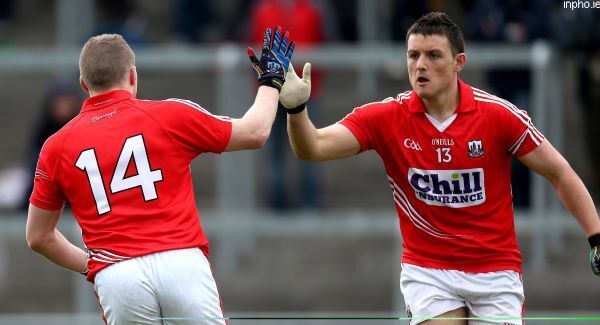
CADBURY'S ALL-IRELAND U21FC FINAL
Cork v Galway

There was a proposal five years ago to lower the inter-county U21 competitions to U20 but it never really gathered momentum. Since then the U21 competition has been won by Cork in 2009, Dublin twice (2010 and 2012) and by Galway in 2011.
Most of the winning teams in those years contained players who have gone on to adorn the subsequent senior championships and even the final with the least amount of stardust — Galway v Cavan in 2011 — threw up current senior managers, Alan Mulholland and Terry Hyland and the youthful midfield hopes of Galway football, Tomás Flynn and Fiontán Ó Curraoin, as well as the magnificent Gearóid McKiernan of Cavan, so unlucky to be ruled out for the remainder of this season with a cruciate ligament injury.
One of the more important effects of following through on this week’s proposal to turn the minor level into an U17 competition was that it could, as Uachtarán CLG Liam O’Neill pointed out, revolutionise fixture-making “big time”. The other influence it would bring to bear on the game would be to make the U21 competition even more important than it already is. By lowering the maximum age criteria of minor by a year, the authorities would automatically make U21 competition the premier competition for showcasing emerging talent as U17s are too young for their progress to be anything more than a fingerpost on the road to a senior career. Only a certain percentage of players will ever get to play Sigerson Cup. Under 21 football is where it’s at these days if one wants to see football played by players who just want to play ball.
I really hope that the latest effort to streamline club fixtures works out as only two weeks ago we saw first-hand in our own club, how an intermediate championship fixture had to be held up because of unavailability of county minor players on both sides. That is, as they say in these parts, scéal eile do lá eile.
Based on their respective semi-finals, it might not come as a great shock if Galway were to beat Cork in the Gaelic Grounds.
While Kildare had enough chances to “win two or three matches” as manager Kieran McGeeney succinctly put it afterwards, Galway were gritty when they had to be and as clinical as you’d expect them to be.
In Shane Walsh they have one of those rarest of players who glides through the gears like Michael Donnellan used to; Seán Moran has almost everything you’d want in a centre forward, Damien Comer and Cathal Mulryan aren’t above tracking back and tackling with purpose and Galway might just have the midfield partnership in Flynn and Ó Curraoin to break the dominance that the Cork duo of Seán Kiely and Ian Maguire enjoyed against Cavan. The Galway duo are veterans of the U21 grade and while Maguire is a fine player, the St Finbarr’s youngster is just a year out of minor and Kiely only emerged as a player of substance when kicking the winning point as Cork’s hand was forced in the latter stages against Kerry in March.
Whether Cork football folk will wish to acknowledge it or not, they’ve been extremely lucky that they haven’t met a team with a genuinely ruthless streak to date. Even allowing for the breeze in O’Connor Park, Tullamore two weeks ago, the free kick that Cavan’s Enda Reilly missed to draw the game at the death was eminently kickable.
Kerry, too had their chances late in the game in the opening round of this year’s championship against Cork and only a lack of killer instinct and more poor free-taking on Kerry’s part saw Cork through.
One of the principal reasons Cork have made their way to this evening’s final is their remarkable ability to do some serious damage in short bursts just after half time. In their semi-final against Cavan Brian Hurley scored points in the 32nd and 33rd minutes, Mark Sugrue in the 34th and in the 38th minute Dan Mac Eoin put Cork six points ahead from a free after a foul on Sugrue.
It seems more than a coincidence that similar damage was done between the 34th and the 39th minutes against Tipperary in the Munster final, against Limerick in the semi-final and against Kerry when Mac Eoin kicked three great scores after half-time and John O’Rourke added another before they had to ride out the late onslaught.
It seems patience and stubbornness are as important as other traits such as class and style.
Only Galway in 2011 had the game wrapped up with an early scoring blitz but Dublin famously had the crossbar to thank for their 2010 title when Michael Murphy’s last ditch penalty went awry.
Their manager, Jim Gavin, made his usual five substitutions to win last year’s final, and together they contributed 1-2, including an injury-time goal from Paul Mannion. Even Cork’s last title in 2009 owed much to stubbornness and patience when Colm O’Driscoll (brother of tomorrow’s wing back, Brian) stole it at the death with a goal against Down.
Galway have shown incremental improvement with each outing these past six weeks but an awful lot of things need to fall into place for them to win the Clarke Cup and going on the belief that a solid final showing usually follows a scrappy semi-final performance, then it is Cork who have more scope for improvement.
So, stubbornness and patience to win out over class and style?
Provided Cork can avoid coughing up cheap frees in the full-back line and provided they are decisive about who takes free kicks of their own up front, they have enough stubbornness and patience throughout the spine of the team to win out.