‘Power is now key asset’
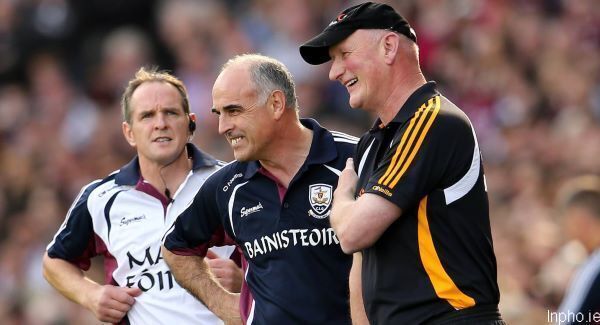
Both experienced men, on Helebert’s return to the senior inter-county scene last year with Anthony Cunningham he noted some changes.
“Looking back over the last couple of years, there’s been the development of group contact over breaking ball and there’s a significant intensity to the way the ball is dealt with at that breakdown. A lot of bodies gather and there’s a lot of contact there, and I think referees have to understand how that plays itself out.
“Another thing is helmet interference under the high ball, I think that’s a factor. Those are things which are causing problems, as is the advantage rule and how to interpret and deploy that — when is the right time to allow it? That all depends on your perspective.
“They’re issues I’d have noted last year when it comes to what you’d need to deal with.”
And then there’s the physical contact. Helebert was struck by the toll it takes.
“That contact is certainly taking more out of players than before,” said Helebert. “It’s the one startling thing, having played recently enough, and you see it in training, particularly.
“The quality of the physical contact is dramatically increased and it takes a high price of the player. You see it in the injuries in bigger games. Fellas aren’t breaking arms and shoulders but they’re coming away from games needing recovery time — recovery time that needs to be mapped out — and it’s not exhaustion, it’s battle-bruising.
“Certainly the physical capability of the modern player is dramatically different to players 10 years ago. I know Jimmy Barry-Murphy remarked upon that when he came back after his first spell in management, but I think you could even narrow down the window to increases coming year on year — that it’s changing that rapidly.
“Players are looking to push the envelope all the time to be stronger and faster, and we saw that in the championship ourselves last year; the sheer physicality of the contact, even in apparently innocuous contacts.
“It’s a joy to behold in some ways because it shows the conditioning of the players, but it requires huge preparation — and hats off to the likes of Kilkenny, who’ve achieved that through sustained training and who’ve gotten the results.”
Ger Cunningham sees that physicality having a direct impact on how the game is played, let alone how players prepare.
“It’s more of a culture now that lads are getting into that earlier,” said the Corkman. “It’s taken as read at intercounty level, that you’re doing the gym stuff, otherwise you won’t survive because you won’t be as powerful.
“Because of the physical battles, you need to be in good condition to take some of the hits because in terms of general fitness fellas are pretty equal, so the difference can be in having that extra power and strength.
“And Kilkenny have shown that. They’re very strong physically and the game you can get sucked into playing against them is a physical game.
“That’s permeating down to development squads, who are being told what’s needed at minor level and so on. In our time lads were encouraged to go to the alley for skill work, but now they’re probably putting that time into the gym.
“And the skill is diminishing, maybe, because hitting the ball off the air or along the ground is hardly needed, all you need to practice is getting the ball into your hand.”
Cunningham traces that to the amount of practice time players have at their disposal.
“I think the time that was spent in the alley before is being spent in the gym now, and some lads are going four or five times a week because I think there’s a focus now on the power and strength that’s needed to survive.
“The big difference now is that the ball is played in the hand, so physical strength is far more important now compared to when it was played off the ground or the hurley, which was the case.”
Because the game is played in the hand, then, there’s a premium on possession, as Helebert says: “If you ask any management team or coaching staff or players, if you ask Joe Canning what ball he wants, or Henry Shefflin, or the Limerick lads, the Tipp lads, the Cork lads, they’ll all say the same thing: I want fast ball and I want it now.
“Most teams try to set up to move the ball quickly, but the conundrum is that most teams are also working so hard to prevent possession being lost and to retain the ball that these rucks are developing.
“I wouldn’t argue that the game is any slower. If you look at the All-Ireland final, draw and replay, the ball was moving quite fast once it moved away from the breakdown. The striking was good — it’s not uncommon for a wing-back to flick the ball 50 yards with a shortened grip, while moving under pressure. That skill is there. There may be a conception among some commentators that the game is slowing down. I don’t think so — it’s just that the capacity of the players to cover vast tracts of land at incredible speed is greater now than ever before.”

CONNECT WITH US TODAY



Be the first to know the latest news and updates