Keeping GAA abreast of medical advances
For a man whose background is financial services, it makes a change for Ger Ryan but then he’s always taken a keen interest in player welfare.
Last April, the Tipperary PRO was appointed by GAA president Liam O’Neill to chair the Association’s medical, scientific and welfare committee.
Congress’ vote to make mouthguards mandatory in football that same month meant he had to hit the ground running.
From January 1, gumshields will be compulsory for all under-age players with the measure being rolled out for all footballers at the start of 2014.
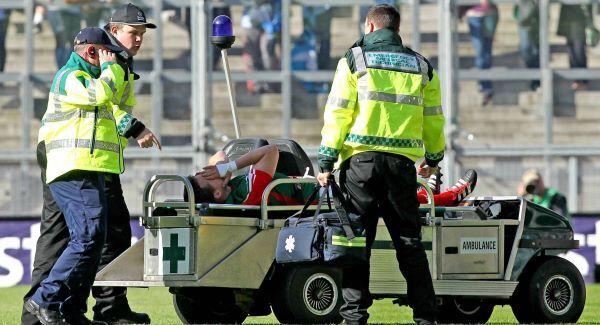
Ryan has been busy overseeing the instalment of a fully-equipped medical kit including defibrillators in every county ground.
Both initiatives are laudable just as the GAA’s ever-growing injury database, something which Ryan is particularly passionate about.
Approximately 16 county teams contribute to the record, which is compiled and managed by John Murphy in UCD.
With Tipperary being one of them, Ryan has seen first-hand what can be achieved by sharing such information.
“I would say the whole approach to gathering data by John Casey has been excellent and has led to better management of injuries and more importantly injury prevention in terms of screening of players at the start of the season. It’s very important to identify any latent injuries with players coming into the panel and then have a very pro-active injury management programme.”
Murphy is then able to analyse the data provided and recognise trends that develop such as what contributes to cruciate (ACL) injuries.
Last year, a staggering €1.4 million was estimated to be paid out under the GAA’s player insurance scheme for the 470 insurance claims for cruciate surgery.
The injury database has helped GAA medics to formulate a warm-up programme which they hope can prevent such injuries.
“One of the things we’ll be trying to do is encourage more and more counties to supply information because it is entirely confidential,” says Ryan. “The purpose of it is to provide information and benefit from it.
“What we’re saying is we want to continue gathering the data but also taking all the findings and try and make a difference out there whether it is a club player or a county player.
With millions being forked out under the GAA’s player insurance scheme every year, naturally there is an emphasis on Ryan’s committee to come up with ways of cutting costs too.
“Obviously, the more money you have to spend on preventing injuries the better whether you’re a club or a county board. There’s a good insurance scheme there but there are costs associated with that as well.
“We’ve very good medical people on our committee and it’s about finding out what the best practice is out there and can we get it in a relevant format that can be presented to clubs and counties.
“The player is the key person, though. We would like to see things happening like arrangements between clubs and counties with a medical centre to ensure players are not waiting too long for a scan. There was a time when you had to travel to Dublin but there are now a lot of excellent facilities available nationwide.”
Ryan is convinced counties working together and sharing information will provide benefits two-fold: for the player and for the pockets of the clubs and county boards. It all comes back to the old adage that prevention is better than cure.
He explains: “One thing we want to do as a committee is ensure clubs and counties aren’t spending unnecessarily on medical issues. What that means in other words is how can you generate an emphasis on injury prevention? That’s all about getting information and knowledge out there.
“It’s all about when you have an injury can you treat it properly, is there a proper rehab programme. Also, can you ensure that players in terms of how they warm-up and in terms of how they train can do it in a manner that prevents injury.
“Then, when a guy gets injured, getting the information out there to ensure he has a proper rehab programme is an important point.
“They are some of the challenges we face as a committee.
“I think there is a lot of good practice in most counties. I only know Tipperary, obviously, but we don’t hear too much about massive injury lists despite all the training. There is a strong emphasis now on quality of training and injury prevention and management.”
CONNECT WITH US TODAY



Be the first to know the latest news and updates