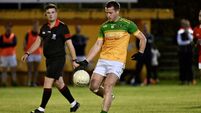
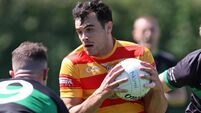
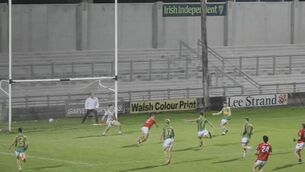
Is GAA ready to take on the world?
But while we have enjoyed stories of Scandinavian football championships and Swiss camogie teams made up predominantly by locals, are we missing the bigger picture? Doesn’t this growth represent a greater opportunity?
With football and hurling proving worldwide popularity, the door is open for the GAA to make a real impression on the sporting world.
In its current guise, GAA abroad depends on the commitment and dedication of passionate ex-pats to organise, recruit and arrange competitions. But without formal international recognition, small clubs will continue to struggle to acquire facilities and funding from foreign authorities.
“Getting a pitch is a big problem, and we have exhausted all routes and avenues to get this,” said Conor Lyne, president of Zurich Inneoin GAA club.
“The fact that the sports are not recognised is a problem across Europe and it would definitely help in our negotiations with the local authorities if we were able to state that the sports are recognised.”
Secretary of the European County Board (ECB), Tony Bass, believes Olympic recognition is the obvious way to safeguard the GAA’s status overseas.
“The ECB is firmly of the view that we need to be an Olympic recognised sport which is not the same as an Olympic competition sport. There are various requirements to achieve Olympic recognition regarding the number of countries and continents in which the sport is played, catering for male/female versions and so on.
“None of these are insurmountable but will require a lot of work in getting the various national authorities to recognise us a sport, which sometimes requires Olympic recognition in the first place — a sort of catch 22 situation.”
There is a precedent. Both hurling and football were exhibited at the 1904 St Louis Olympic Games as demonstration sports. Previously, achieving demonstration status was a step towards Olympic recognition, however they were suspended after the 1992 Olympic Games due to the scale of the programme.
Today, recognition is initiated through the foundation of an International Federation which must ensure the sport complies with the Olympic Charter.
Bass maintains the GAA needs to look beyond the small scale operations in force overseas and move past the “short-sighted” reliance on the diaspora.
“What people in Ireland need to get their heads around is that sport is generally governed by national legislation in legal systems outside the common law system which operates in Ireland/UK and very few other countries.
“There are complex legislative requirements in most countries to be recognised as a sport and the various state, regional or local authorities may play a role in governance and other issues. For the most part the GAA has never had to bother about these issues and just operates through the comfort zone of playing the games based on Irish communities abroad.
“This is short sighted as formal recognition bestows many advantages such as access to municipal facilities because there is no tradition, nor need, for every sport to provide its own facilities, funding and other supports. In most European countries outside Ireland, Gaelic games has about as much official recognition as conkers or tiddlywinks has in Ireland and even less visibility.
“It is difficult to get GAA personnel vetted from a child protection perspective as, officially, we don’t exist therefore the authorities cannot deal with us in the same manner as soccer, rugby or even sports such as lacrosse or synchronised swimming.”
While he insists the GAA has been supportive to units outside Ireland, Bass thinks more could be done to harness an affiliation with the International Olympic Council if the GAA was willing to accept the compromises presented by international recognition, including a movement of control away from Ireland.
“The ECB has brought this matter to the attention of GAA Annual Congress on a number of occasions. However because of the practice of confining Congress debates to rule changes, they have not been debated and are referred to Central Council which has referred them to the Overseas Committee.
“Most of the international units especially Europe and Asia have expressed similar views. Our latest attempt this year was referred to a new high-level group charged with developing an International Strategy and we have strenuously pushed our arguments when we met them.
“Personally, I am of the view that some, but by no means all, in the GAA may be concerned about a potential loss of control as Ireland would then be only one unit in an international body.
“There would be other issues, for instance, the operational structures of the GAA would have to change to reflect the arrangements. The Official Guide would need to be rewritten to reflect the changes and many of its provisions would be irrelevant or even unacceptable internationally. The playing rules may have to be decided at the international level, county congress delegates in Ireland would lose influence, international units would have more power.
“Another major issue lurking around the corner is that, if international development became really successful, the debate about professionalism would inevitably raise its head at some point in the same manner as it did in rugby some years ago.”
It’s clear the GAA has the opportunity to go global on a grander scale than the current community-based growth. What it needs to determine is whether it wants its sport to be exported, knowing that the tradition of the GAA will most likely be lost in transit.
Heart-warming though it is to hear of hurling and football contests in exotic corners of the world, the notion of formal international recognition represents something different.
Bass believes: “Worldwide recognition and development would enable Gaelic games to become one of the premier international field sports with considerable potential for promoting Ireland, the games and our culture.”