Rule 42 three-year trial ‘ideal’
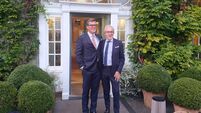
The former Munster chairman, one of the main movers behind the move to amend Rule 42, believes that the ideal scenario would be for delegates to agree to a consensus resolution to suspend policy for the duration of the Lansdowne Road development. This would have the benefit of avoiding a debate which could split the membership.
“To me it would be the best solution if that could be done. We don’t want to be divisive,” he said.
“Rather than bringing it to a vote and maybe aggravation afterwards, if there is such a strong groundswell in favour of change - as there appears to be at the moment - I would like if we get consensus from the floor. The president could declare that ‘we are leaving this’ for a three-year period while Lansdowne Road is closed and then we could reactivate it afterwards.”
While he is naturally pleased in the knowledge that “the omens are good” for a yes vote, Walsh admits he would have a concern about the actual mechanics of the vote.
He says a count of delegates would have to be carried out more efficiently than it was when the Roscommon motion failed by less than two votes in 2001. With a ballot vote there is no guarantee that delegates who vote in secret will do so in accordance with the mandate given to them - unless their votes are authenticated by the county chairmen.
“As one of the tellers (four years ago), I can confirm that the count was done very inefficiently. If you are going to do it on a show of hands, every section should be counted by two people who would compare their figures. A lot of people would prefer this method if it were carried out properly. That way everyone mandated by his county to vote would have to put his hand up.
“The danger is that in a ballot vote, in counties where delegates are not disciplined they could vote individually, rather than going with the mandate. In a tight vote that could be crucial. Central Council has decided on a ballot vote, but that would not be binding because congress will decide on how the vote should be carried out.” Still disappointed that the Motions Committee rejected his proposal for a plebiscite of clubs, Colonel Walsh feels that this objective has been only achieved to a certain extent through the nationwide debate at club level. “You see what’s happening in Cork, the junior clubs are not being allowed to have any say,” he added. “What I was suggesting was a referendum of all registered members, to see what the thinking of the players and everybody would be. But this was rejected because the result would be very obvious.”
Despite speculation to the effect that work on Lansdowne Road may not be carried out for several years, he is adamant that there is an urgency about taking a decision on Rule 42, explaining that it would enable the FAI and the IRFU to plan ahead.
“International matches are not just arranged the year before. They are going to have to make arrangements with stadia across the water to make sure of their availability if things go against them at congress. I think this is the opportune time. Why delay it, why come back again next year?”
As a former candidate himself, he talked about the “strange irony” of the presidential election being sidetracked almost completely.
“You’d think it doesn’t take place at all. There was hardly a mention in the Sunday newspapers, except in passing,’’ he added.
“But Rule 42 is the thing which the media are focusing in on and everybody is watching us to see what the result will be. The repercussions could be very serious in many ways for the Association - depending on how it goes.”
CONNECT WITH US TODAY



Be the first to know the latest news and updates