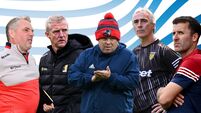
No proof managers are paid: McCague

THE GAA has yet to receive any hard evidence of payments to team managers.

Outgoing President Sean McCague made this clear at a media briefing in Dublin yesterday when discussing the escalating cost of training inter-county teams, which last year amounted to Euro 11m.

Mr McCague said in spite of anecdotal evidence, the Association had no proof that managers were being paid.

“You can be quite sure, there is no evidence,” he said. “If there were evidence there would be action.”

At the launch of his annual report, director general Liam Mulvihill said there was an onus on county boards to cut back on their expenditure, unless they can increase their own income from sponsorship or other sources.

“This coming year is going be a crunch year,” Mr Mulvihill said. “I can see counties having to take a serious look at the number of county teams they have and maybe having to pull out of some of the subsidiary competitions.

“Very hard questions will have to be faced by us all over the next couple of years, because it’s getting very, very expensive.”

Mr McCague and Mr Mulvihill also stressed the importance of getting counties to standardise their accounts. Ideally, boards should know the breakdown in spending which will then allow them determine the major agents driving up costs, they said.

“A lot of our people feel it’s related to travel expenses, but that may not be the case,” Mr Mulvihill said.

Mr McCague said he believed there would not be a cut in the amount of time spent training by inter-county players unless it was demanded by the players themselves.

He was responding to a question about the call by Munster Council Secretary Donie Nealon in his report for ‘a cap’ to be placed on the amount of training sessions.

Mr McCague said the Association had a bad record when it came to “imposing sanctions that became inoperable”.

“I would support the players’ position. If they desire a lessening of the nights they spend in their involvement in training, I would certainly support that. This is a matter that players, out of respect for themselves, should obviously be concerned about,” he said.

Mr Mulvihill stressed the importance of a proper dialogue between players, management and county board officers to facilitate a realistic discussion on how the players and the officers would like to allocate the resources available for the treatment of players in the panel.

And, in a clear reference to the GPA, Mr Mulvihill made it known that this and other issues can only be dealt with by the GAA.

“There have been many column inches written on play demands, pay-for-play, loss of earnings, travel expenses and other issues. Now, we hear from some quarters that image rights are a major issue,” his report stated.

“We should remember that players, whatever group they use to raise issues, are first and foremost members of the GAA and the issues can only be resolved within the GAA, not in the national media.

“Furthermore they can only be resolved in discussions between GAA officials and GAA players with no agenda other than the better treatment of our players at all levels, within the rules of the GAA.”

*The Central Council’s income in 2002 totalled €26,338,457, over a 1m down on the previous year. Expenditure, which was up 18%, amounted to €17,294,912, resulting in an operating surplus of €9,043,545.

However, after the payment of provincial, county and club grants, provision for strategic developments, an allocation of over €2m to counties from the qualifier competitions and the transfer of €4m to the stadium redevelopment fund, less than €50,000 was available for transfer to reserves.

More in this section

Cookie Policy Privacy Policy Brand Safety FAQ Help Contact Us Terms and Conditions

© Examiner Echo Group Limited