Quinn: Why GAA may have to roof Croker
In the event of either sporting body seeking the use of the stadium and the GAA negotiating a deal that would be mutually advantageous, he feels such an arrangement might be extended.
"I'm not looking beyond what was agreed at Congress, which is for the duration of the reconstruction of Lansdowne Road. (But) it would probably be difficult enough to revert to a situation where other users would not be allowed the use of Croke Park after that," he said.

"That might be difficult. A lot will depend on the experience between now and 2010."
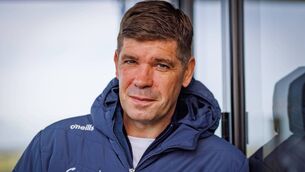
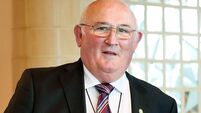
Mr Quinn, who received a President's Award from Sean Kelly on Sunday night in Cork, supports the Congress decision. The policy of transferring responsibility for deciding on the use of Croke Park for other sports to Central Council was one of the key recommendations of the Strategic Review Committee, which he chaired.
"I see the possible use of Croke Park by other sports as a three-phased thing. The first is we would change the rule to remove the impediment that was right to do, as was the decision to give responsibility for the stadium to the directors and the directors are Central Council.
"In any commercial organisation that's the way it would be done and I don't see any reason why the GAA should be different.
"There are two other requirements. One is that some other sport asks for it and that hasn't happened yet. And, in the event that they do ask for it, there's got to be an agreement on the price. I don't believe the GAA should make their stadium available for nothing to anyone. There are certain things you make it available for on a charitable basis, like the Special Olympics, but that was different.
"There is a negotiation process that's going to have to be undertaken and whether or not the stadium will ever be made available for other sports will depend on that negotiation. One hurdle has been cleared, but there are other hurdles there. And, those who believe that the decision automatically means there will be other sports played in Croke Park are not thinking logically because that may not be the outcome."
Believing the stadium may have to be roofed in time, he feels that in the event of soccer internationals in Croke Park, the segregation of supporters would not be a problem.
However, he recognises that the use of temporary seating in the Hill 16 end would be prohibited.
"My understanding is that UEFA will no longer accept temporary seating, that's one of the problems the FAI face with Lansdowne Road,'' he said.
"Segregation would be an issue because our stadium is not designed for that. But segregation is possible with a little bit of modification temporary segregation that is. We would not want it segregated permanently."
While Croke Park has been hailed as one of the great modern stadiums in Europe, Mr Quinn conceded that it has a number of shortcomings, most notably the fact that it's not covered and doesn't have floodlighting.
"It's not a proper bowl, but that was outside our control because of the railway line and we'd be taking light from the residents on Clonliffe Road.
"Similar stadia that have been built in inner-city areas have generally been built on greenfield sites. Ours was built on an established site, where we had to live with the infrastructure around us. There was nothing we could do about that, and there wasn't anything we wanted to do about it with the benefit of hindsight. It does mean that the stadium isn't a perfect bowl which, aesthetically, would look better. But I'm very happy with the aesthetics as they are and the functionality of the stadium as it is.
"We did have a little problem in the first few years with the playing pitch, but we rectified that this year. And, I'm very hopeful the problems we had will not recur with the new surface."
Taking account of the vagaries of the Irish weather, Mr Quinn believes that if the usage of stadium increases, it may be necessary to install a roof in order to protect the surface.
"If we had a very wet summer and we had a lot of games in Croke Park, none of us know at this stage just how well or how badly the current surface would stand up.
"We think it would stand up well but we could be wrong and in that event it would be nice if we could protect it from rain."
The President's Award was in recognition of his major role in the redevelopment of Croke Park, and Mr Quinn agreed that the timing of the project had been opportune. While two of the four phases proved to be quite expensive, the first phase would have been "significantly more expensive" if it had been delayed.
"There's no doubt that we saved a considerable amount of money. We brought it in under budget, which is difficult in a big project, and we don't have a great track record in this country for doing that. I can't take the credit for that, the design was 90% complete before I ever came on board at all.
"What I brought was a little bit of business acumen and a bit of courage I wasn't scared by numbers with pound signs in front of them. Most of the preparatory work had been done, but I believe it was most important that we started when we did. It was at a time when the economy was weak and the cost base was low.
"As the economy strengthened and the cost base went up, everything we did subsequently was more expensive. And we were very fortunate that we came up with a different system of construction. For Phase 4, we saved a considerable amount of money because of that."