Young guns key to Ulster’s hurling future
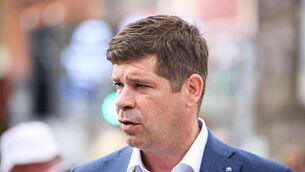
Frankie Quinn, a member of the Ruairi Óg club in Cushendall, but originally from Lámh Dhearg in Belfast, has been in the post of Ulster Hurling Development Officer since the start of August. He will soon be joined by Jimmy Darragh, who will take over as Hurling Development Manager. There will also be a network of nine Hurling Development Officers, one in each Ulster county.
The announcement of the development plan contains good news for the province but, as Quinn points out, Ulster’s wheels are already in motion.
“The Ulster Council already had their own programme in place, and the most recent announcement is in addition to that,” he said.
“My position, and the position of Hurling Development Manager, who would be my boss, and the positions in each county are all part of the Ulster Council’s strategic plan for hurling. The stuff that was announced is additional and different to that.”
The plan is to strengthen the game across Ulster, tailoring the solutions to the particular problems existing in different counties. It’s an approach, says Quinn, that can benefit every county.
“What would work in Antrim wouldn’t necessarily work in Fermanagh. Antrim’s problems are totally different to Fermanagh.
“Antrim would say they have the participation levels, and the problems are maybe more to do with the quality of coaching, lifestyle, competition from other sports and the big-city problems in Belfast.
“In rural areas, there’s not the same sort of competition for the players. There are also areas where GAA clubs have to look at themselves and what they’re doing. They’re there to promote the games, and not just a game.
“We’re trying to get that point across. There are people who are playing football in football-only clubs, who haven’t had the opportunity to play hurling,” he said.
Quinn says giving children the opportunity to play will be key to establishing a base from where counties can move on to success.
“We want to maximise participation levels with schemes in each county. Part of our focus will be trying to get children at a younger age access to hurling. Let them try it and see what we get out of it. If it meant we had a hurling club covering where five or six football clubs are in existence, that would be a bonus.
“Our chief focus is to maximise the number of children playing the game. The broader the base, the likelihood is more come through, and the quality is better. If you’re working from a small base, you’re not going to get as much quality. If children get the opportunity to try it, we might be surprised at how many actually take it up,” he said.