Maurice Brosnan: Inter-county apathy - what does it take to keep a GAA team together?
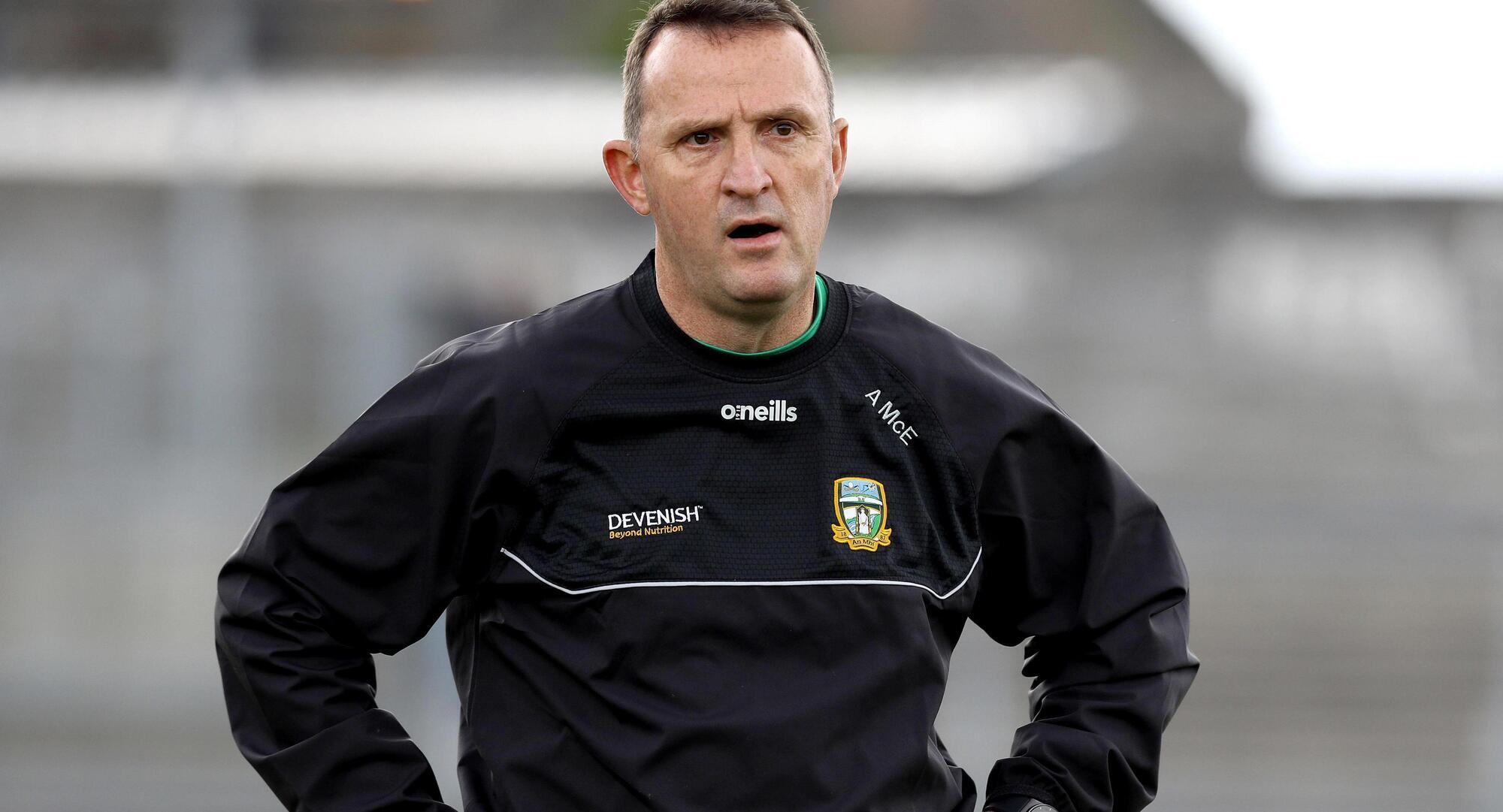
EXIT STRATEGY: Andy McEntee. Pic: INPHO/Lorraine O’Sullivan
The problem is that nothing in these stories is ever straightforward. Not the number of players who have opted out, not the differing circumstances of various counties, not their particular frustrations or the possible solutions. It is all a knot.
Three weeks after he was appointed Longford manager, Andy McEntee stood down. “It has become clear to me that the level of player availability and commitment needed to build on this year’s promotion is not in place at this time,” he wrote in a resignation letter read to the Longford GAA executive last week.
Inevitably, there was loose talk about this commitment and player churn and the perennial plight of mid-tier counties. Longford’s story is not unique, but it is Longford’s own. There is a spectrum of emotion within the county, from simmering frustration to outright apathy. A sensible starting point is understanding why.
“It's up to the Holy Trinity of the county board, the players and the management. Usually those connections are fractured somewhere,” says Mickey Quinn, the former AFL and Longford footballer. He retired from inter-county football in 2024.
“If you look at the good counties, they're able to keep all three happy across those connections. You look at the ones that are struggling, there is a fallout between players and managers, or players and county board over expenses, or county board and managers over managers wanting more.”
In Longford, there was speculation that up to nine of the squad who reached the Division 4 final in Croke Park last March hadn’t yet committed. Some of them had contemplated moves to America or Australia before recently electing to stay put. A small number were weighing up retirement. But those close to the panel do not expect a mass churn.
“There hasn’t really been, from what we can see, a big exodus or some significant concern with a lot leaving or a huge changeover,” says Colm Begley, the former Laois footballer and the GPA’s head of player welfare and engagement.
“That sometimes happens in camogie or lower tiers.”
That said, Longford have been here before. It took months for Pádraig Davis to be replaced by Billy O’Loughlin. The number that turned up at his first field training session wouldn’t have been enough to tog a team.
There were lingering grievances in the squad, too, with the recent departure of Mike Solan. He has since taken over at fellow Division 3 side Offaly. He finished his parting statement with a pointed wish for sufficient support for the current group.
“It is my hope that the team will be supported in every way possible to keep striving to improve and drive the standards needed to keep developing.”
Player frustration is rarely centred on one aspect. It is death by a thousand cuts. That explains why irritation eventually becomes indifference.
A place to train on Friday nights was a persistent issue, as was gear for players outside the 26 during the league. They would play challenges against the likes of Mayo’s extended squad and come home knowing exactly what good looks like when it came to food or facilities.
“There is only so much influence we have,” says Begley of the GPA. “Even with charters, they do say about a minimum standard of facilities available to players. They don’t have a centre of excellence there. Westmeath, for example, had no venue with lights. This is a macro issue that is already being looked at in those counties themselves. No one believes the county board aren’t trying to get a venue.”
The awkward reality in such situations is that there is rarely any malice in any of it. Managers want the best possible conditions to succeed, players want every support to fulfil their potential and a board wants to see the county run in a sustainable way.
Because of that, players are never quick to resort to banging on the table or airing it in public. The Longford panel were not interested in issuing a statement after McEntee’s bombshell to clarify that there was still a sizeable cohort committed and available for 2027. There had been tense end-of-year reviews over various elements that come with running a senior team, but that is not unusual.
Where the added friction comes is in the interpretations that flow from that. Reasonable requests can get twisted into “demands” or unnecessary difficulties, even if the players making them are simply speaking for the wider squad, or are some of the most self-driven people in the group.
The damage that does to relationships within a county is slow to heal. Sometimes it never does. Last September, Limerick’s Jimmy Lee ruled himself out of staying on as boss and accused the football board of a “disrespectful” lack of support for the management team and players. There is a generation of former players turned coaches who would be an enormous asset to any setup, but Lee put on record that he felt the board failed to set aside their own prejudices.
“I had put forward coaches’ names for positions on my management team that they did not want to appoint because of their personal views, rather than considering the skillsets that these coaches brought to the setup,” he wrote.
That exact situation is common. Quinn saw it all during his 13 years as a Longford footballer. He knew quality setups like the one he joined under Glenn Ryan, or Davis’s before Covid.
“I had heard it back a few times in the past that certain players weren't asked back in or were advised by officials, ‘No, he is finished now. It is not a good idea to have them back in now. He was only causing trouble again.’”
It was never publicly confirmed whether player commitment was the reason Mickey Graham stood down as Leitrim manager, having initially taken the job after serving one season as assistant manager. His replacement, Steven Poacher, dealt with availability issues and conceded a walkover to Fermanagh in 2025.
Again, player availability is not simple. Sometimes it is family, work or a diminishing love of the game. A county can create the best possible environment and some players will still leave. A certain amount of churn is inevitable.
Former Leitrim captain Gary Reynolds noticed a marked shift in attitudes between the dressing room he joined and the one he left. In 2006, they had the last of the great 1990s team and pushed Mayo to within a point. By the 2010s, players started to drop off to travel. That drift mirrored Irish society and the recession-enforced emigration.
Covid had a similar effect on players, and on all young people.
“I remember worrying so much when I was captain in ’15 and ’16, I was so invested and worried about all the other young lads and players on the panel, just trying to keep lads together. You would be dealing with GPA reps, getting lads' mileage sorted and other things like that,” explains Reynolds.
“Genuinely my performance began to lag. You're taking on so much. I actually remember coming home at night, I was living in Dublin at the time, up and down twice, three times a week, and you're coming home, you're doing a couple of GPA emails, you're getting lads' interview preps for jobs or the Guards, you're trying to get their CVs updated or sort stuff going on in their lives. And all of a sudden, then, you've done none of your own recovery, or stretching, or any other sort of craic. It can really impact the older players on the squad.”
There are passionate local coaches around the Midlanders who have made themselves available to the senior squad so that they aren’t left in the lurch while a new manager is sought. It is commendable, but still not ideal.
All of this scrambling, by stalwarts to keep as many committed as possible, by managers for pitches and gear, by boards for managers, means the long-term planning suffers.
For Quinn, that is the damage done by a saga like this.
“We're playing catch-up now. Get back on the pitch, get going because you already fell behind. There needs to be a sit-down as a county, though. What do we want out the next three to five years or ten years? We're talking here in six-month, one-year blocks. What about beyond that?
“I always consider myself optimistic, but you're at a crossroads. Look, there is a lot of good work and people that are trying to do the right thing, but you have to put scaffolding in place for people to thrive and improve and have the standards so that they can be the best they can be.”
The GPA has a new scorecard system that was introduced as part of its annual membership survey for 2026. Male players were asked to rate their inter-county environment across six key areas: leadership and communications, performance support, team/player promotion, facilities and logistics, player welfare and team culture, as well as their overall player experience. Each category was scored out of six, from one for “very poor” to six for “excellent”. The intention is to present the results to county boards so they can work towards improvement plans and close the gaps.
Ultimately, though, more scrutiny will lead to more demands, and meeting them will require more money. Few counties have it to spare. The question facing the association is not just what players or counties need.
It is a bigger one. What do we want the inter-county game to be?

BLACK FRIDAY
Already a subscriber? Sign in

CONNECT WITH US TODAY



Be the first to know the latest news and updates