Maurice Brosnan: As champions continue to stumble, will Mayo’s kickout gamble catch on?
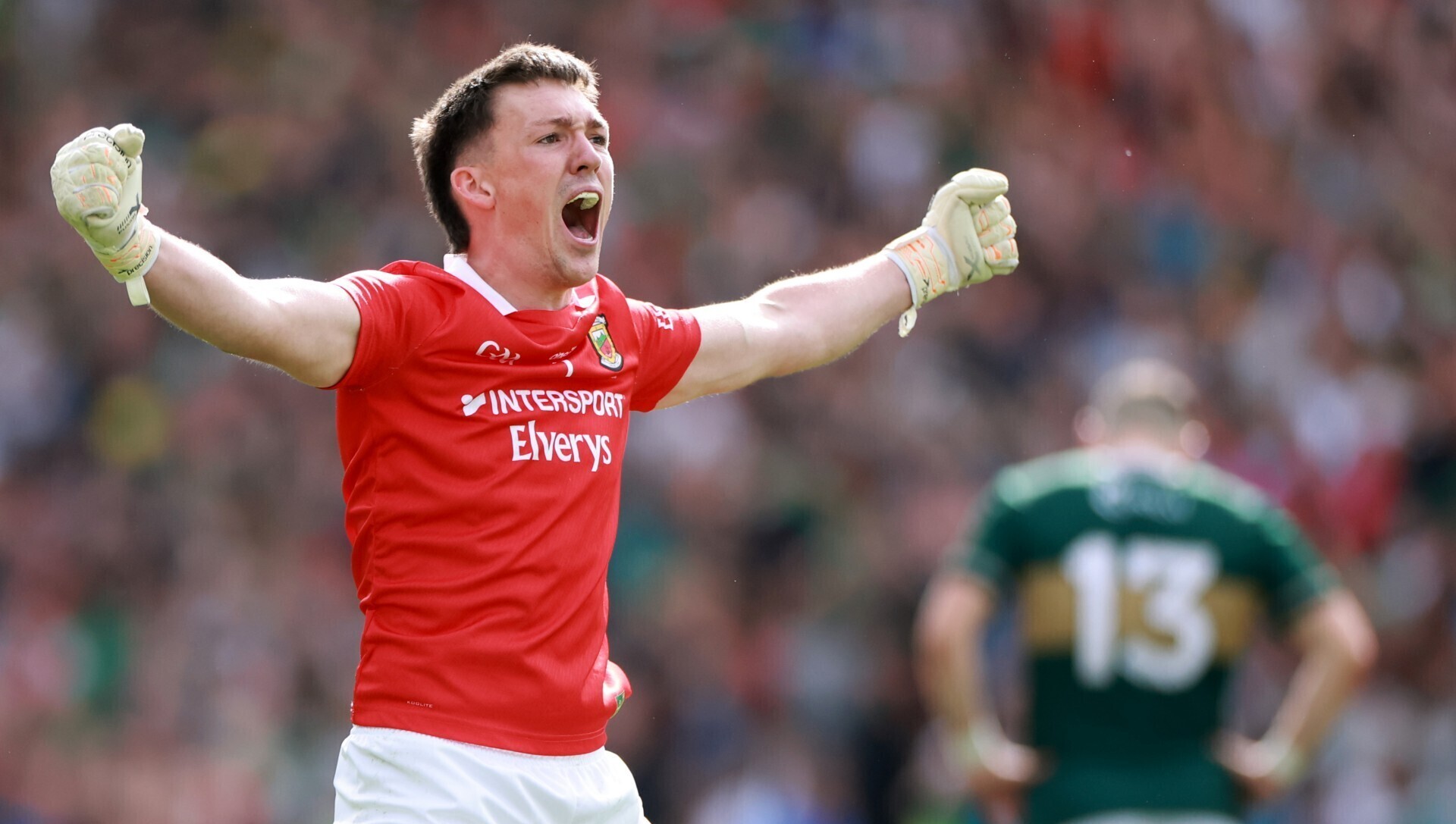
Mayo goalkeeper Jack Livingstone celebrates victory over Kerry in the All-Ireland final. Pic: ©INPHO/James Crombie
For his last answer in a remarkably compelling pre-All-Ireland final press conference, Andy Moran wanted to offer an important qualification about kickouts: they are important but not all-important.
“Am I right in saying the two teams who lost that midfield battle the last day won the games? Yeah,” he said, referencing both semi-finals where the team that won the majority of kickouts went on to lose the game. Dublin and Louth both fell into this bracket.
Under the old rules, the value of the kickout was pronounced. Gaelic Stats’ comparative analysis of over 500 senior inter-county games from 2011 to 2023 showed that own kickouts won were worth 0.4 points on average, regardless of where on the pitch they were received. As Gaelic football transformed, the kickout only grew in importance.
Donegal boss Jim McGuinness made some shrewd predictions earlier this year after his side defeated Kerry in Ballyshannon last February, foreseeing a future of two-pointers and the high press, but he also argued that, at its essence, it is now a game of kickouts. That view became commonplace.
Read More
“It is unbelievably important,” said Moran.
“There is no point dressing it up. It is massive. But it is part of the game. It is just another function of the game. I think teams are getting better at setting up in case you lose the kickout. Do you know what I am saying? At the start, if you have a wind blowing against you in the National League, the midfield battle is huge. In Croke Park it is massive but not as big as it was back in February, if I am being honest. It is still a huge part of the game.”
In both semi-finals and the All-Ireland final, the winner lost the overall share of kickouts. After Mayo’s remarkable triumph, talk immediately turned to the template the 2026 All-Ireland champions would inspire. From Tyrone’s retreating half-forwards to Kerry’s Kieran Donaghy on the edge of the square, Donegal’s blanket defence or Dublin’s possession game, winners always set trends. An aggressive hunt for orange flags or pressure up the field were two obvious contenders for the next one.
Just weeks after they brought back Sam Maguire, Mayo champions Ballina Stephenites launched their defence of the county title against underdogs Garrymore. Ballina won 68% of their restarts. Garrymore’s total was just 38%. It ended in a shock 1-12 to 0-11 Garrymore win.
Meanwhile, All-Ireland club champions Dingle were stunned by Rathmore in the opening round of the Kerry senior club championship. Interestingly, Rathmore finished with a 48% retention rate. Dingle’s was a remarkable 87%. Aidan O’Mahony’s Rathmore won by two.
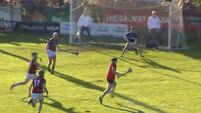
What does this look like? Gavin Curran clips his first kickout to the corner, but Rathmore stay high and apply pressure. A cross-field kick goes out over the sideline and Rathmore counter quickly. Ciaran Collins races in on goal and finds the bottom corner.
Moran’s point about how outfits are set when they lose their own kickout was apparent across Mayo’s run in Croke Park too. Jack Livingstone’s tendency to go long naturally means that there are more variables and that they will lose certain contests. When they did, the opposite wing were remarkable in their ability to scramble back and provide cover. It did not mean Mayo stopped conceding chances, against the likes of Louth or Cork in particular, but those teams’ failure to find a cutting edge meant the lost kickouts rarely punished them.
What this means for the rest of the club championship and the evolution of the sport will be fascinating to observe. We can’t be the only ones who became exasperated at endless discussion of the game of kickouts without sufficient attention paid to how a team was actually winning them.
It is more than simply hoofing it out to a battle around the middle. The kickout is about a unit operating in concert, a full operation. They need variety, a different trajectory, timed runs, as well as a range of presses to combat them.
Equally, while it is a limited sample size now, it will be worth tracking to see if teams develop to a point where it isn’t paramount that they win the majority of them. The innovation we see in this regard will only accelerate in the coming weeks. Some of this will be inspired, some of it ill-advised. Last year, five-in-a-row-seeking Naas elected to concede kickouts completely in the county final clash with Athy. It proved costly.
The other problem with taking lessons from winners is that imitators often learn the wrong ones. So many teams attempted to replicate the McGuinness system without ever properly investing in the sweeping counter-attack that his victorious side possessed. It is one thing to want to kick progressively like Mayo. It is another to log the sort of hours Jack Carney did away from the lights to hone his two-point ability, or to match the work of a Ryan O’Donoghue to make up for a wayward effort and win the ball back.
What will the value be of kickouts to the 2/4 position? Can defences continue to evolve and become better equipped at slowing down transition attacks? How will a heightened awareness of the two-pointer impact the number of goals in a game?
This is the wonderful place the game is currently in. There are informed predictions, wild guesses and our own convictions, but the future is so uncertain. Nobody knows.
CONNECT WITH US TODAY



Be the first to know the latest news and updates