Engines revved as Formula One braces itself for rollercoaster ride
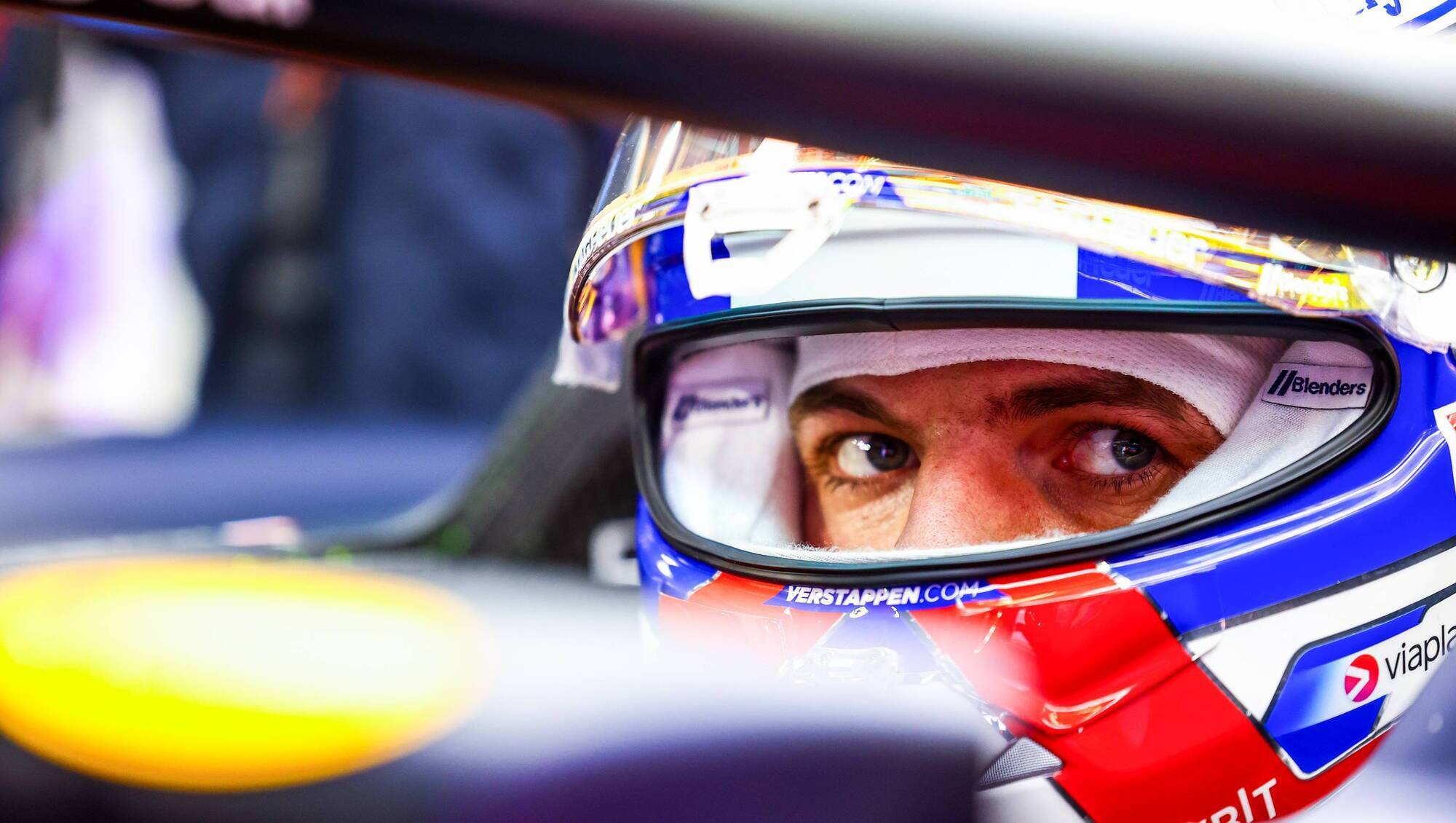
NEW SEASON: Max Verstappen of the Netherlands and Oracle Red Bull Racing prepares to drive in the garage during day three of F1 Testing at Bahrain International Circuit on February 23, 2024 in Bahrain, Bahrain. Pic: Mark Thompson/Getty Images
Max Verstappen and Red Bull Racing begin the longest season in F1 history this weekend in Bahrain as the red hot favourites to win another world championship.
Verstappen’s ardent fanbase will be hopeful the Dutchman can continue to dominate as he did in 2023, and take a fourth successive title; everyone else, not least the other teams and F1’s central organisation, will be hoping that a significant challenger emerges from the pack.
Hardened F1 fans have become accustomed over the decades to periods of domination by one team and one driver; for newer fans - and F1 has gathered plenty of those over the past few seasons as the sport’s cache and popular appeal has grown - it is another fresh new experience.
F1’s CEO Stefano Domenicali will be watching the engagement and viewership metrics closely, to understand whether this new portion of fanbase is willing to endure another Verstappen steamroller of a season.
The promise of change on the horizon may help. What was shaping up to be a quiet winter – for the first time ever, there have been no driver changes anywhere on the grid – exploded into life in January when Lewis Hamilton announced he will be leaving the Mercedes team with which he has won six of his seven world titles and joining Ferrari for the 2025 season. It is a blockbuster move: the most famous racing driver in the world racing in the most famous car.
Hamilton has placed his bet for 2026, when the next set of major technical regulation chances presents a chance for the current pecking order to be shuffled. And it makes the dynamics of the coming season, for the superstar champion and the Mercedes team he has effectively jilted, fascinating.
It's the soap opera element that the producers of Drive to Survive, the Netflix documentary series, have seized upon over six seasons of poking cameras in places previously unseen. The success of the series can often be overstated - the sports documentary as a medium did exist before it, despite what some would have you believe - but the global distribution platform offered by Netflix has proved worth its weight in gold for a sport looking to renew its audience.
It’s a formula that other sports are busy trying to copy in an effort to attract new fans, although their calculations probably don’t include Covid - when, in the absence of any live sport, fans flocked to the series just as it was gathering momentum - and the extraordinary drama of the 2021 title battle between Verstappen and Hamilton, a for-the-ages scrap that seems to happen only once in a generation.
For F1 and its American owners since 2017, Liberty Media, the series has undeniably been the driver of a significant financial and perception lift. The collective financial health of the 10 teams has also probably never been higher, and appetite to invest in the sport is strong – from would-be venues to consumer brands, technology firms to institutional investors.
The most recent barometer on the team front is Renault-owned Alpine, which in December finalised the sale of 24% to a group of investors led by Otro Capital for €200 million, valuing the company at around US$900 million. As recently as 2020, private investment firm Dorilton Capital acquired the Williams team in its entirety for a reported US$200 million.
Elsewhere, the Red Bull corporation continues to own and fund two teams and has enticed Visa in as a major sponsor of its junior outfit for 2024; Aston Martin owner Lawrence Stroll is investing heavily in his squad, which exists for the moment at least in part as a literal vehicle for his son Lance. Ferrari, McLaren and Mercedes, the latter part-owned by INEOS and Manchester United co-owner Sir Jim Ratcliffe, are mainstays of the grid.
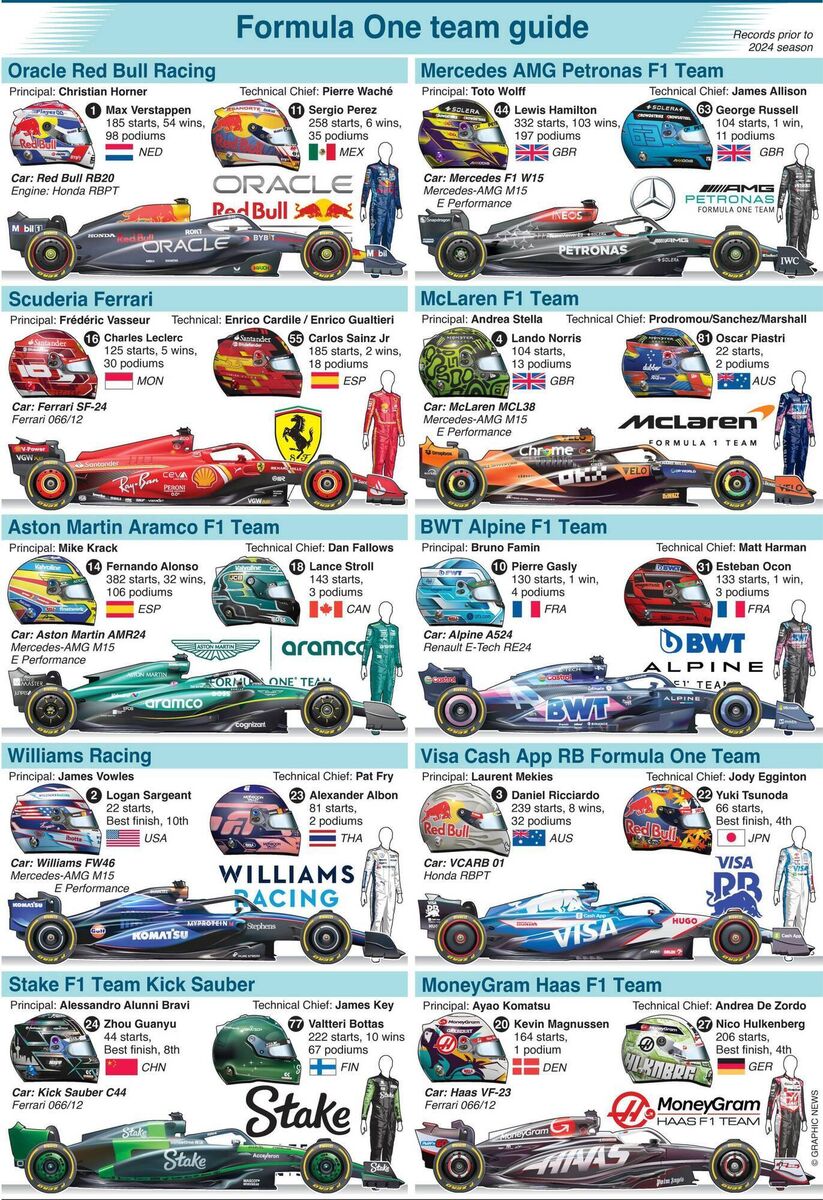
The Haas team, the last all-new outfit to join the grid in 2016, is perhaps the only team with a major question mark against it as the new season dawns. The American-owned team dispensed with the services of team principal and Drive to Survive breakout star Guenther Steiner over the winter, while owner Gene Haas currently appears unwilling to either invest further or sell.
Just as the drivers are positioning themselves for the 2026 rules shake-up, so too are car brands. Audi is poised to enter the sport as the new owner of the Sauber team (known previously as Alfa Romeo and this year as Stake, after the betting brand); Ford is returning as Red Bull’s engine partner; Honda will return to the sport as the Aston Martin team’s engine supplier. General Motors’ plan to enter F1 with its Cadillac brand appears on hold, though, after the Andretti team’s entry bid was rejected by F1 over the winter.
F1 and its 10 existing teams are intent on preserving the status quo - essentially turning the sport into a franchise structure - rather than expanding and sharing revenues with an 11th. That decision feels short-sighted, not least as the bid came from a committed US motorsport name.
History shows car manufacturers, even those who appear all-in on F1 team projects come and go; it is always prudent to have willing new entrants in the wings. It may be gruelling for anyone part of the travelling circus, but the health of the series is also reflected in the record-breaking 24-race calendar, stretching between now and December.
The Chinese Grand Prix is returning to the calendar this year after a four-year, Covid-induced, break. The Las Vegas Grand Prix, one of three races in the United States, will again take place along The Strip in November, despite some vocal local opposition. Over the winter, F1 announced a ten-year contract for a new city race in Madrid, beginning in 2026.
It promises to be the latest glamour destination for a sport – and soap opera – still packed with twists and turns.