Ian Mallon: How Six Nations rugby has swelled to a €4 billion business
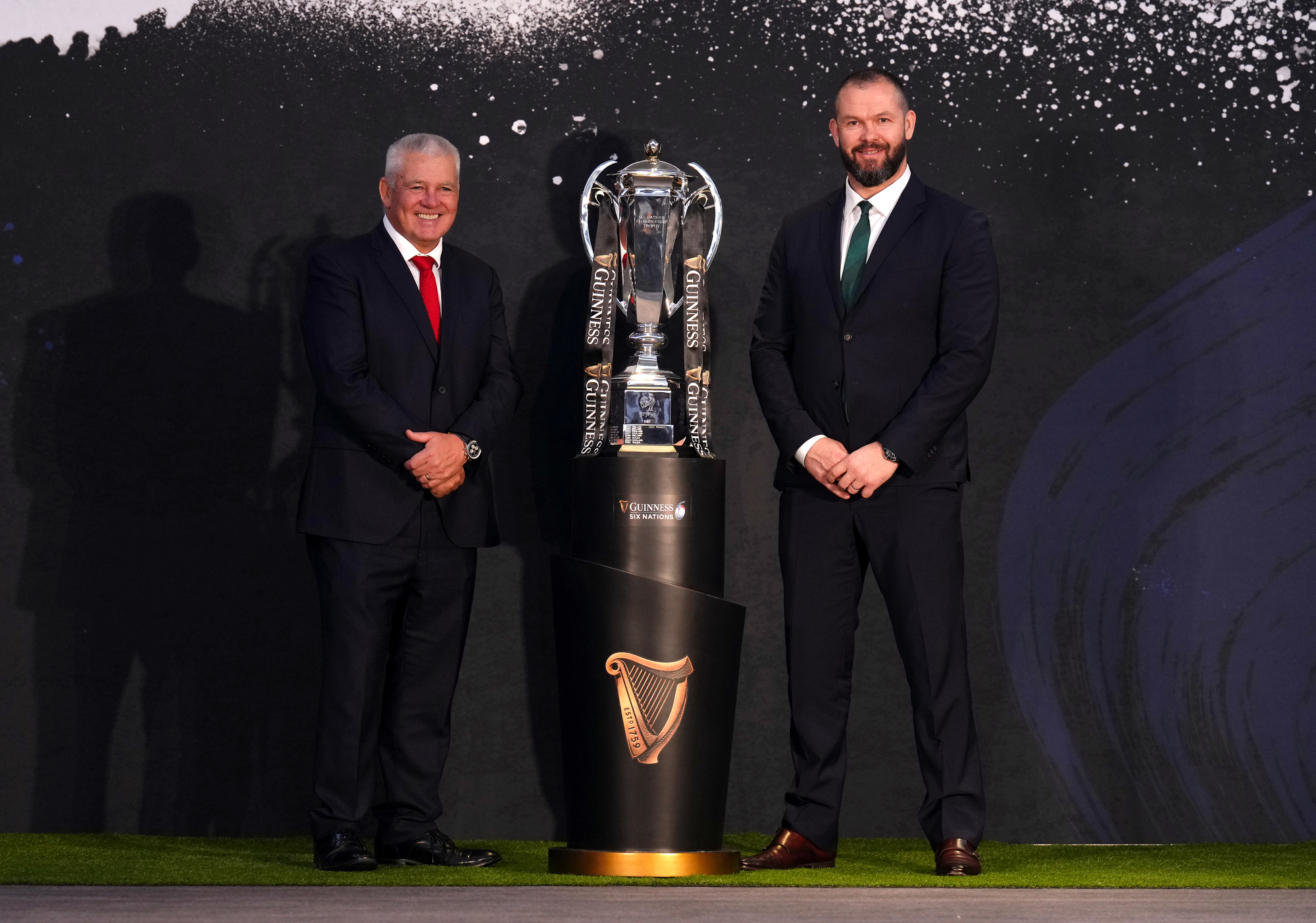
BIG BUSINESS: Wales head coach Warren Gatland and Ireland head coach Andy Farrell (left-right) with the trophy during the Guinness Six Nations Launch.
IN THE two years since its £365m (€413m) acquisition of a one-seventh share of Six Nations Rugby by CVC Capital Partners, the value of the sports brand has grown by 30%.
The Pitch has analysed that the March 2021 deal, which valued the business at £2.55 billion (€2.89 billion), has swelled by €800m-€1b through new broadcast rights deals and marketing asset agreements.

Add to this, increased revenue from tickets – with more than €100m expected to be spent for the upcoming 15 Championship games, greater visibility for the tournament – more than 120 million will watch live broadcasts, and you see irrefutable growth patterns throughout an organisation which is now likely worth €3.9 billion.
Let’s dig into the numbers to demonstrate this astonishing surge for an organisation that structures the Guinness Six Nations Championship, Autumn International Series, as well as Women’s Rugby and U20s internationals.
Compared to the money coming in, the money invested through the prize purse is meagre by comparison, but enough to set the difference between winning and losing.
The winners of this year’s Guinness Six Nations Championship will get €6.8m from an overall cash fund of almost €19m.
The key lookout here is the contrast between first and last, or even finishing runner-up as opposed to second from bottom, where the differences are anything from €5.7 to €2.5m in value.
While not to be sniffed at, the prize money for the Championship is ‘small beans’ compared to the most significant revenue streams for the six participating teams, which comes through Fund VII, broadcast rights, matchday revenues and marketing activations.
This year alone Six Nations Rugby – or its six stakeholder teams - will receive approximately €100-120m in investment from CVC Capital Partners.
This money will come through ‘Fund VII’ – an investment vehicle structured through a four year payment phase by CVC in which funds are staggered in instalments to Six Nations Rugby until 2025.
Remember, CVC - along with the six national Unions – owns a 14.28 per cent stake in Six Nations Rugby – but unlike its playing partners, it pays the other six €70m each for that strategic partnership.
It’s worth pointing out that each Union determines how it spends the CVC cash and receives no strategic direction from Six Nations Rugby on where it should invest.
The clearest financial benefit to Six Nations Rugby since the CVC investment comes through a staggering rise in the value of fees for broadcasting rights contracts.
Current deals with the six host nations' chief broadcasters have surged to almost €700m since the capital investment agreement, with added value of perhaps €100m for onward global distribution to international territories including Australia, New Zealand, South Africa and the USA.
In Ireland, The Pitch understands that the value of the Six Nations Championship to broadcast co-rights buyers, RTÉ and Virgin Media, sits at approximately €28m over four years, or a shared €7m cost per annum.
The Irish price is dwarfed by the colossal deal between Six Nations Rugby and UK broadcasters, which came in the immediate aftermath of the CVC deal when ITV and BBC agreed a €520m contract to broadcast matches until 2025.
In France a further €100m has been invested by France Télévisions to cover the tournament. While the Sky Italia figure is undisclosed, it is likely between €20 and €40m over four years, pushing overall totals towards €800m for contracts, globally.
A total of 1,069,000 tickets for the upcoming Six Nations’ have been, or will be, sold out by the end of the competition, representing a value of €100-120m for tickets alone.
Autumn Internationals and other international ticketing income will appreciate an additional €30m for the stakeholder organisation.
Then, consider the huge amount of money paid out by this captive stadium audience in each of the six venues on matchdays.
The Pitch has analysed, with the help of Aviva caterers Levy UK+I, that rugby fans spend an average of €7 per patron in stadia, per matchday, working out at an additional €7m in revenues throughout the tournament.
Six Nations Rugby has a deliberately narrow suite of commercial partners, paying considerable investments to feature as one of four premium brands associated’.
Headline sponsor Guinness, which has sponsored the Six Nations Championship since 2019, is joined by lead associates Breitling, Tik Tok and Sage, together paying an estimated €50m for the privilege of some of the most high-end visibility in sport.
It’s understood that Six Nations’ is willing to increase its list of commercial partners in the medium term, but is mindful not to take on a rights partner which rivals one of its stakeholder associates.
For example, Six Nations’ would not bring in a mobile operator, say ‘3’, which contravenes with Ireland’s Vodafone partnership or the deal that France has with the Orange network.
While it is not known how much Six Nations is paid by Diageo for all of that Guinness branding throughout the competition, it will fall in around €20-25m for the privilege of having the world’s leading rugby tournament named after it.
THE unseen, surging value of Six Nations Rugby comes through two significant marketing partnerships with the world’s leading content platforms – TikTok and Netflix.
Half a dozen Netflix crews are currently embedded in the six team camps gathering content for a much-anticipated Six Nations docuseries, slated for broadcast before next year’s championships.
The cash value of these fees-plus-access deal is not impossible to forecast, based on similar experiences across other sports.
If we take F1’s Drive to Survive series, a lift of 29% in audiences now watch Formula One as a result, according to various sources – using a 30% metric for rugby would see Six Nations’ live coverage going from its current 119m to 170m in the short-term.
Based on a cash scale for current rights deals, this would translate as an increase of up to €200m on present values.
It’s not known how much Netflix are paying Six Nations for its licence, but there will be a mix of quid-pro-quo, where the promotional benefits to rugby will likely cancel out the fees being charged to the streaming platform.
The TikTok deal will be similar where there is extreme value for both sides having access to each-other’s brand and audience.
The deal which was heavily influenced by CVC has a multi-strategy objective for rugby - promotion of the Women’s game, marketing amongst the platform’s 1 billion younger users and overall promotion of the game.
While it’s tempting to say that such marketing arrangements are priceless, their real value could be as high as €400m after the Rugby World Cup.
The key thing to remember, with all of this growth in such a short space of time, and with France only nine months away, the current surge in value is only set to increase.
***
The shared arrangement between RTÉ and Virgin Media is the highest-profile sports partnership in broadcasting history and demonstrates the high price rugby now commands from rights buyers.
RTÉ Group Head of Sport Declan McBennett told The Pitch that while such collaborations are not unique to Irish broadcasting, collaborative strategies between separate broadcasters will only increase.
“We already have the Champions League with Virgin, who have Wednesday games and we have Tuesday, and you see that BBC and ITV have extended their (Six Nations) deal to include the Rugby World Cup,” he pointed out.
“You have a situation now where you have both sides who will compete vigorously for properties, and neither side can have everything, nor should they.
“We see it with the GAA where RTÉ, TG4, GAAGO and BBC share broadcast rights, and while each side will fight hard for the rights acquisitions that they want, a shared acquisition of sports rights is a prudent approach now for broadcasters.”
This year RTÉ will broadcast Ireland’s games against France, Italy and Scotland, with Virgin Media showing the clashes with Wales and England
***
RUGBY is the most successful sport on Irish television with audiences.
Despite 2022 being a FIFA World Cup year, four of the most-watched progammes in the Top 10 last year featured Ireland’s Six Nations games.
Two slots were taken by GAA – both All Ireland Finals - while three featured World Cup matches.
1. Late Late Toy Show (RTÉ) 1.53m
2. All Ireland Football Final – Kerry v Galway (RTÉ) 872k
3. Guinness Six Nations – France v Ireland (VM) 818.5k
4. All Ireland Hurling Final – Kilkenny v Limerick (RTÉ) 786k
5. FIFA World Cup – Argentina v Croatia (RTÉ) 784k
6. FIFA World Cup (Final) – Argentina v France (RTÉ) 783k
7. Guinness Six Nations – England v Ireland (RTÉ) 778k
8. FIFA World Cup – England v France (RTÉ) 760k
9. Guinness Six Nations Ireland v Wales (RTÉ) 733k
10. Guinness Six Nations Ireland v Scotland (VM) 683k