FAI accused of ‘deliberately’ avoiding transparency over lobbying activities
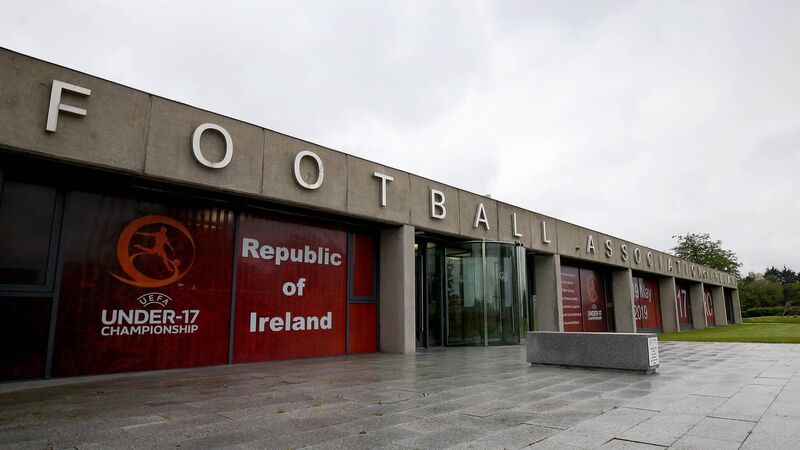
Remaining cloudy: The FAI have been questioned over “deliberately failing to account for itself”. Pic: INPHO
THE FAI has failed to file details of its lobbying activities since April 2020, despite legislation compelling it to do so.
Lobbying includes seeking political favour, funding or policy change in meetings and communications with Ministers, TDs and public representatives. In the past two and a half years, the FAI has lobbied Government and ministerial representatives on funding, the hosting of Euro 2028, a change in legislation on betting tax and a range of other activities which fall under the Regulation of Lobbying Act 2015.
The Association is ordered by law to detail all lobbying with designated public officials (DPOs) and a failure to do so carries a threat of fines and/or a jail term of up to two years.
The matter raises fresh questions about transparency and accountability at the FAI which Deputy Imelda Munster, a member of the Joint Committee on Sport (Media, Tourism, Arts & Culture) said looked like the FAI was “deliberately failing to account for itself”.
“This is a very serious matter, if as it seems, the FAI is no longer registering its lobbying activities and giving details of meetings and communications with public representatives,” said the TD, who branded former FAI CEO John Delaney “disgraceful” at a hearing in 2019.
“With all that went on before them, this new FAI was supposed to be about accountability and transparency, and what we are seeing here is anything but, in fact it appears to be deliberately failing to account for itself.
“This raises questions which the FAI must come forward and explain further and it also brings Sport Ireland to bear some oversight on this issue, because ultimately it has the oversight on such behaviours.”
Lobbying Regulation was passed into legislation seven years ago in order to create greater transparency of the activities between organisations and public representatives, in a bid to lift the veil of secrecy on political influence.
An FAI spokesperson confirmed: “Nil returns have been filed for the past two years in line with our obligations.”
The Standards In Public Office (SIPO) Commission which has oversight on lobbying activities said that the FAI “is obliged to make returns to the lobbying register” and is not above the rules.
“No organisation, including the FAI, is exempt from complying with lobbying regulations,” it said in a statement. “In short, any person/body as defined under the Regulation of Lobbying Act that communicates about a ‘relevant matter’ with a Designated Public Official (DPO) is obliged to make returns to the lobbying register.”
The FAI has likely legally interpreted Article 5, Section 5 of the Lobbying Act which offers cases for ‘excepted communications’ where lobbying takes place but does not have to be declared under subsection (i) ‘communications by a designated public official in his or her capacity as such’.
However, this directive would not affect meetings, even those which included a Minister, DPO or Public Authority, if those communications were initiated by the FAI, or if the FAI sought a meeting and were then invited to attend by the representative.
For an organisation like the FAI – which is in receipt of more public funding and grant aid than any other National Governing Body – lobbying is a routine and normal way of doing business.
FAI officers will meet regularly with Government representatives, local politicians and authorities to discuss national issues as well as local programmes and initiatives including co-funding projects, pitch development, stadium redevelopment and the shared funding of local development officers.
If one takes the FAI’s declarations at face value, it has not held a single meeting with a public representative where favour, funding or policy was on the agenda for 30 months.
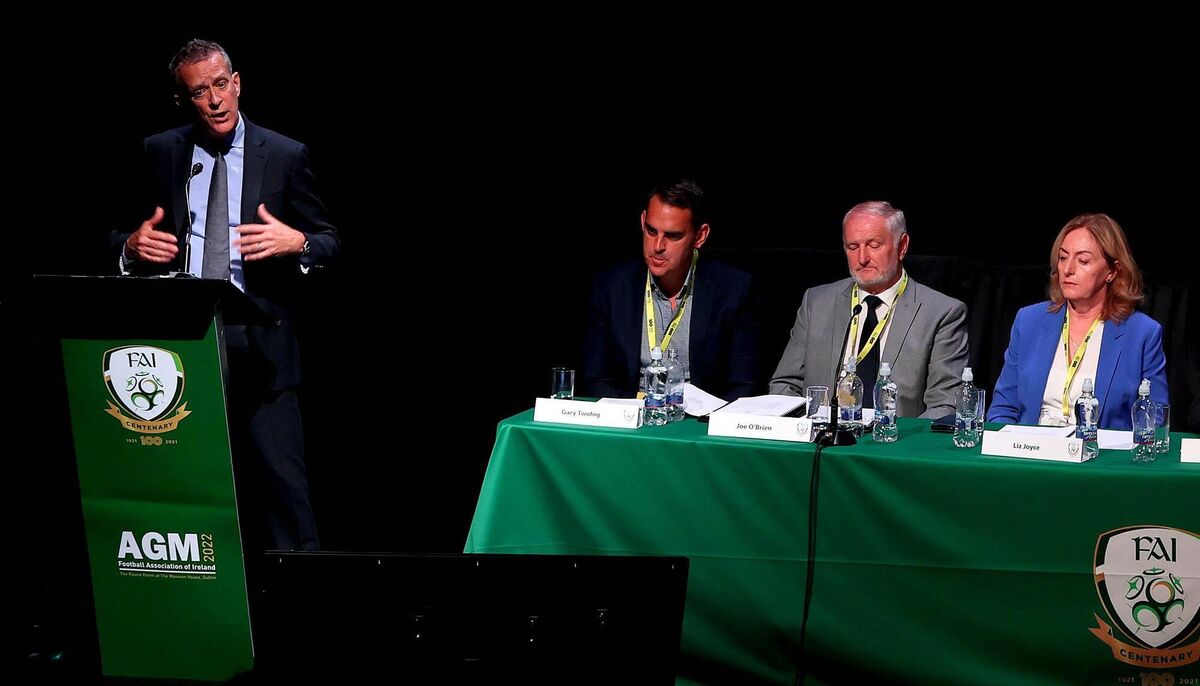
An example of one such meeting was highlighted last year by the Business Post, in which it revealed that representatives from the FAI met with Minister of State for Sport Jack Chambers to lobby for a change in policy around betting tax. The Association had sought that a portion of this now almost €100m in duty should go towards football, and supporting the organisation, as it bids to repay a growing debt at Abbotstown which is now approximately €65m.
However, the February 4, 2021 meeting was never officially declared by the FAI and no record of it taking place was made public by the organisation – in fact the Association stated: “Our meetings with the Department of Sport are confidential.”
The FAI was asked why it had “not provided details of its lobbying activities to the Lobbying Register, for the approximate lifetime of the current administration” and if it was aware that a failure to provide such details was in breach of legislation.
It responded that it had filed returns recently – when it had actually filed ‘Nil Returns'.
“The FAI files returns to the Lobbying Register as per legislation with the most recent return filed in September. Nil returns have been filed for the past two years in line with our obligations. We continue to enjoy and build a strong relationship with national and local Government,” said a spokesman for the Association.
The Department of Sport was asked about meetings it took part in which were not subsequently declared, and responded that “the obligation is on lobbyists (FAI) to register and to provide information regularly about their lobbying activities”.
So why are old transparency failings returning to an organisation which was driven to the brink of bankruptcy due to a lack of oversight and accountability?
Issues were first raised last February about funds which were being paid in a ‘Rolls Royce’ expenses scheme to its current CEO Jonathan Hill, covering hotels, flights and personal drivers for the time the London resident spends in Ireland.
FAI Chairman Roy Barrett refused to discuss the cost of the perk (which may be as high as €50k pa) and described the matter as a “non-issue”.
returned to the FAI and requested for all details of its lobbying activities since April 2020 to be revealed, and awaits further communication.