Ian Mallon: Confusion lingers over Klopp's Kelleher remarks
Klopp said that the FAI’s medical department told the goalkeeper that his now long-term injury “would be good after a holiday”, something which has been denied by Stephen Kenny.
Ian Mallon: Confusion lingers over Klopp's Kelleher remarks

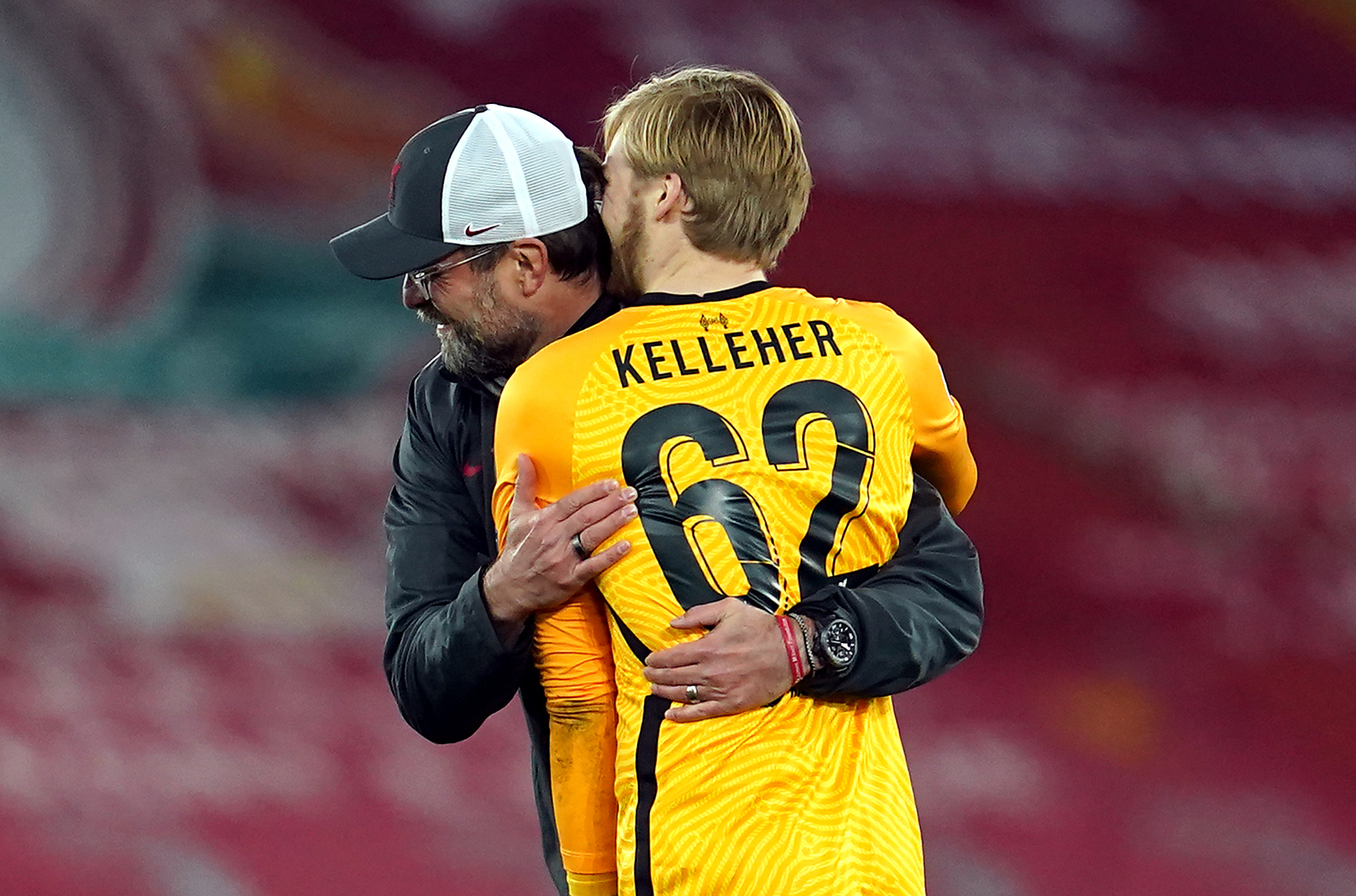
CONFUSION: Liverpool manager Jurgen Klopp and goalkeeper Caoimhin Kelleher. Photo: Jon Super/PA Wire.

THE FAI has decided not to challenge Liverpool manager Jurgen Klopp’s claims about the treatment of Caoimhín Kelleher while on international duty in June.

Klopp said that the FAI’s medical department told the goalkeeper that his now long-term injury “would be good after a holiday”, something which has been denied by Stephen Kenny.


However, in a communication to The Pitch after being asked why Klopp’s charge has been left unchallenged and whether it would be doing anything to protect its medical staff, the FAI said that the issue was dealt with by Stephen Kenny and the matter is now closed.

Kenny said recently: “It caught us by surprise I must say - I actually wasn’t aware that he was injured, to be honest with you.” 

The comments lead to two conclusions – Kelleher was not injured, or he was and nobody told Stephen Kenny or his coaching staff.

Normally in moments of injury in an international camp, a triple lock scenario is activated which would immediately inform the manager of any trauma or problems with a player’s welfare.

First the head doctor informs the international team manager of the situation, then the medic contacts medical staff at the player’s club, and then the national association’s communications head is updated.

Such fluid lines are needed as much to inform all parties, as to protect against accusations from the club, as we’ve seen from Jurgen Klopp, and previously Ronald Koeman with Martin O’Neill.

Let’s look at what Klopp said exactly: “Caoimh’ felt something after the international game and everybody, the medical department there, told him it’s fine and it will be good after a holiday.

“He came back and first training, (he) felt it again. We checked it and it was not good.” 

Stephen Kenny’s assessment is clear that nothing was wrong with the goalkeeper and added: “If he had been injured, he would have been out of training or not training.” 

But then Klopp said nothing about training, he said the injury was felt “after the international match”, which you could conclude was after the final game, away to Ukraine (in Poland) on June 14.

We must take Stephen Kenny’s word that there was no injury to Kelleher and that Klopp may be mistaken. However, Kenny didn’t say that Klopp was wrong, just that he was unaware of an injury.

Ordinarily, where an issue needs further clarification, the FAI’s director of communications steps in. However, there is an added layer of complication with the FAI, where there are now two communications directors, but neither working directly with the Men’s senior team affairs.

The easier solution would be to allow the FAI’s Team Doctor and Medical Director – Dr Alan Byrne – to clarify matters. But Byrne recently announced his resignation from the Rep of Ireland Men’s Team after a two-decade career – there’s no suggestion his departure is related to this situation.

The Pitch made repeated attempts to speak with Dr Byrne, but no response was forthcoming.

Leading golf economist calls PGA hardball tactics ‘distasteful’

THE leading commentator on the business of golf has criticised the PGA Tour’s banning of golfers for participating in the LIV Series.

Professor emeritus Stephen Shmanske, author of Golfonomics and Super Golfonomics said the PGA’s position was “distasteful” no matter “whether Saudi Arabia is civil or thuggish”.

“For the PGA Tour's part I think it is distasteful the hardball attitude they are taking, as in, ‘sign with LIV and never play on the PGA Tour, and get aced out of qualifying for the majors’,” Shmanske told The Pitch.

“I don't see why they have to do that. On a similar vein, Greg Norman tried to arrange for a series of international competitions way back when.

“The PGA Tour squelched the idea and then appropriated it for its own, so they have a history of playing hardball.” 

The Cal State East Bay academic said history in US (team) sports shows that negotiating with rival leagues is the only workable option.

“There are historical examples in league sports of competing leagues offering large sums to draft or poach big name talent,” he continued.

“(In basketball) Rick Barry and others signing with the ABA and ultimately forcing a merger with the NBA. Joe Namath (in American Football) going to the AFL and then getting merged into the NFL.” 

Stephen Shmanske added that if soccer took the same stance of banning players for jumping to an upstart league, then Pele and others would have received bans for moving to the NASL.

“I don't recall either the NBA, NFL, or Champions League placing ‘lifetime bans’ on players who signed or jumped to the upstart. If they did they were ultimately rescinded,” he added.

11 LIV golfers are suing the PGA Tour in an antitrust lawsuit which players including Bryson DeChambeau and Phil Mickelson say is damaging them.

“The Tour’s conduct serves no purpose other than to cause harm to players and foreclose the entry of the first meaningful competitive threat the Tour has faced in decades,” states the lawsuit by lawyers for LIV.

The PGA Tour has responded this week by saying players broke the rules for ‘eye-popping money’.

Speed of referee protection easures will be key

THE raft of new sanctions against any players or club officials, who physically or verbally attack referees, must be actioned immediately, the league secretary who has led the change in discipline across football has warned.

Tony Gaines, Secretary of the NDSL and MGL, last November cancelled a weekend programme for more than 13,000 players and 870 teams across both leagues, in solidarity with referees over growing incidents of abuse.

Speaking to The Pitch, Gaines agreed that the actions of the leagues was pivotal in achieving a new raft of tough sanctions against perpetrators of violence and abuse at matches.

“The action was certainly needed, because without highlighting what was happening, we’d still be in the same position today as we were then,” he said.

“There’s no doubt that these new rules need to actioned immediately and to get the message across that the letter of the law will be acted upon.” 

The Irish Examiner yesterday revealed that bans of three matches (for swearing at a ref) to up to three years, at least, for assault, are being enacted across football in time for the new amateur season.

Tony Gaines was clear, such change is needed to protect the game against the growing issue of referees taking up the sport.

“If we don’t do anything about it we’re not going to get young referees, kids of 16, 17 or 18 taking up refereeing then we will have no refs,” he continued.

“Certainly they’re coming into the game, but they’re off after a month because they can’t take the abuse.” 

From now on Clubs will also face severe penalties for repeat offences, which marks a period which Sean Slattery vice-chair of the Irish Soccer Referees Society (ISRS) believes marks a turnaround for football.

“We’re hoping that we will see as a major change in behaviour, at matches,” said Slattery.

The FAI has still not commented on the new rules which it has recently approved at Board and Assembly level.

More in this section

Sport

Newsletter

Latest news from the world of sport, along with the best in opinion from our outstanding team of sports writers. and reporters

Cookie Policy Privacy Policy Brand Safety FAQ Help Contact Us Terms and Conditions

© Examiner Echo Group Limited