Ian Mallon: Real commercial giants winning the social war too
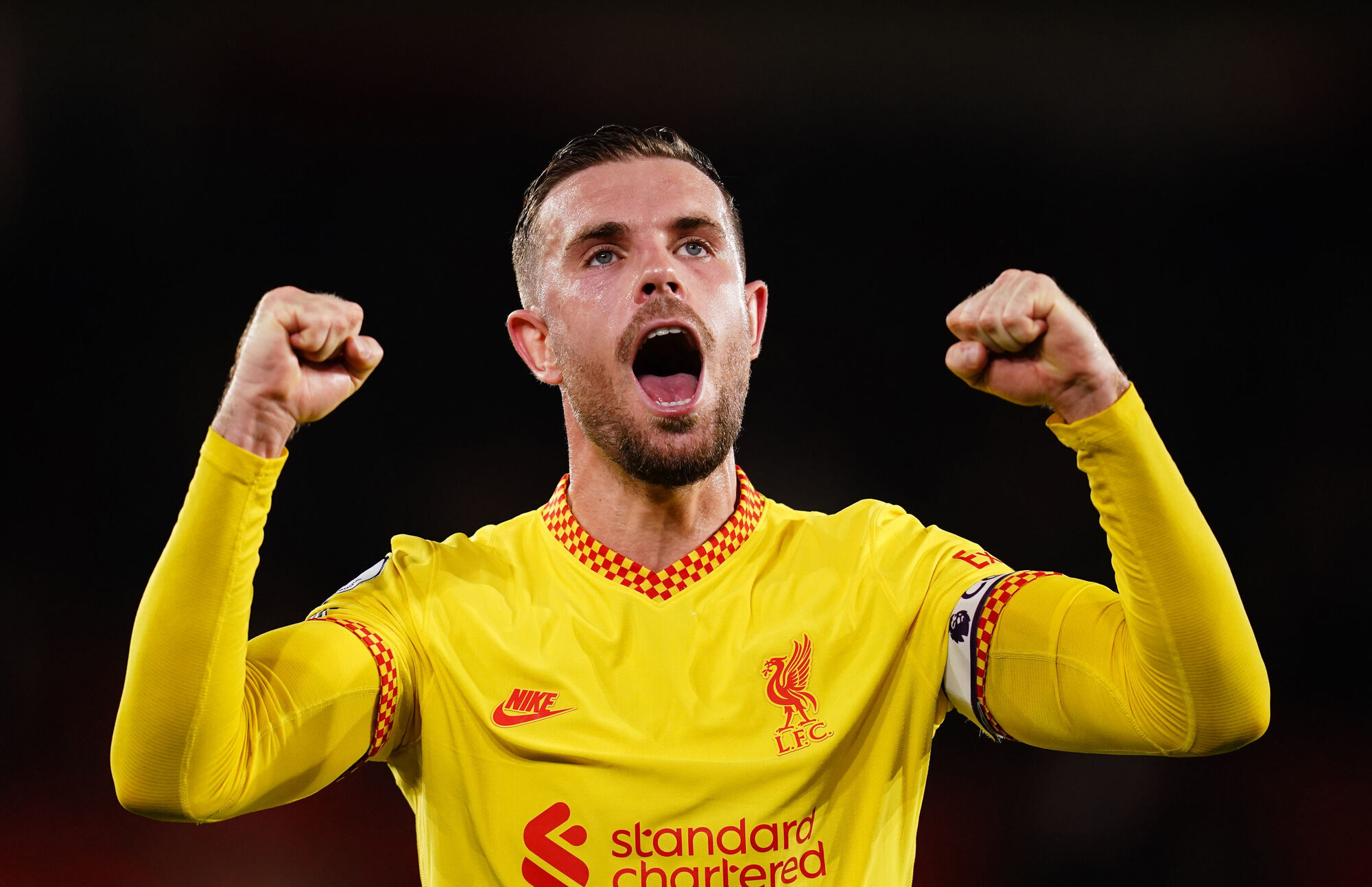
Liverpool's Jordan Henderson. Photo credit: John Walton/PA Wire.
THE biggest club match in world football takes place on Saturday night in Stade de France, Paris, when Liverpool play Real Madrid in the Champions League final.
Off the pitch the clubs are among the wealthiest and most powerful in world football with Real Madrid, second, and Liverpool, seventh, in the latest Deloitte Football Money League report (March, 2022).
While the report does not contain an overall valuation of both clubs, Forbes ‘The Business of Soccer’ money list assessed that Real Madrid has a club value of €4.45 billion with Liverpool rated at €3.87 billion, according to latest figures.

Barcelona is assessed as being the most valuable football club in the world – $4.76 billion – while the richest sports clubs overall are the Dallas Cowboys (NFL) at $5.7bn with the New York Yankees (MLB) $5.25bn – however, it should be noted that the latest figures were produced in 2021.
The Liverpool v Real Madrid head-to-head throws up some fascinating insights, particularly where broadcast revenues are concerned – with both clubs amassing a combined €560m.
Social media, the ultimate barometer in virtual fan engagement throws up a fascinating study on the size of audience of both clubs, with Real Madrid far superior to Liverpool in followers, by 171m across the five most popular channels.
The SM numbers contained here have been assessed by The Pitch, given the constantly increase values across Instagram, Facebook, Twitter, TikTok and YouTube – based on our most current assessment, Real Madrid have a social media following of 294.4m v Liverpool’s 117.3m.
Commercially Real Madrid beats Liverpool by €321.6m v €238.4m, and while we’ve included matchday revenue the numbers in our graphic, it should be remembered that the figures were collected during what a period of Covid-19 disruption.
We’ve decided to stay away from speculation in the shirt sponsorship valuation segment. With Liverpool not denying that the value of its main jersey sponsorship is set to double from €47m to €94m at end of 2022/23 season, we’ve stuck with current values.
There are some Boardroom factors that we’ve not added to our head-to-head, including ethnic and women’s representation at Board level, with no figures available from the Deloitte report on Real Madrid’s status, while Liverpool have 0% factors for both.
In various assessments carried in our graphic, you will notice in certain segments values in brackets for each club, which have been assessed vs overall standings.
While many of these valuations may have increased or decreased since the release of various pieces of data, they are most accurate based on current information available and current currency conversions.
FOR most football fans there’s no greater annual showcase than the Uefa Champions League final.
Saturday’s game to decide the best team in Europe will be aired in more than 200 territories worldwide, with a projected live audience of 325 million unique viewers, across all media touchpoints – television, mobile and laptop.
In Ireland, RTÉ will broadcast their first final in four years, with the rights previously held by Virgin Media.
Pictures beamed into Irish homes by RTÉ and its UK rival, BT Sport, will be produced through by 40 different cameras in and around Stade de France, by Canal+ who will act as host broadcaster for the game.
The more spectacular footage will be provided by a helicopter film crew, an aerial camera system (over the pitch), seven super slow-motion cameras and two hi-speed units, two in-goal cameras and two crane cameras (which swoop to cover play from behind and over the goals).
In all, more than 100km of fibre optic cable is used to deliver Ultra High Definition and Standard HD images to broadcast partners.
For the pre-match, half-time and full-time analysis, 25 pitch-side positions will be in operation where host presenters and guests can offer viewers a sense of occasion by being as close to the heart of the action without crossing the white line.
After the game, four Super Flash interview positions will be set up on the final whistle (or completion of penalties) where players and coaches will offer their live assessments on the pitch, with a further 13 Flash interview positions set up for additional interviews.
The most important footage for coaches and managers will be provided by Uefa from the coaching camera, high in the gantry, which gives a complete overview of the pitch, providing invaluable positioning and tactical insights to coaches.
Live images from this footage, which is not seen by the public, is available to team analysts and coaches during Champions League matches and Premier League games, but is not yet provided by Uefa during international matches.
This will change for next year’s Euro 2024 qualifying campaign, where as a result of new broadcast deals with Uefa, live footage will be provided during the game itself.
Currently in international football coaching and tactical footage is organised by the associations themselves and partners, and transported to tactical coaches (iPads) on the bench.
A final piece of footage that will provided following the game will be the official Uefa Champions League final film, which will capture the historic occasion though footage provided by all 40 cameras.
The only piece missing from such a highly produced operation in Paris is a script and an ending, with work beginning on that at 8pm Irish-time, on Saturday.
RTÉ’s return as the official Irish broadcast partner for Saturday’s Uefa Champions League Final - for the first time in four years - marks a statement week for the station’s investment in soccer.
Last weekend the public service broadcaster caused a major surprise when it won the licence from Uefa to carry the Republic of Ireland’s Nations League fixtures – securing the rights ahead of Sky Sports, the expectant victors.
RTÉ will pay approximately €1.8m to show the games, in fees and operational costs – however, the bigger story is how a state broadcaster is outmuscling and beating all-comers in a space where the opposite is occurring internationally.
Sky Sports has exclusively owned the rights for the Nations League since the competition began in 2018, but no longer retains any coverage, after Virgin Media secured the contracts to show all other matches (that don’t include the Rep of Ireland).
Virgin Media also secured permission to show World Cup playoffs involving Wales, Scotland and Ukraine, as well as non-Ireland games in next year’s Euro 2024 qualifiers.
RTÉ’s outmuscling of Sky Sports immediately received the full endorsement of the FAI, after the Association “welcomed (the) announcement that RTÉ has secured free-to-air rights for all six Republic of Ireland Nations League games”.
The public declaration by the Association may not have gone well with Sky Ireland which is one of the FAI’s official commercial partners – through its sponsorship of the Women’s international side – and who will be deflated by the loss of its Irish Men’s coverage.
RTÉ’s recent and ongoing spending on football, on top of GAA, Rugby and Olympiad, is a clear declaration by the broadcaster that it is commercially comfortable with such considerable sports rights investments.
In other territories, like the UK, traditional football broadcasters like ITV, Sky Sports and previously, BBC, have been disrupted out of the market – Channel 4 will now show all England games until the Euros at Germany 2024.
Here the market is clearly different with RTÉ now enjoying exclusive Ireland competitive coverage, along with a multi-million euro deal in place to screen the World Cup in Qatar later this year - and its huge investment to cover Euro qualifiers and the finals in the next two years.
In Ireland, the football rights disrupters have been entirely disrupted by the most unlikely of sources – the traditional state broadcaster.