Christy O'Connor's talking points: Mayo shift Galway off the grid
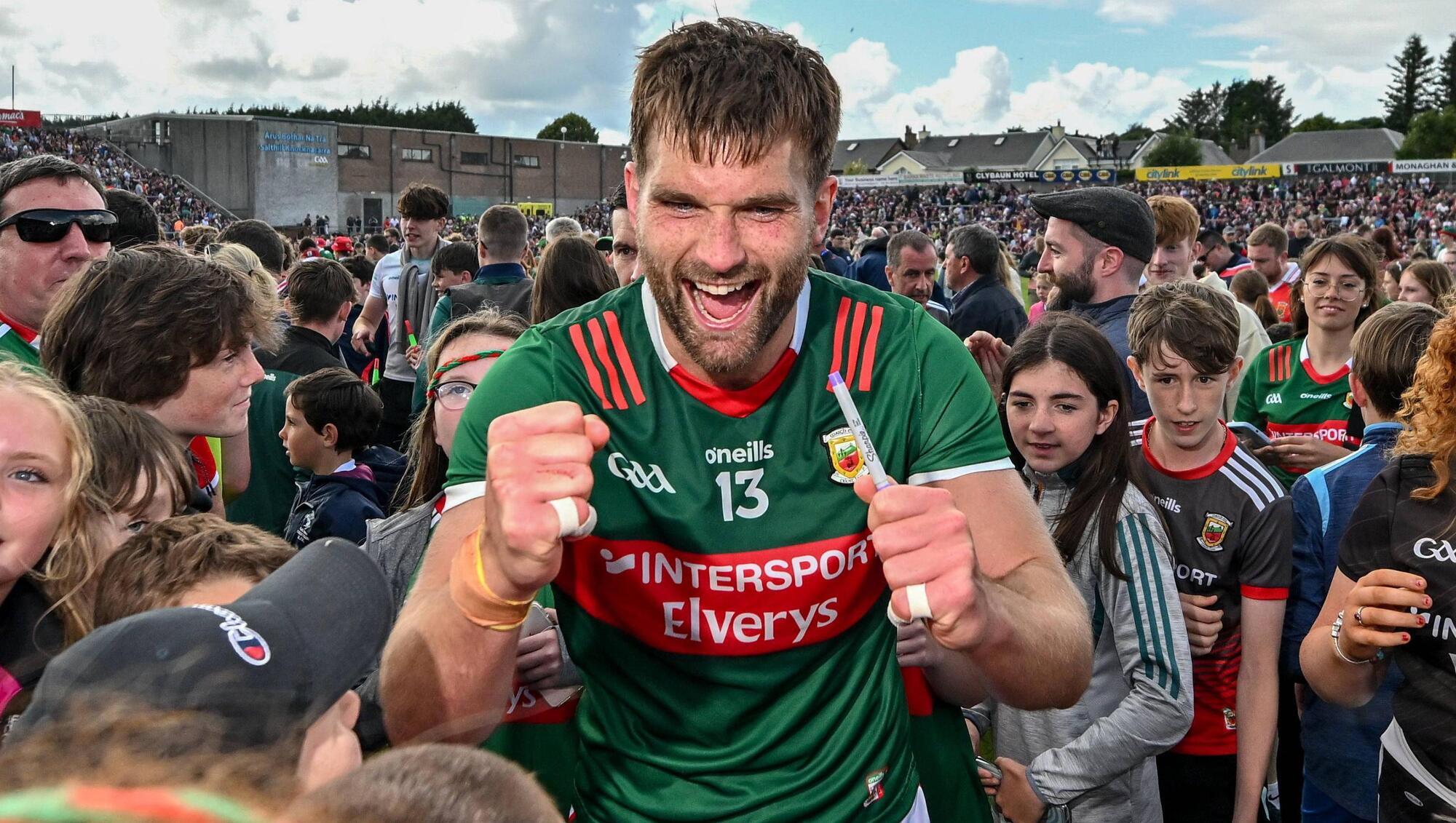
QUARTERS BOUND: Aidan O'Shea of Mayo celebrates. Photo by Seb Daly/Sportsfile
Just after the half-time whistle blew in Pearse Stadium, as all the players rushed into the dressing room, Galway goalkeeper Conor Gleeson made his way down to the eastern side of the ground to begin preparing for the second half. Gleeson knows Pearse Stadium better than anybody but the breeze was so strong that he spent a handful of minutes practising his restarts into that gust.
Gleeson had seen how tricky it had been for Colm Reape in the first half when Mayo won just five of their 13 restarts. Galway only translated that possession into 0-3 but it would have been more if Galway had converted two more shots from the possession off those restarts.
Gleeson nailed eight of their nine kick-outs in the second-half, which was the source of three of Galway’s four scores in that period. Yet the one kick-out Galway lost led to the pivotal score of the game.
Six of the eight kick-outs Galway won were short but when Gleeson kicked long to a wide overload eight minutes into the half, he skewed it to the middle and into the arms of Paddy Durcan. In Gleeson’s defence, Mayo held onto the ball for 33 seconds before David McBrien – after a slick one-two with Aidan O’Shea – scored the goal to level the match and swing all the momentum back in Mayo’s direction.
Kick-outs were always going to be critical on such a difficult day for restarts but, while Mayo only secured eight of their own kick-outs, they were able to over-ride that deficit by compensating on the profit off turnovers, mining 0-7 from that source. Five of those scores came in the second half but two came before the goal, which showcased just how much of a different team Mayo were after the break.
The breakdown of those turnover numbers also underlined how Mayo shaded the physical battle outside of kick-outs; of the 20 turnovers Galway coughed up, nine were forced from relentless Mayo tackling and pressure on the ball carrier.
As a comparison, Mayo only turned the ball over 13 times, with just five of those turnovers resulting from Galway heat in the tackle.
Although Mayo managed the game well late on, they still had to rely on some helter-skelter defending to secure the result. They fully deserved to win but they also got a lucky break from Galway’s injury misfortune. It was always going to be hard to boom the ball long against the breeze but Galway had no real focal point up front after Damien Comer went off at half-time with a hamstring injury.
Seán Kelly was also clearly operating on just one leg, with almost a visible limp, which negated his penetrating impact. That injury was so restrictive that Galway played Kelly mostly as a sweeper because he wasn’t able to twist and chase as a man-marker.
Kelly was primarily acting as a vocal orchestrator and, while he did get forward more in the second half, setting up the goal chance for Matthew Tierney that Reape saved, the reconfiguration with his role also restricted the impact of John Daly as a distributor. Moreover, any time Mayo forced a Galway turnover when Kelly was high up the field, he wasn’t able to sprint back to help stall the Mayo counter-attack.
Mayo have long been hammered for their profligacy but they were clinical too when it mattered most. After having just a 37% conversion rate in the first half, which was difficult kicking into a tricky breeze, Mayo’s conversion rate in the second half was 80%. Mayo’s overall conversion rate from play was an impressive 62% compared to Galway’s 43%.
That narrative could also be broken down into the tale between the side’s main forward – Shane Walsh and Cillian O’Connor. Walsh failed to score from play, kicking two wides, while he had a 57% conversion rate from placed balls, which was always going to be tricky in the conditions. O’Connor only came on in the 45th minute but he kicked a brilliant point and had a key assist for Paddy Durcan’s second point.
Mayo move on. Galway, who prior to the Armagh game appeared to be in pole position to launch a huge offensive from the All-Ireland quarter-final onwards in Croke Park, move off the grid.
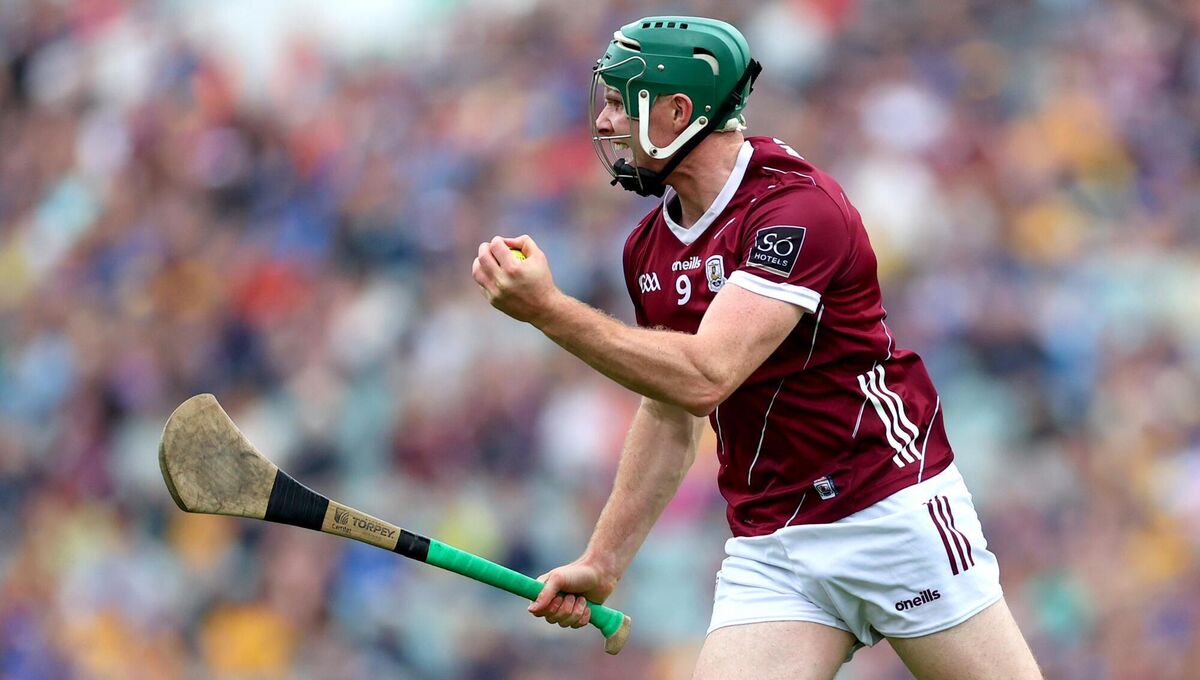
Mannion masterclass
In the 39th minute of the Galway-Tipperary match on Saturday evening, Liam Cahill moved Michael Breen onto Conor Whelan in a switch with Cathal Barrett. It’s not often that happens to Barrett but something had to give. Over the previous 20 minutes, either side of half-time, Whelan had scored 1-3 and was fouled for two converted frees from just six possessions. Whelan could have actually had three goals from that possession.
When Whelan finally got his goal just after half-time, it was no surprise that the ball into him was played by Cathal Mannion, a quick pick and whip off the hurley in traffic. Whelan was man-of-the-match but Mannion was majestic.
Playing as the sweeper does grant the licence for more possession and time on the ball but Mannion is such a brilliant playmaker and deliverer of the ball that he ran the game. From 26 plays, Mannion found a team-mate with 15 of his 18 passes, eight of which were long stick-passes into the Galway attack.
Mannion was mostly sitting in the pocket in and around the D but, as well as that tactic helping the Galway forwards to be more aggressive in the tackle and in how they attacked the ball, having Mannion as a constant out-ball option is a luxury few teams possess.
As well as being instrumental in Whelan’s goal, Mannion also laid Cianan Fahy’s late goal chance on a plate with a sublime stick-pass. As Galway were under the cosh from Tipp by that stage, Mannion had pushed forward as Galway needed to get the scoreboard moving.
That play showcased Mannion’s fluidity in the role. And his pure class.
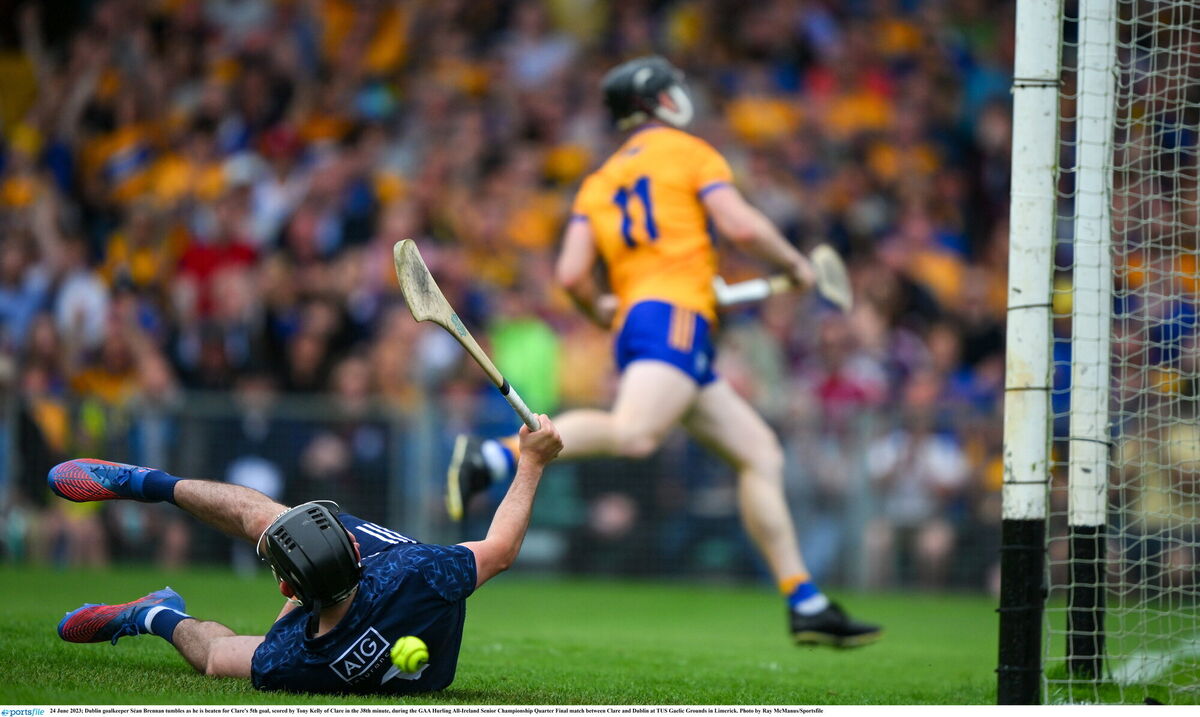
Clare’s green eyes
Green was the colour. Five goals could have been seven or eight for Clare on Saturday evening against Dublin. It was the first time Clare hit five goals since the 2013 All-Ireland final replay. It was just the third time Clare have hit five goals or more in a championship game over the last 70 years. In their entire history, there have only been seven occasions when Clare scored five goals or more in a championship match.
Clare were lethal when they needed to be, especially Tony Kelly. As well as hitting 3-4 from play, which was his first championship hat-trick, Kelly also had two assists. He only touched the ball once in the last quarter, which resulted in a point, but it could have been a goal if Kelly had really fancied it.
Dublin surprisingly chose Paddy Doyle as a man-marker on Kelly, but Clare always looked like they could cut loose in the massive tracts of space down their central attacking corridor. Leaving their defence so open was surprising, but Dublin couldn’t afford to go zonal with Kelly, Shane O’Donnell and David Fitzgerald so potentially devastating on the front foot around the middle third.
There were stages during the first half when any line-break from midfield looked like a potential goal chance for Clare. During a lengthy delay when John Conlon got injured, Eoghan O’Donnell went to Micheál Donoghue looking for answers. Dublin tried to realign their formation and get their lines deeper down the field, but they still never shut off those attacking lanes.
Throughout, space was Clare’s friend. And Dublin’s arch enemy.
CONNECT WITH US TODAY



Be the first to know the latest news and updates