John Maughan: I’ve changed because the science has changed me. I was a bit mad in those days
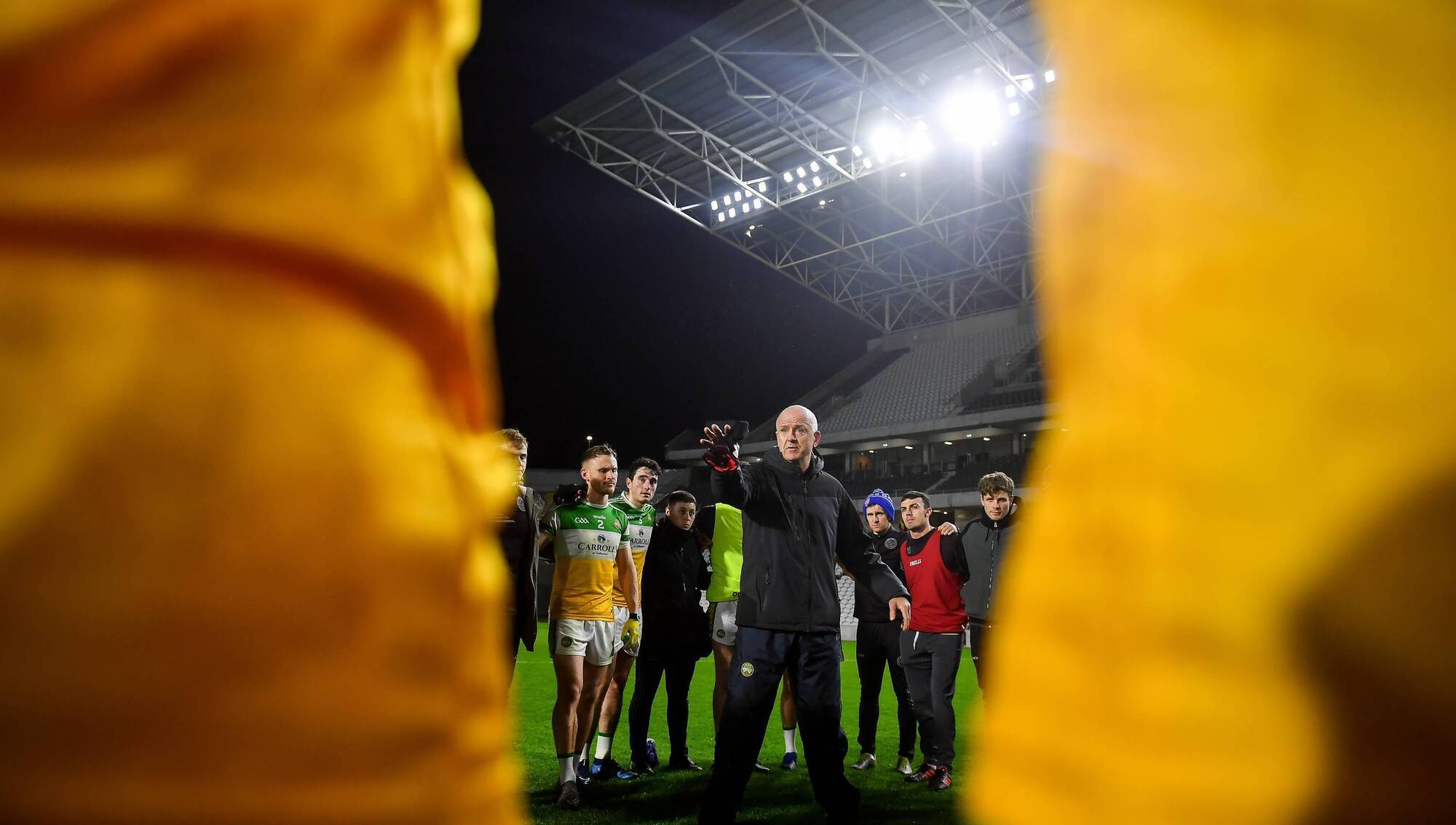
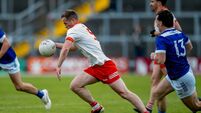
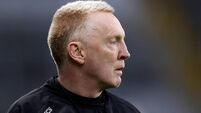
CENTRE OF ATTENTION: For many years, John Maughan had no desire to get back on the managerial carousel but he doesn’t regret his decision to answer the call from Offaly. Picture: David Fitzgerald/Sportsfile
Once 12 o’clock in the day would come, you’d start thinking about training. ‘Oh Jesus, tonight’s going to be tough.’ You’d eat no dinner because it would be only coming back up. You’d start off with 20 laps. If you went down to a county team now and said, ‘Right, lads, 20 laps to warm up’, they’d tell you, “Fuck off, you don’t know what you’re talking about.’
‘But the thing about it was you were mentally tough from it. You didn’t want to be the one that was going to give up. We had a sub on the panel called Liam Conneely. He was working in Sligo and he’d still be down in Lahinch at seven o’clock for training. One night he was frothing at the mouth during a savage run. He was actually in a state of delirium. But he had this thing, ‘I’m going to finish this’, and we had this thing, ‘He is going to finish it’, so myself and Joe Joe [Rouine] grabbed him by the hand and pulled him along. We developed this savage friendship. The feeling in the dressing room afterwards having done a session like that was absolutely fantastic.’
— Seamus Clancy in 2012, reflecting on playing and winning with John Maughan 20 years earlier
A bit like Denzel in Training Day, the car, the road, is John Maughan’s office, at least on an Offaly training day.
Our call comes through to him just as he’s passing through the small town of Balla, home to Maurice Sheridan and Pat Fallon, that he led to All-Ireland finals a quarter of a century ago now and about a quarter of an hour from his own adopted home of Castlebar.
In all it usually takes him two-and-a-quarter hours to get to Kilcormac and Offaly’s splendid Centre of Excellence, though he senses, with the way the traffic is already shaping up heading towards Claremorris, it could take him an extra five minutes or so this particular Tuesday evening.
He finds the driving tougher, not just longer, than when he first started out on this journey of managing county teams. He’s 60 this year, a fresh 60 mind you, which means it’s over half a lifetime ago now since he began with the Clare lads and making the commute from his then base in Galway to the wilds of Crusheen.
Still, the time isn’t long going by, either on this trip or indeed this whole coaching journey that’s also taken in Fermanagh and Roscommon along the way.
He still hasn’t got into podcasts though his wife Audrey has recommended a few. He’s strictly an RTÉ Radio 1 man. Drivetime for his time driving to Kilcormac, “listening to everything from the Ukraine and how mad Putin has become to Boris Johnson partying through Covid”. John Creedon and his impeccable musical taste then help take him home. But usually he finds it’s the phone that he has on more than the radio. The calls are constant, especially in a week as this. Not only is it the eve of a vital Division 2 campaign but the height of an extended Sigerson Cup. It’s manic. Madness.
“I’m a big fan of Sigerson. I played it [and won two Sigersons]. I’ve coached it. I encourage our lads to play it because a few years ago we didn’t have a single Offaly player playing it. But now we have 12 lads tied up in it and a couple more playing freshers football and it’s just ridiculous what Croke Park are trying to squeeze into January.
“Tonight I have three lads tied up with Maynooth playing a backdoor game in the Sigerson — they’ve brought in a backdoor this year of all years to start doing it. We’ve another with UCD. Cathal Flynn is playing with Athlone IT. Lee Pearson is away playing a freshers game with Trinity. All this the Tuesday before the commencement of the National League, which, for a team like us and most teams in Division 2, is essentially the championship. We’d two Offaly lads playing for Maurice [Sheridan] with NUIG and both had to come off injured. The load is too much. There’s certainly a player welfare issue there.”
He’d be more conscious of such things now: Load. Player welfare.
Back in the 1990s Maughan was to the forefront, indeed the leader and catalyst, of the heavy training regimen that was so pervasive that decade. Ger Loughnane has admitted that the Clare hurling revolution of ’95 took inspiration and direction from how Maughan spearheaded the Clare footballing breakthrough of ’92; even before Mike Mac ever stepped foot in the place, Maughan had drilled into a group of Clare men the virtues and hardship of Crusheen. Similar methods also transformed his native Mayo from being a mediocre Division 3 team to back-to-back All-Ireland finalists. Whatever about being the best football manager of that decade — and there is a case he was, with no one winning more provincial titles during that period — he was its most influential. Derry ’93, Leitrim ’94, Clare ’95, Wexford ’96, Cavan and Offaly ’97: the chances are none of them happen without the example and inspiration of Maughan’s first army.
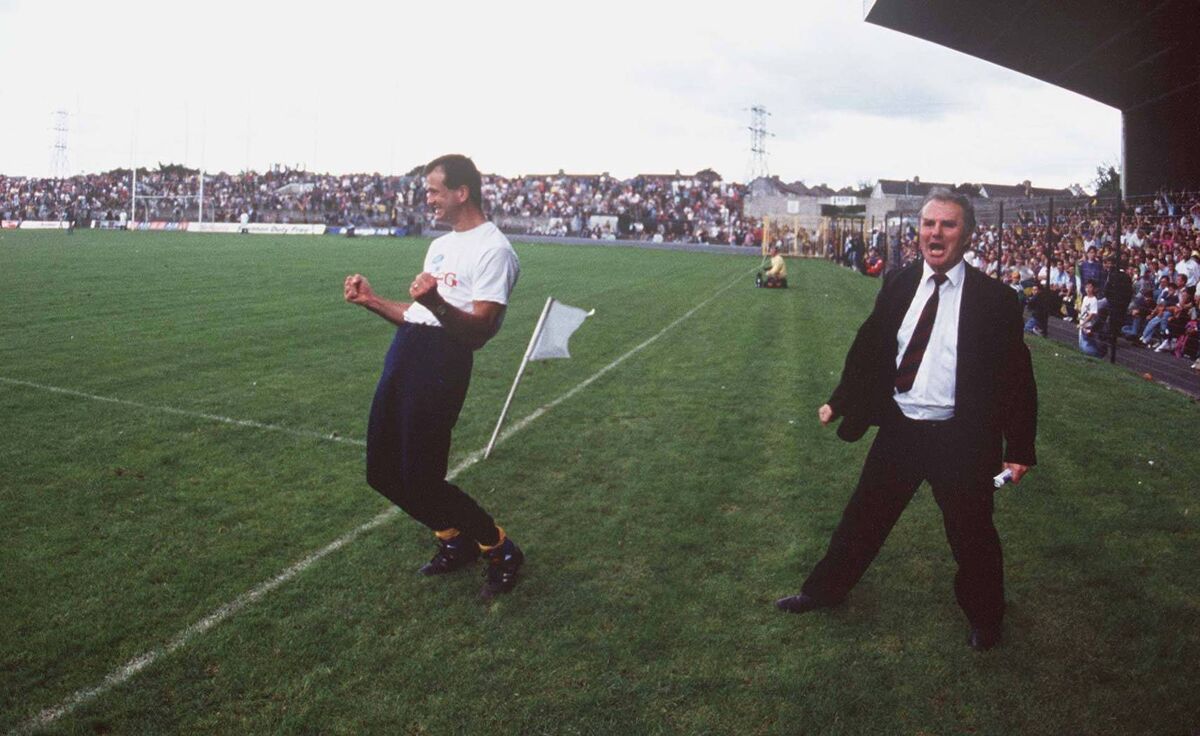
But those ways were of a time — another century. So John Maughan has changed. He’s had to change. As he says himself, tangibly smiling down the line, “I’ve changed because the reality is that science has changed me! I have a [strength and conditioning] guy screaming at me, ‘Those guys are tired! Look at the GPS! Look at their load!’
“And I know now, looking back on it, there were times I brought teams into a big game and physically we had already peaked.”
He’s thinking of a year like 2004. There wasn’t another team in the country that year — not even eventual champions Kerry — that strung three games together and played as devastating a level of football as Mayo did that summer, dismantling a Galway team that had just reached a league final, a combative Roscommon side, and a rampant Tyrone team that had won the previous year’s All-Ireland. Ciaran Mac was in his pomp. Conor Mort too. Maughan had them all hopping off the ground. But come the All-Ireland semi-final series against Fermanagh, they were flat. It took Trevor Mortimer to muster one last great rally up the field to drag them over the line, only for them to be mere roadkill for a Kerry team determined to flatten anything in their wake.
That said, he still knows why he did what he did. It helped get teams as far as they did when no one else could have seen they’d get as far as they did.
In 2004 Mayo had been almost relegated before Maughan brought them to the Catskills and they bonded on the training ground as much as they did in its bars. In 1996 they hadn’t much to spare over London in Ruislip and so after their plane had touched back down in Dublin airport, he brought them out to Westmanstown and turned the place into a torture chamber.
“I was so disgusted with the performance I took it out on the boys! I remember Anthony Finnerty and a few boys the next day saying they’d been crying, thinking they were going to get a heart attack out in Westmanstown! I was a bit mad in those days!
“And yet in many ways I’d love to introduce something like that to the Offaly boys! I’d love to see lads begging for mercy because when the game is in the balance and you’re looking for someone to go to the well, if they haven’t been tested in Kilcormac or some training environment, how do you know if they can go there or not? I miss that.”
Actually now that he thinks of it, he seems to really warm to the idea: Yeah, there’s still a case for the odd ball-breaker session like that!
But just the odd one, he then quickly adds.
And this isn’t the time of year for it.
It was a bit of an accident that Maughan ended up managing Clare. Initially someone connected to the county board rang his flat in Galway city centre, enquiring would the then young army captain meet chairman Brendan Vaughan and a couple of other officers in a Gort hotel about coaching their senior county team. “At the meeting then I asked them who was the manager. When they said they hadn’t yet appointed one, I said, ‘Lookit, I’m not going to take on coaching the team and eventually find out I’m working with someone I’m not aligned with.’ So I took on the whole thing.
“Only 11 players turned up my first night there — and a few of them weren’t in the dressing room a few months later. They’d played an All-Ireland B championship match against Sligo a few months earlier and had only the 15 players and a couple of them had to go off injured. But back when I was in with Mayo before I got injured, I’d have gone down to Clare to play a good few games against them and even though Mayo were going places we always found Clare a difficult team to beat. In their DNA they had exceptional battling qualities.
“And that was brought home my first year. We put it up to Kerry in the championship but in the last 20 minutes we just ran out of steam. I had come up on the back of Sigerson training with Anthony ‘Horse’ Regan who was a dog of a trainer with us in [then UCG]; inter-county training at the time would only have been in the ha’penny place compared to it. So I said, ‘Right, we’re going to get our fitness up extremely high and bridge the gap in a short time.’
“I’m sure there were times that the players hated me, that they dreaded coming to training. And again, I wouldn’t get away with it now, so all these years on I unreservedly apologise to each and every one of them what I put them through!
“But they knew I wasn’t asking them to do anything I wouldn’t do myself. And in my four years there I don’t think I missed a single session. I wouldn’t accept anyone saying they couldn’t make training because the roads were slippery when I was travelling 150 miles myself to be there. You just had to be there, simple as that. That’s just the way it was.”
At this juncture, Maughan hardly requires any form of forgiveness; in Clare whenever they throw a sign of the cross his way, it’s in the way of beatification. As Colm Collins said during the week, “John Maughan is a God in Clare and all the players who would have played under him have immense time for him and rightly so.”
He always felt welcome in Clare. Even now he smiles at the thought of the hospitality the likes of the late Tom Downes and Paudie Nealon and so many others “with no agenda but to try and get Clare football moving the right direction” would extend to him and Audrey. He lights up at the memory of Jack Horgan who ran the post office in the remote village of Cree who’d put him up for weekends — “And does Mr Maughan wish to stay in our Connacht suite or our Ulster suite or our Munster suite?” Jack would theatrically enquire, all parties knowing Maughan’s accommodation wouldn’t be quite as grand as it sounded.
Then they’d head out the door. “There were three pubs in Cree,” says Maughan, “and of course you couldn’t go to one without going to all three. They were just great times, great fun. They made Audrey a judge of a Rose of Clare festival and everything. We often say if we were to live anywhere else it would be in Clare.”
It’s still a home from home for them. They’re still all family. Ever since there’s been WhatsApp, the Clare crew of ’92 have had one and Maughan has been on it.
“Of all the inter-county panels I’ve been involved with it’s the only one I’m on [bar Offaly now, of course]. I’d have been in more funerals in Clare than Mayo the last few years. I don’t think I got as close to any group as I did with the Clare boys. There was just something particularly honest about them and I just found myself connecting with them in an unique way. I still love meeting them to this day.”
In 2017 the Munster Council introduced them all to the crowd at halftime in that year’s Munster final in Killarney. Maughan couldn’t find any accommodation in town that weekend, so instead he hired a camper van and stayed in it after cycling the Ring of Kerry on the Saturday. After the game on the Sunday he found himself driving home on the N7 when he saw the turnoff for Ennis. And instead of driving straight on towards Galway and Castlebar, something told him to take the fork. Head for Ennis. Actually, head for Miltown. The Willie Clancy Festival was on and some of the boys were going to be there.
And sure enough, the first pub he walked into and there were some of his old players, leading the sing-song.
And so he stayed for the night. A part of him has always remained in Clare.
For a good few years there, John Maughan was sure he was finished with the inter-county carousel. After he got off it in 2008 when the Roscommon gig didn’t finish as well as it had started, he had no inclination to look out for when it might stop again and what free horse to bolt for.
He was content being back on the quiet fields, helping his mother’s homeplace of Lahardane to a rare junior championship title, coaching his son Johnny and underage Castlebar Mitchels teams. Then, in the autumn of 2018, an old schoolmate rang.
“I had gone to boarding school in Carmelite College in Moate where obviously you’d have had a lot of Offaly boys go too. Eugene McGee would have been over the county team and helping them rise again when I’d have been in school. And what happened was a contemporary from my boarding school days called me from out of the blue asking would I go for an interview for the Offaly job. I said there wasn’t a chance but he insisted on meeting up and over a bit of Madeira cake I warmed to the idea.”
Maughan’s first night meeting the team was even more alarming than his first night in a Clare dressing room: Only eight players had bothered to show up.
“I turned around to a couple of county board officers and said, ‘What am I doing here?’ The first night we had an O’Byrne Cup game we went down to Carlow and I didn’t know if we’d have 15 players for it. And then on the sideline for Carlow there was a coach issuing the instruction, ‘Full house! Full house!’ I was there wondering: What exactly does he mean by that? Then it dawned on me: he’s getting everyone behind the ball! The whole dynamic had changed from when I’d last been involved [at county] and, to be honest, I had to retrain myself. I had to recognise the game had moved on to such an extent in how it was played and how you prepared for it.”
He’d adapt. Back in the Clare days, he says, he did everything “including booking the hotel”. Even back when he was guiding Mayo to Croke Park in the mid-noughties during his second stint with them, he’d look and somewhat scoff at the number of people Pillar Caffrey had in his Dublin backroom team.
Now his own support team has almost as many people as that. And there’s no fat. They’re all contributing. He sees the value in them all.
Some things, though, haven’t changed. It’s still about connecting with a group of young men and helping them believe good things are possible when you commit in a worthy cause. How did he turn Offaly around? The same way he turned Clare around, Mayo too.
“It’s about being honest and straight with them and not accepting any nonsense. Before, you’d have fellas not fully recognising what goes with being an intercounty footballer, how your lifestyle revolves around it. Whether you’re doing it or one year or 15 years, you’ve to embrace what goes with it.
“I never had the experience of winning an All-Ireland other than at U21 as a player. But there is no greater sensation than striving hard to win and then winning, be it winning promotion to Division 2 or surviving and staying up in Division 3 like we did a few years ago [2019] after beating Sligo in Collooney. We needed a last-minute score to win and just the sense of satisfaction on the bus afterwards was a joy you simply don’t experience in ordinary life.
“You won’t get it in Coppers. You won’t get it lying back on the couch watching Netflix. There is just this incredible sense of satisfaction that you can only get when you work hard and really feel you’re doing your county proud.”
Another privilege now is getting to work with Tomás Ó Sé, his once-tormenter in that 2004 final with his diagonal high balls into Johnny Crowley but now a collaborator and friend. The idea first came up over a few pints with his so-progressive chairman Michael Duignan at the end of the summer and it’s turned out even better than they imagined. Just his knowledge of the game, his humility and ability, from being a teacher, to impart nuggets as to how they can get better.
It’s not just about football. As Maughan learned and displayed back in the Clare days, it’s still ultimately about dealing with people who play football.
“I know the importance of a phone call to a guy, whether he’s playing brilliantly or he’s playing badly, or maybe not playing at all. Tonight now we have to pick our matchday panel of 26 when we have 43 lads in with us. OK, some of are injured and some of them might never kick a ball for Offaly but they are the guys who need your attention: the guy who is hurt and down in the dumps.
“We have a lad called John Furlong down in UCC. Super lad, very keen, fine footballer, one of the winning U20s team, a grandson of Martin Furlong. But now he has an overuse groin injury. So last night I rang Tomás and said, ‘Is there anything we can do for John Furlong? I don’t want him to be dragging him up to Kilcormac twice a week.’ And Tomás said, ‘John, I know what we’ll do, I’ll try to get him out to Fota Island.’
“Now if I was a 19-year-old in my first year on an inter-county panel and Tomás Ó Sé, a five-time All Ireland winner, is engaging with me and organising a gym and sauna and strength and conditioning programme for me, isn’t that simply tremendous?
“We’ve other young fellas such as Cathal Flynn coming in with an overuse injury so it’s a question of managing that and looking after them. That’s where the real engagement is, they’re the guys who need the phone call even more than our captain Niall Darby, who is going to be on the team.”
And then as it happens, just as the car enters Offaly, Maughan says he has a call coming in from a player that he has to take.
In this gig, things never stop. Deep down he probably wouldn’t want it to.
CONNECT WITH US TODAY



Be the first to know the latest news and updates