How four Irish athletics greats put aside their rivalries for a world record that still stands today
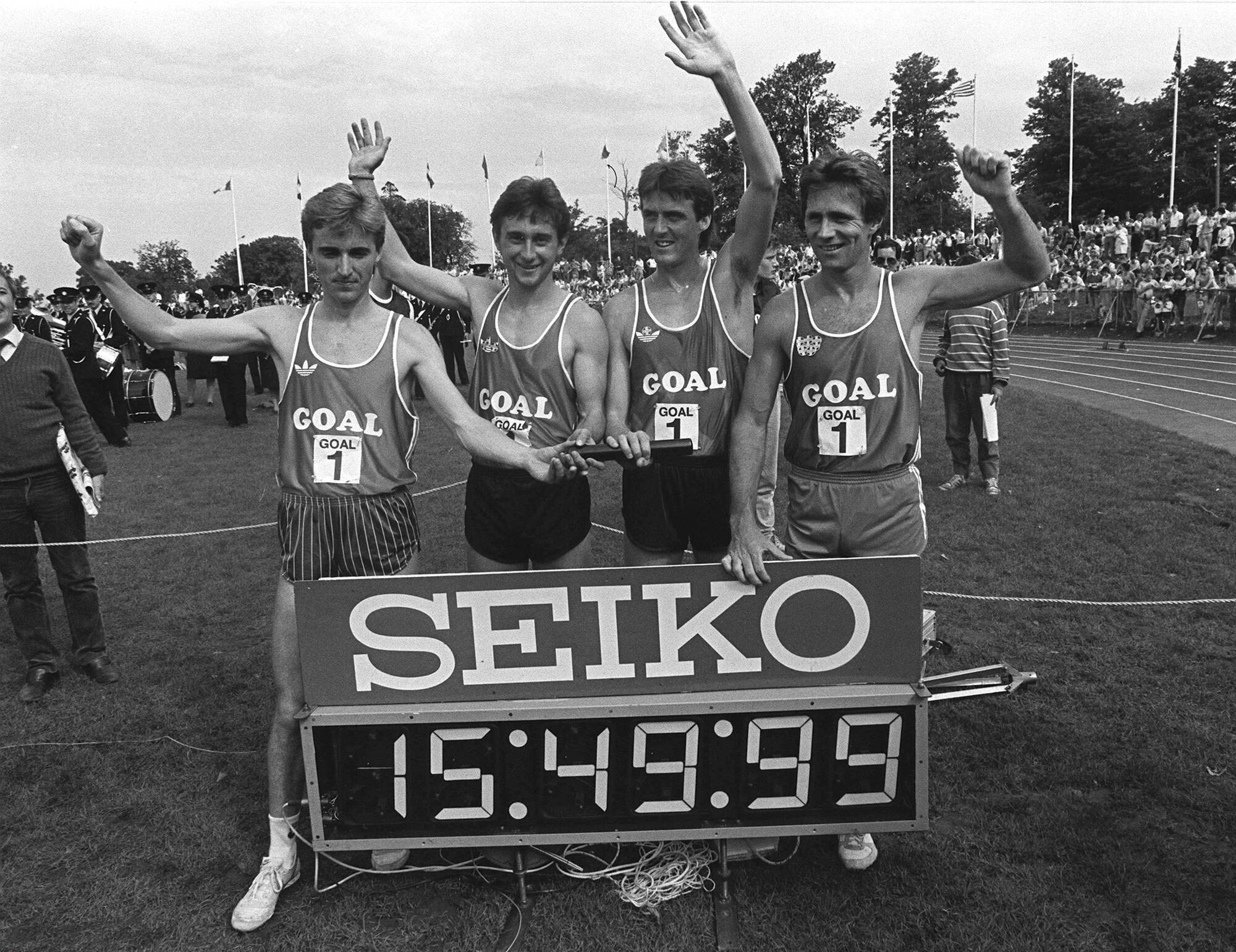
Frank O’Mara, left, Marcus O’Sullivan, Ray Flynn, and Eamonn Coghlan after breaking the world 4 x 1-mile relay record at Belfield on August 17, 1985. Their time, officially clocked at 15:49.08, still stands today. Picture: Ray McManus/Sportsfile
In the annals of Irish athletics, it’s a date that echoes forever: August 17, 1985, the night four Irish greats came together to set a world record for the 4 x 1-mile relay. In the 35 years since, their time of 15:49.08 has yet to be surpassed, a feat few could predict on that warm summer evening in Belfield.
In truth, Eamonn Coghlan, Marcus O’Sullivan, Frank O’Mara, and Ray Flynn didn’t even want to be there — their arms twisted, their consciences coerced, by John O’Shea, the founder of humanitarian charity GOAL. In the end, it was a night all four still treasure to this day, and one that several thousand fans present will never forget.
This Thursday, the four athletes — now aged between 59 and 67 — will again team up to complete a virtual marathon relay, a charitable event organised by the The Armory Foundation in New York. They will log a cumulative 26.2 miles at four separate locations: Coghlan in Castleknock, Dublin; O’Sullivan in Villanova, Pennsylvania; O’Mara in Little Rock, Arkansas; Flynn in Gray, Tennessee.
The four former rivals have stayed in touch over the years, chatting back and forth in a WhatsApp group that’s titled with digits defining their shared achievement: 15:49.08. Here, in their words, is their story of how that magical night came together.
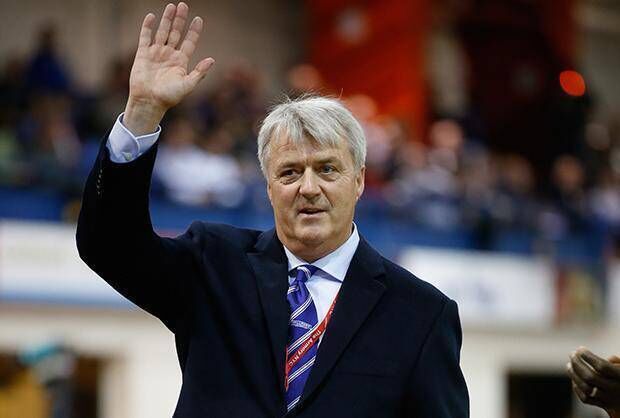
Ray Flynn: At the time, we were all caught up in our individual worlds, racing different places with our own agenda. We were competitors. There was a great respect among us, but it was everyone was for themselves.
Frank O’Mara: I remember John O’Shea coming to the meeting in Zurich and strong-arming us into taking part. It was the peak of the season, and (O’Shea’s idea) sounded like a circus. As an athlete, you only get 10 or 15 races a summer to make hay, and it’s not easy to give up one to be part of John’s endeavour.
Marcus O’Sullivan: The night (O’Shea pitched the idea) I was rolling my eyes, another race I didn’t want to put out for. We were all back at the hotel having dinner, sitting around a table and John came in to pitch it. We’re nodding our heads, but I’m thinking: I don’t want to do this. Without any commitment we said we’d think about it. But John persevered and was insistent.
O’Mara: Never underestimate John O’Shea. He doesn’t take no for an answer, that’s for certain. That was the summer of Bob Geldof’s Live Aid, the summer of giving, and it was at the top of everyone’s mind, so it’s something we wanted to be part of. East Africa was really struggling, it was always in the paper and GOAL was at the forefront of it.
Eamonn Coghlan: I was coming back from a lower-back injury at the time, I’d missed the spring-summer season. I was back jogging, then all of a sudden John comes up with a crazy idea. I’d have been a patron of GOAL, doing the GOAL mile every Christmas, but I said: “John, I can’t bloody well do it.” He said: “Come on, Coghlan, you’ve got to do it.” Over a couple days he was on to me, and then Noel Carroll called and said: “It won’t work if you don’t do it.”
The day before the race John rang me and said: “You can f*** off, Coghlan, I’m going to get John Treacy to do it instead.” I said, “John, I just ran 10 or 12 miles, I’m not ready to run a sub-four-minute mile.” With that Noel was on to me again and said: “Eamonn, it won’t be the same if you don’t do it.” So I said okay.
O’Sullivan: John named the team with Eamonn on it and we’re looking at each other going: “Eamonn can’t run; he’s been injured, he’s out of shape.” We felt bad, we loved Eamonn, but he just wasn’t the guy. But John was adamant he had to be on the team. We finally agreed, reluctantly. The three of us were in good shape, but could we afford to absorb Eamonn? I was sure he’d be hard pressed to break 4:12. [The world record at the time stood to New Zealand at 15:59.57, meaning the four had to average sub-four-minute miles to break it.]
Coghlan: It seemed like it all happened the day beforehand. It was typical John O’Shea, pulling something out of the sky. He saw an opportunity to create awareness. He got Seán Kelly and Stephen Roche there for a bike race, boxers and different football players participating in celebrity runs.
BLE (the governing body of Irish athletics at the time) were giving them a hard time: no way would they give them a permit, and no way was it going to be an official record. There was all sorts of crap going on behind the scenes right up to the race. I didn’t know too much about it, but 24 hours before I said: “Okay, I’ll do it, but I don’t want to be the guy to screw it up.”
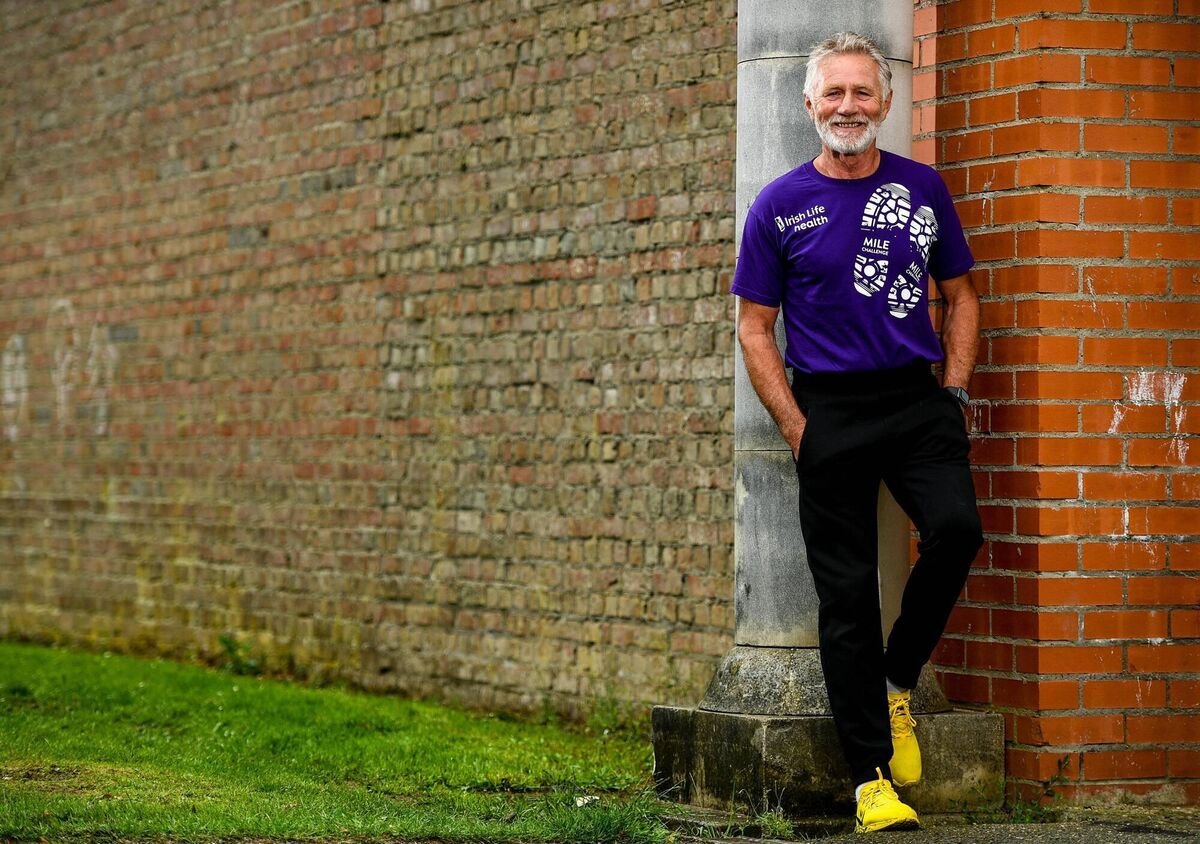
Flynn: It was a hard thing to say no to. Everyone was living their own lives but it was for a good cause, it was at home, and John had done a good job. I think the BLE were not crazy about it but John was so pushy that he was able to guilt them into it.
O’Sullivan: John was resourceful, persistent, a rain-maker. He was making this happen, come hell or high water. He was able to make it a festival and the athletes, while we were needed, were just a part of the whole evening. It was a very improv orchestration and yet, reflectively, it could never have been pulled off had it not been for John.
Coghlan: John was not afraid to speak his mind, not afraid to tell you how to train. He said it as it was. From the time I was doing my thing in America, he’d be the first person to call you at 5:30am in California looking for a story for the paper. He ruffled feathers but behind it all, you’d do anything for John.
Then Noel Carroll, he was a mentor of mine and it was his belief in me that forced me to change my mind about that race. They put me running first on the A-team and put John Treacy first on the B-team. Between Noel and John they were saying: “No f***ing way will Coghlan let Treacy beat him.”
O’Mara: I remember getting to Belfield that night and thinking, this is a waste of time. Nobody was about. To a man, we were wondering how we got into the situation. We knew we had a job to do, but running a 3:55, 3:56 mile by yourself isn’t easy. We were very fearful Eamonn wouldn’t be able to and that he would run 4:04, 4:05.
O’Sullivan: We’re about to warm up, but I’m still in this negative tone: What the hell are we doing here? It’s one of the most ashamed moments of my life, but I just didn’t want to do it. It’s about 75 minutes to the race and there’s nobody there, nobody at all. I say: “Let’s go out, get the warm-up done, get it over with, make the attempt and go home.”
We were apathetically warming up in the grass fields — I know I was anyway — then with about 25 minutes to the race we move closer to the track. We take a peek out and go: “Oh my God, the place is full.” People came out of nowhere and now, all of a sudden, I could feel the adrenaline rush go through me. I was like: “Aw shit, now we have a show to present.”
Flynn: I remember feeling a lot of pressure. I decided to anchor the race and we didn’t know what to expect. You’re soloing and I was unsure if I’d be in a deficit situation on the final leg. There was a lot of anticipation. It was unlike any other race.
Coghlan: When we came in from the back fields, all of a sudden the place was jammed. F**king hell, packed out. The fact there were 8-10,000 people to see us run got the adrenaline flying. The fact it was John Treacy (on the first leg), I wasn’t going to let this sucker beat me over a mile.
So the race took place and as predicted, Treacy pushed the shit out of me all the way and I ran 4:00.2. I gave it everything I possibly could. I threw my heart after it and I was making sure John didn’t beat me, making sure I won the race. The objective was always to get under four minutes.
O’Sullivan: The US collegiate system is built on relays, you were always strategising who’ll be on what legs. You don’t put Eamonn in the middle where there’s no one around him. He needs the competitive juices, the energy. It was one of my greatest experiences watching Eamonn running 4:00 that night, the most quintessential representation of who he was as an athlete.
When you’re in shape it’s easy, when you’re not and you’re doing it on memory and on sheer will, you see the true character. Eamonn was not walking away with an excuse that he couldn’t get it done.
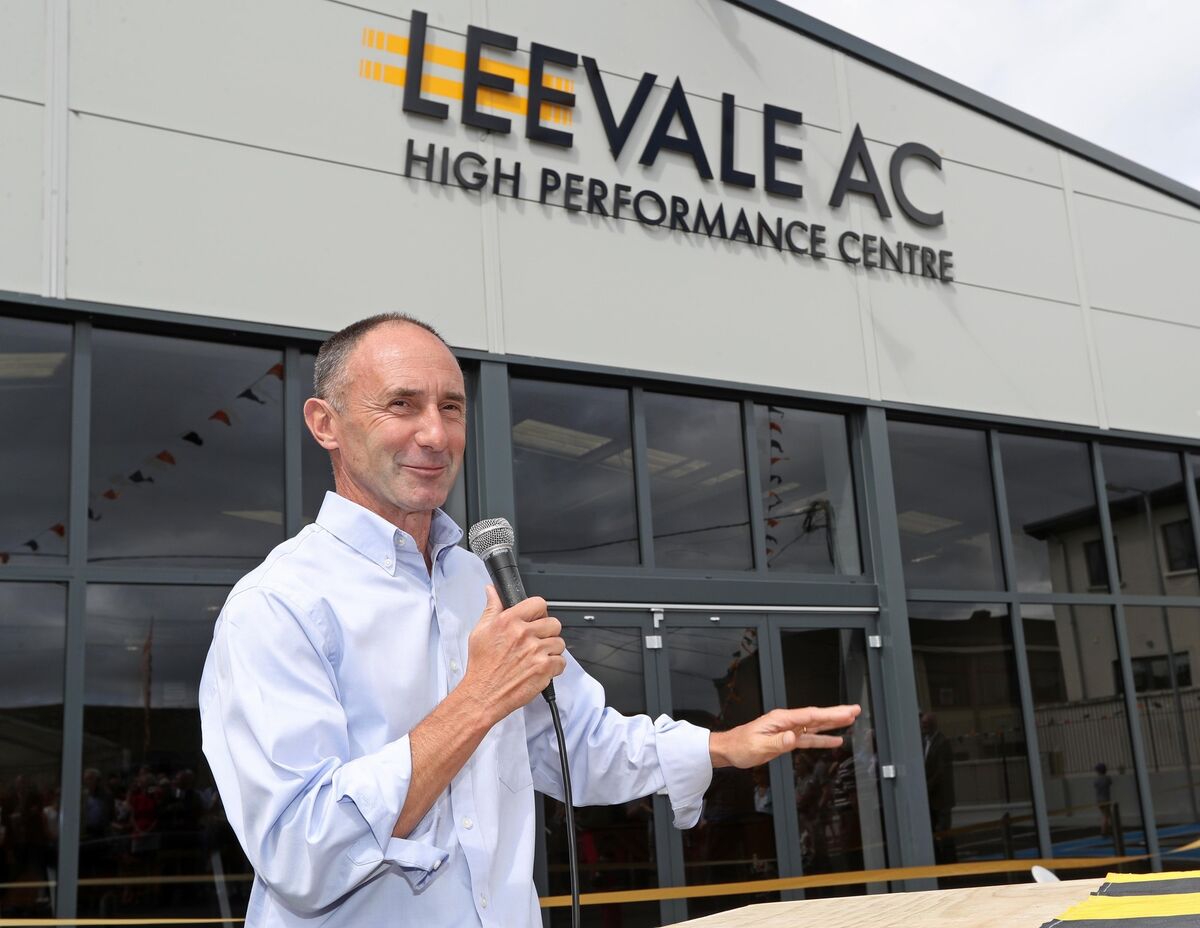
Coghlan: It was like getting back on the bike again. Once you know, you just get up on the bike and ride it. When you’ve got the calibre and you’ve got the experience and the fact you’ve run 3:49 at some stage before that, you can pull something out of the bag. Noel Carroll always said that was my best race. I was able to pull it out of my ass on the night.
O’Sullivan: It took every ounce of resourcefulness and athleticism, every ounce of character, for him to manage a four-minute mile that night and, at that point, the tone was set. It all happens then with a sense of: “It’s on, now it’s up to us.” [O’Sullivan took the baton in front and clocked a 3:55.30 mile, handing over to O’Mara, who clocked 3:56.60.]
O’Mara: I knew we were running under (world record pace) when I got it. The other two had done enough to give us a chance. I ran a lot of those races in college at the Penn Relays, Texas relays, so we were used to running with a lead.
John O’Shea was roaring like a bullock, but you have to control your emotions and not get carried away. I aimed for 2:57 at 1200 and by the time Ray got it, we were well ahead of (world record pace), which put more pressure on him, knowing you can only screw it up.
[Flynn ran 3:56.98 on the final leg to bring them home 10 seconds under the previous record.]
Flynn: I knew I was up on the record, I knew I had five or six seconds because the announcer was saying it and that puts even more pressure on you. Don’t screw it up, right? But you still have to do it, you still can’t make a mistake or drop the stick. To run a four-minute mile is difficult but to run it solo, we underestimated how difficult it was.
O’Sullivan: The atmosphere built and built, and at the end there was a sense of euphoric energy. There was this feeling: what an evening to have missed if I had missed it. I was right about that at the time because we’re still talking about it 35 years later.
Flynn: It was pretty euphoric. I have pictures of these young boys following the four of us around and it’s a great image. We were able to run a lap together and there was a great celebration. It was a feel-good evening, something that made us one rather than competitors. We were too used to trying to beat each other but this was a night when we were all champions together.
O’Sullivan: Seeing the kids running around the track, they’re dropping their pens and their paper, it was this incredible, wonderful evening. The weather was beautiful, a summer evening, and it’s one of those moments you treasure forever. You realise after how quickly it could have slipped by.
O’Mara: I wasn’t even aware until recently all the famous names who had that record: (John) Walker, (John) Landy. The names are pretty remarkable. We thought we had a shot for a while, but it’s hard to get four guys to solo sub-four.
It’s hard to get four guys to commit to giving up an earning opportunity. We knew we wanted to go far enough under 16 minutes to discourage people from having a go at it, and I think we managed it. It’d take a pretty good effort from four pretty good athletes to break it, even today.
O’Sullivan: It’s one of my proudest moments. That night is a credit to our country and the sense of community that was there at the time.
O’Mara: It’s the only athletics picture I have on my wall: that race, the four of us and John O’Shea. As I said before, the friendships from the sport are what are most important to me, and I became great friends with all three of those guys. That would not have happened had we not done that.
Flynn: Even though it may have not had the magnitude of a Zurich, it had the same energy and excitement and support. We all felt that pressure to deliver because people came out to see a world record with the best milers Ireland had in a long time.
O’Mara: As rivals, there was a degree of tension between us but that race definitely brought us together. Eamonn was the oldest of us and a hero, certainly to Marcus and me growing up. It was really exciting to be on the same team as your hero, and after the shared experience we became friends rather than admirers.
Ray was closer in age and knew the circuit so well and was always willing to offer guidance. Marcus and I had been rivals in the Munster schools and in the NCAA and everything pointed to a rivalry, but we were becoming fast friends and this effort brought all of us closer
Coghlan: Irrespective of the record, we’d have kept the communication. It was the fact we were on the circuit together. We all had huge respect for each other’s ability but the longevity, how long the record has endured, gives us a special pride to hold on to. That puts the icing on the cake.
Flynn: You lose track of a lot of people in your life as you get older and we’re not young men anymore, but there’s still a bond between us.
This race, this experience, brought us together as friends.
The October 15-17 Armory’s Columbia & New York Presbyterian Virtual Marathon 2020 Team Relay is The Armory Foundation’s largest fundraiser of the year and supports both its after-school educational and youth athletic programmes for children from underserved communities in New York City. For more information about The Armory, go to www.armory.nyc.om and for donations go to [url=https://www.armory.nyc/donate]armory.nyc/donate[/url].

CONNECT WITH US TODAY



Be the first to know the latest news and updates